5 Warning Signs It’s Time to Upgrade Your Cabinet Security
Feb 16, 2026
In the amusement and skill game industry, security is often treated as a "set it and forget it" task. You bolt the machines down, throw on a standard lock, and hope the bill acceptor is still full when your collector arrives. But if you’ve been in this business for more than a few months, you know that hope isn't a strategy.
The reality of 2026 is that tampering is becoming more sophisticated, and the hardware that protected your route five years ago is likely failing you today. Upgrading your cabinet security isn't just about preventing a one-time break-in. It’s about plugging the holes in your bottom line caused by labor costs, equipment damage, and internal shrinkage.
TL;DR: Red Flags Your Current Security is Failing
- The "Silent" Thief: You find empty cash boxes with no signs of forced entry.
- Maintenance Bloat: Your techs spend more time "fixing" old alarms than servicing games.
- Regulatory Pressure: New mandates require more robust terminal security.
- Nuisance Alarms: Your current sensors are so unreliable that location owners are unplugging them.
- Accountability Gaps: You can't tell the difference between a service call and a midnight heist.
1. You’re Seeing "Mystery" Shortages
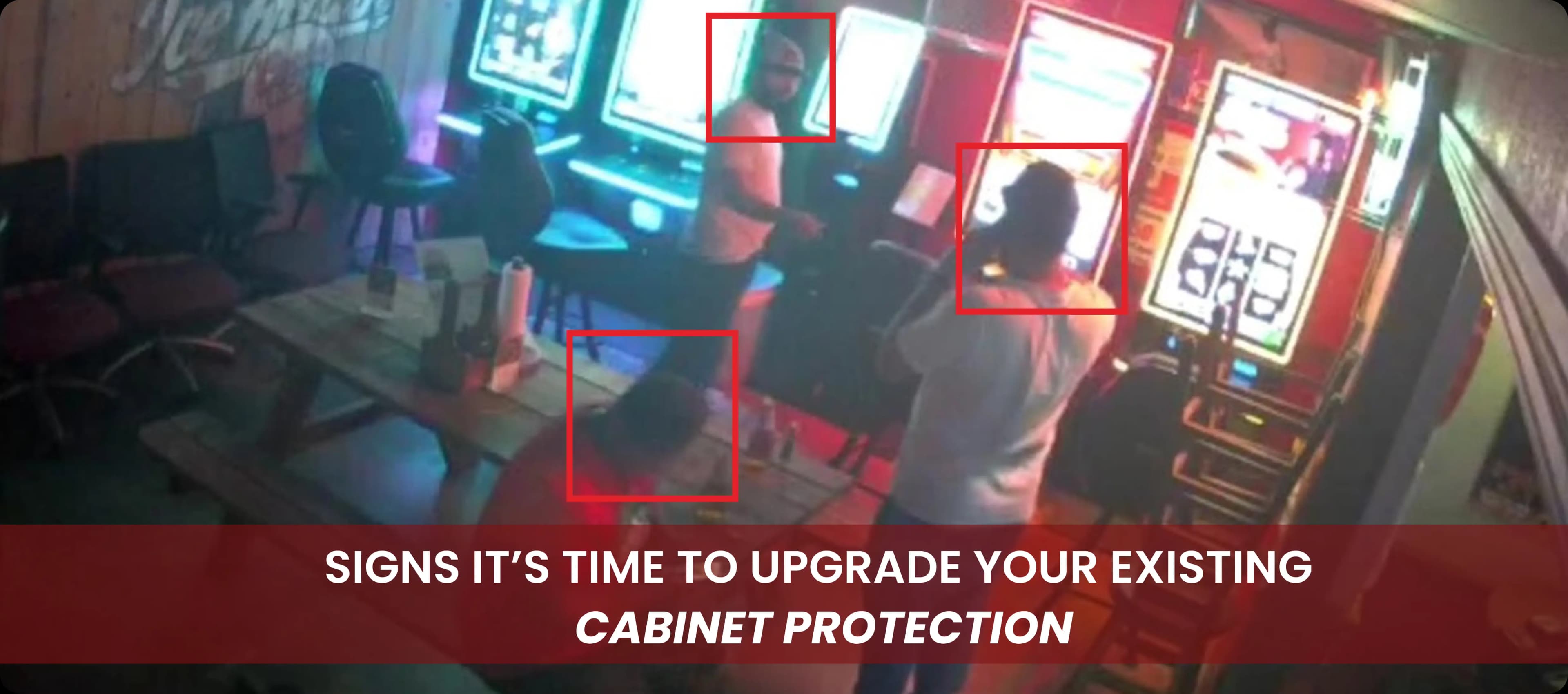
If your collections are consistently coming up short, but the locks are intact, and the cabinet looks untouched, you have a major security gap. This is the hallmark of employee theft prevention failures or "prosumer" thieves who have mastered bypassing basic mechanical locks.
Standard cabinet switches are often easy to shim or jump if the intruder knows the machine's layout. If your current protection doesn't offer a hardened, tamper-resistant enclosure and a unique digital access method, like the iButton technology used in the CG-1000, you are essentially leaving the keys in the ignition. An upgrade is required when your security can't distinguish between an authorized collector and someone with a duplicated master key.
2. Your Current Alarms Are "Nuisance" Devices
We’ve all seen it: a machine in a loud bar starts chirping for no reason, and the location owner "fixes" it by cutting the wires or pulling the power. If your existing amusement machine parts are prone to false triggers due to vibration or poor terminal connections, they are worse than useless; they are an active liability.
Modern upgrades focus on false alarm reduction. Moving to a system with spring cage terminals ensures that wires don't vibrate loose. Furthermore, a system that supports low-voltage security standards (12-24V AC/DC) means you aren't fighting power compatibility issues. If your techs are constantly taping up an old cabinet door sensor, it’s time for a dedicated controller.
3. Remote Location Security is Keeping You Up at Night
Relying on a cloud-based notification for remote location security is a common mistake. By the time a "door open" alert hits your phone in the middle of the night, the cash box is gone, and the cabinet is trashed.
The sign that you need an upgrade is the realization that local deterrence is king. You need a loud security alarm that reacts instantly with a high-decibel siren. Thieves don't want a spotlight; they want a quiet corner. If your current setup doesn't make it physically painful for a thief to stay inside the cabinet, your protection is purely symbolic.
4. Compliance and Legal Standards are Shifting
The landscape for route operators is changing rapidly. Whether it’s the specific requirements found in Pennsylvania skill game laws or the tightening of terminal standards in other states, regulators are looking for "hardened" machines.
A simple cabinet door alarm is no longer the baseline. Regulators and insurance providers are increasingly looking for terminal security that includes event-logging readiness and tamper-resistant housing. If your machines are still using the same basic components from years ago, you may find yourself on the wrong side of an inspection.
5. You’re Expanding into New Markets
As operators diversify into vending machine security or micro market security, they often realize their old security habits don't translate. A micro market kiosk or a high-end vending stack requires a higher level of protection than a jukebox.
The need for a battery backup alarm becomes critical when you can't guarantee 100% uptime of the location's power. Furthermore, the same high-standard protection needed for games is applicable across your entire business, serving as a medical cabinet security tool or even a tool chest alarm in your service vans. If your hardware can't adapt to these different environments, it’s a sign you’ve outgrown your current provider.
The Evolution of Route-Hardened Hardware
When these signs of failure appear on your route, the instinct is often to patch the problem with more of the same amusement machine parts that failed in the first place. But there is a fundamental difference between a generic door sensor and hardware built for the specific abuse of a high-traffic skill game route.
The CG-1000 was developed after 12 years of field experience to bridge the gap between "basic notification" and "active deterrence." By moving away from fragile connections and toward spring cage terminals and replacing easily duplicated keys with unique iButton access, we’ve addressed the vulnerabilities that thieves (and internal shrinkage) exploit. It’s a standalone, wired solution designed to eliminate the "nuisance" of false alarms while ensuring that when a door is forced, the response is immediate and undeniable. Still confused? Read how to choose the right cabinet security system for your route.
If your current security feels like a collection of "failed DIY fixes," it may be time to move toward a more professional, unified standard.
Review the CG-1000 technical specifications to see how it fits into your existing fleet, or reach out to the Cabinet Guard team to discuss your route's specific security needs.