How to Choose the Right Cabinet Security System for Your Route
Feb 13, 2026
Standard cam locks were built to slow someone down, not stop them. In the modern route business, spanning amusement games, vending machines, and skill-based terminals, a lock alone is a speed bump. If evaluating a cabinet security system stops at the keyhole, the review isn't finished yet.
For operators, the real question isn't whether to add protection. It's what actually holds up on a route where cabinets sit in gas stations, bars, and laundromats with different power setups and different amounts of foot traffic. We've consulted more than a dozen operators and technicians and tested more than a few prototypes to land on the specs that separate a genuine deterrent from a gadget that just adds a light.
TL;DR: The Cabinet Security System Checklist
- Power Range: Runs on 12–24V AC/DC so it fits most cabinets in a mixed fleet, not just one voltage.
- Real Deterrence: A 100+ dB audible alarm, not a quiet chime, loud enough to pressure someone into leaving.
- Reliable Wiring: Spring-cage terminals that hold up to daily route vibration better than screw posts.
- Simple Service Access: Keyfob or iButton entry that puts the unit into service mode without leaving the cabinet unprotected long-term.
- Backup Power: Battery backup that keeps the alarm armed if main power gets cut.
Power Versatility: Why 12–24V AC/DC Support Matters
Most off-the-shelf alarms are built for one voltage. Route operators manage a mixed fleet instead. A single route might carry a 12V skill game cabinet, a 24V vending machine, and an older amusement piece running AC components.
Carrying a different power adapter for every machine type is a logistical headache. When you're evaluating a system, confirm it actually supports the full 12–24V AC/DC range rather than one fixed voltage. That's what lets a route standardize on a single part instead of stocking three.
One Part, Not Five
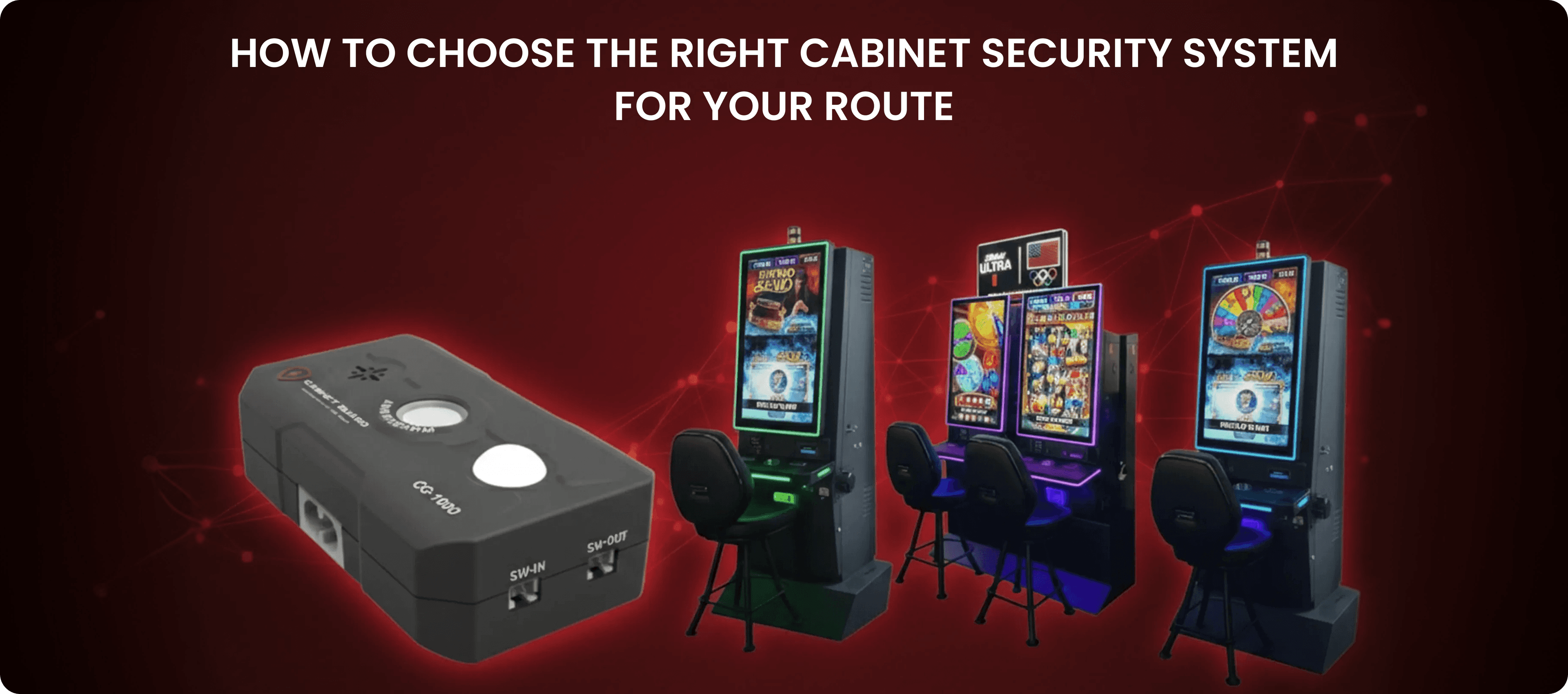
Standardizing on one wiring approach makes sense once a route runs more than a handful of cabinets. It cuts down what a technician has to carry, and it means every install follows the same SW-IN / SW-OUT wiring approach regardless of which machine they're standing in front of. Built for broad compatibility across most cabinet types, not a narrow list of specific models.
Real Deterrence: Why Presence Beats a Silent Alarm
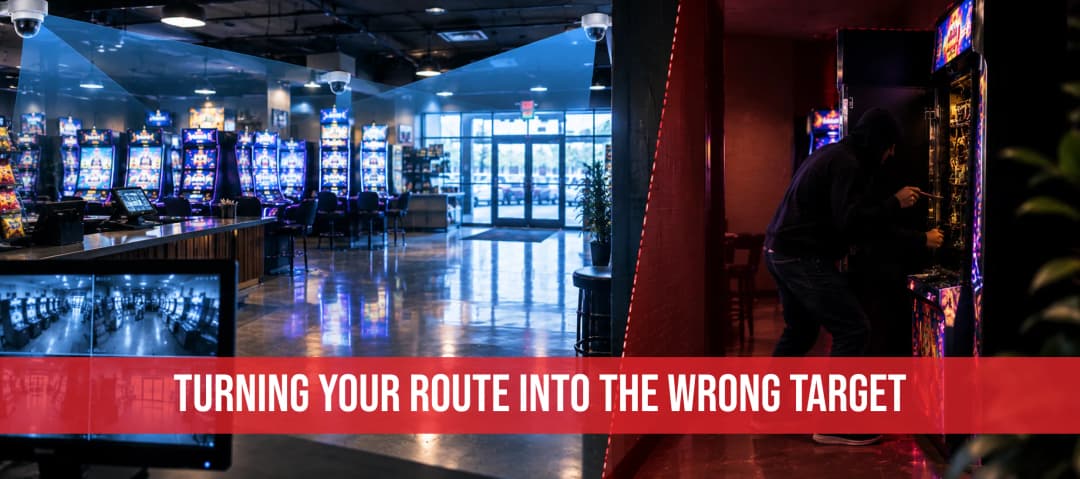
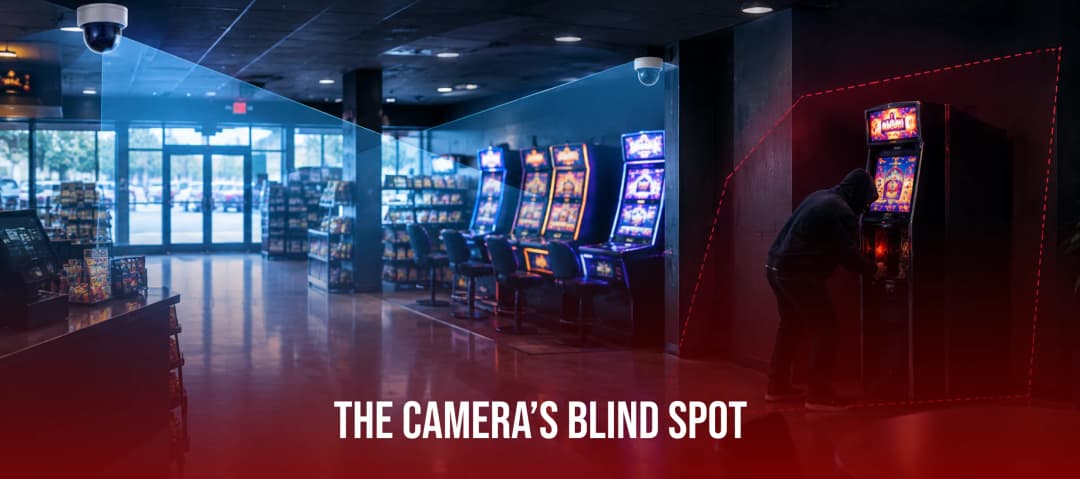
Some security systems lean entirely on cloud notifications sent to a phone. That's useful after the fact, for reconstructing what happened. It does nothing while someone's actually working a pry bar on the door right now.
The thing is, a notification thirty seconds after the door opens doesn't change what happens in those thirty seconds.
It doesn't.
Dr. Joseph Kuhns's UNC Charlotte survey of convicted burglars found that 83% check for an alarm before attempting a break-in, and 60% pick a different target if they expect to find one there.
It's not about being seen.
It's about whether the door makes noise the instant it opens, loud enough that anyone nearby knows something's wrong, and that's a very different design problem than adding a light to a cabinet nobody's looking at in the first place.
A real deterrent means 100+ dB of audible output, tuned to cut through jukebox noise or a busy convenience store, not a system built primarily around after-the-fact alerts, which is also part of why hardwired systems outperform wireless on responsiveness alone.
Reliable Wiring: Spring-Cage Terminals Over Screw Posts
Time is a route technician's most valuable resource. Traditional screw terminals loosen with vibration, especially on machines running cooling fans or coin-handling motors.
Look for spring-cage terminal blocks instead. These push-in connectors hold constant tension, giving a far more reliable connection than screw posts on a cabinet that vibrates all day. Designed to simplify installation and reduce unnecessary wiring complexity, not eliminate every tool from the job.
Service Access That Doesn't Get Bypassed
A security system is only as good as whether staff actually use it correctly. If service access is a hassle, technicians find workarounds, and a workaround defeats the whole point.
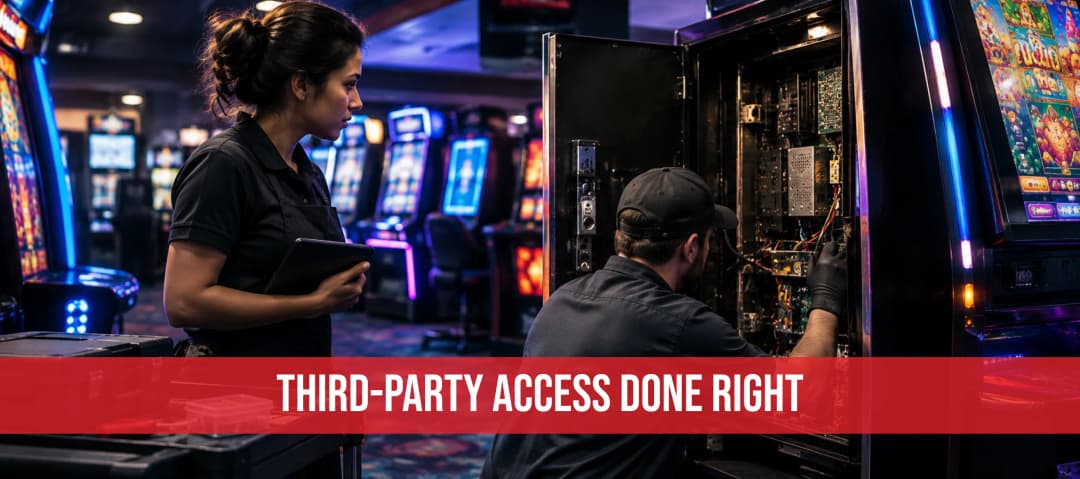
Authorized technician credentials manage service access on-site through a keyfob or iButton. A technician taps in, the unit drops into quiet mode for the service window, and it re-arms automatically once the door closes, so nobody has to remember to turn protection back on.
That single step, removing the "did someone forget to re-arm it" question, is worth more on a busy route than most operators expect going in.
Staying Armed Through Power Interruptions
A thief cutting power before touching a door is a real scenario, not a hypothetical one. If cabinet power is interrupted, internal backup power keeps the alarm system armed so unauthorized cabinet access can still trigger the alarm.
Cutting power on its own doesn't set off the siren. It only fires when the door contact opens without authorization. That distinction matters, and it's designed specifically to avoid unnecessary nuisance alarms during ordinary power interruptions, like a breaker flip during routine maintenance.
Where This Fits on a Route
A single successful machine break-in can cost operators $10,000+ when stolen cash, cabinet damage, downtime, and service response are combined. That number holds regardless of which type of cabinet gets hit, since the costs, the cash, the damage, the technician dispatch, and the days a machine sits dark stack up the same way across a mixed route.
Built for Mixed Routes
None of this changes much whether the cabinet in question is a vending machine in a break room or a skill game in a gas station. The standardization argument holds across a mixed fleet: one wiring approach, one service workflow, one part number to keep on the truck. That's the difference between operator-grade hardware and something assembled to hit a spec sheet.
Reviewing the full spec sheet before committing to a system across a whole route is worth the extra ten minutes.
If you're weighing this against what's currently on your cabinets, reach out with the specific machines you're running, and we'll walk through what actually fits.