How Cabinet Alarms Prevent Unauthorized Access in Skill Gaming Locations
Feb 9, 2026
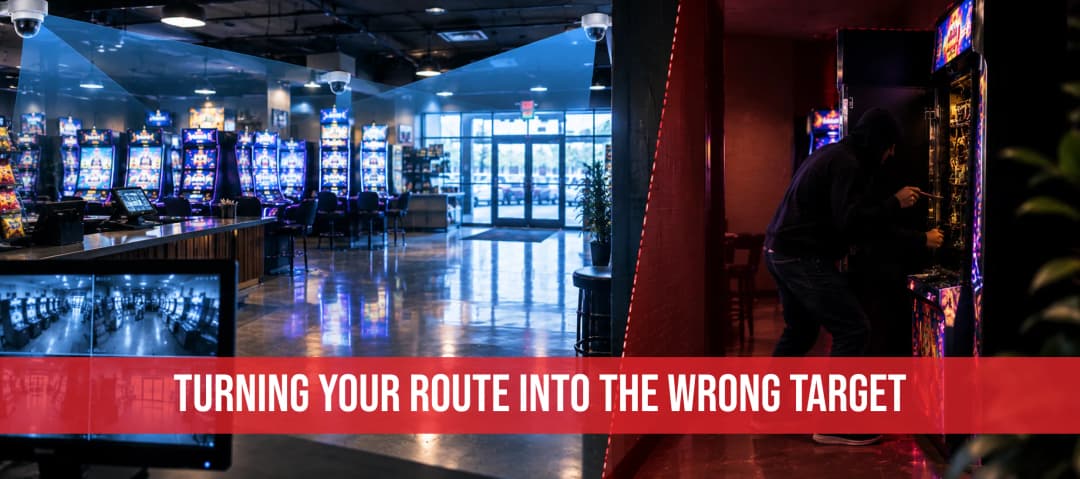
A route gaming cabinet in a busy location gets checked constantly, but usually only after something's already gone wrong. Most operators find out a door was pried open when the cash box is already empty, not before. A cabinet door tamper alarm changes that timeline. It fires the moment a door opens without a service call on the books, giving an operator a chance to react before the damage stacks up.
TL;DR: Cabinet Door Tamper Alarms for Route Gaming Security
- Trigger type: Fires from a door contact switch, not vibration or motion, the moment an unauthorized opening happens
- Response: A 100+ dB siren sounds immediately, no delay and no network connection needed
- Service access: A keyfob lets authorized technicians open the cabinet without setting off the alarm
- Power reliability: Built-in rechargeable backup power keeps the alarm armed even if cabinet power gets cut
- Fit: Works with SW-IN / SW-OUT wiring already in most route gaming cabinets
Why Unauthorized Cabinet Access Costs More Than the Cash
A cabinet door opening during a scheduled service stop is nothing.
The same door opening with no service call on the books is the thing worth paying attention to.
That's the door-contact trigger doing its job, not something an operator has to catch manually. And once it happens, the cash is usually the smallest number involved. Cash taken in a single incident often runs $2,000 or more.
Cabinet damage adds more before repairs even start; cut wiring, a pried door frame, a busted validator can push $1,000 or higher on its own. Then the machine goes dark. Downtime after a break-in typically runs 24 to 72-plus hours, and every hour offline is an hour it's not earning.
A single successful machine break-in can cost operators $10,000+ when stolen cash, cabinet damage, downtime, and service response are combined. Dispatch alone runs $150 to $250, and parts can run $400 to $2,000 depending on what got damaged.
The thing is, the venue relationship is the cost that never shows up on a repair invoice. A location partner watching a cabinet sit broken for three days starts wondering if there's a better operator for that spot.
How a Door Contact Alarm Stops Access Before It Escalates
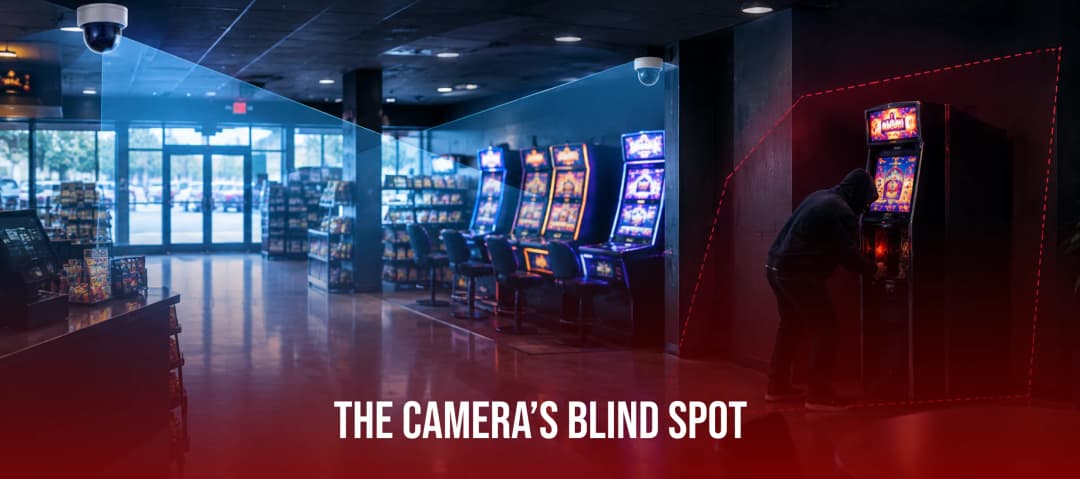
A locked cabinet door doesn't do much once someone's decided to open it anyway. Prying a standard cam lock takes a determined person a couple of minutes and basic tools.
The challenge isn't the lock.
It's whether the door makes noise when it shouldn't.
That's what changes the calculation for anyone deciding whether a cabinet is worth the risk. A door contact alarm doesn't wait to be checked. It fires the instant the door opens without an authorized key fob first, and a 100+ dB siren is hard to ignore on a gaming floor or in a busy bar.
Many thefts happen even when you are present, even during broad daylight. Presence alone isn't protection. A locks vs alarms comparison is worth reading if a route is still weighing whether an alarm is worth adding on top of the lock already installed.
Why Route Operators Standardize Security Across Every Cabinet
Operators running more than a handful of route gaming cabinets face a different problem than a single-location owner. Managing a route means keeping consistent security across high-traffic locations that don't get visited every day, often with more than one cabinet manufacturer represented on the same lineup.
Standardizing on one system just makes sense once a route passes a handful of machines. Technicians learn one wiring approach and one behavior to expect from every unit, instead of relearning a different setup at every stop. That reduces installation errors and keeps route checks faster.
What the CG-1000 Does Differently
The question isn't whether an alarm exists.
It's whether it's built for a route instead of a warehouse shelf.
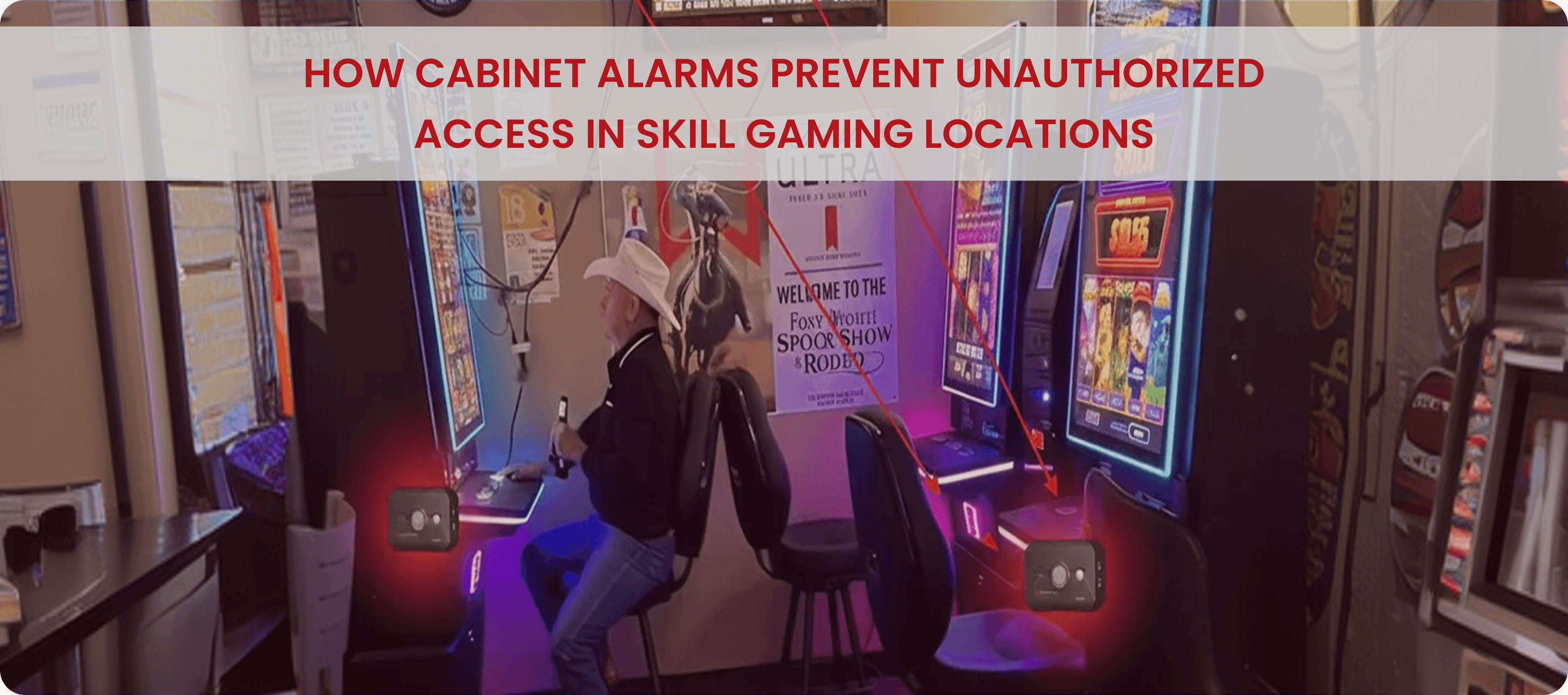
This is where Cabinet Guard's CG-1000 fits in. It's a wired, standalone cabinet door tamper alarm, built specifically for route-operated machines rather than adapted from a general security product.
Built for the Wiring Already in the Cabinet
The CG-1000 connects through SW-IN / SW-OUT wiring, using the door-switch circuit already inside most route gaming cabinets. Spring-cage terminals speed up the physical connection for installers working a full day of stops. Power comes from the cabinet's existing 12–24V AC/DC supply, so there's no separate adapter to source or maintain. Tamper switch wiring covers that connection in more depth if you're specifying a full install.
Service Access Without Setting Off the Siren
Authorized technician credentials manage service access on-site through a keyfob. A tech with a valid keyfob opens the cabinet without triggering the alarm, while an unauthorized opening fires it immediately. If cabinet power is interrupted, internal backup power keeps the alarm system armed so unauthorized access can still trigger it, cutting power first doesn't buy anyone a quiet way in. Service mode covers how that access works during scheduled maintenance specifically.
What to Check Before Choosing a Cabinet Door Tamper Alarm
Not every alarm on the market is built for how a gaming route actually operates. A few specifics are worth checking before taking a spec sheet at face value.
Wiring compatibility matters most. A system that needs custom harnesses for half a fleet ends up costing more in labor than it saves in hardware. Locks vs modern systems breaks down why locks alone stopped being enough for most operators.
Power reliability is next. An alarm that dies the moment someone cuts a machine's power isn't protecting anything after that point. It's just decoration until the battery runs out or gets bypassed.
Every gaming route has its own mix of cabinet ages and manufacturers, so it's worth checking compatibility before standardizing on one system route-wide. Our team can walk through what that looks like for a specific lineup.