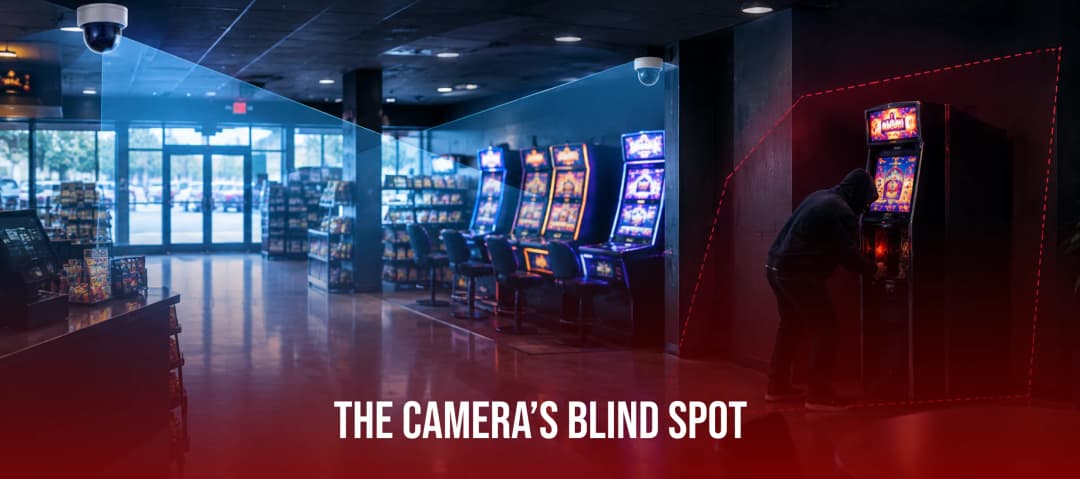
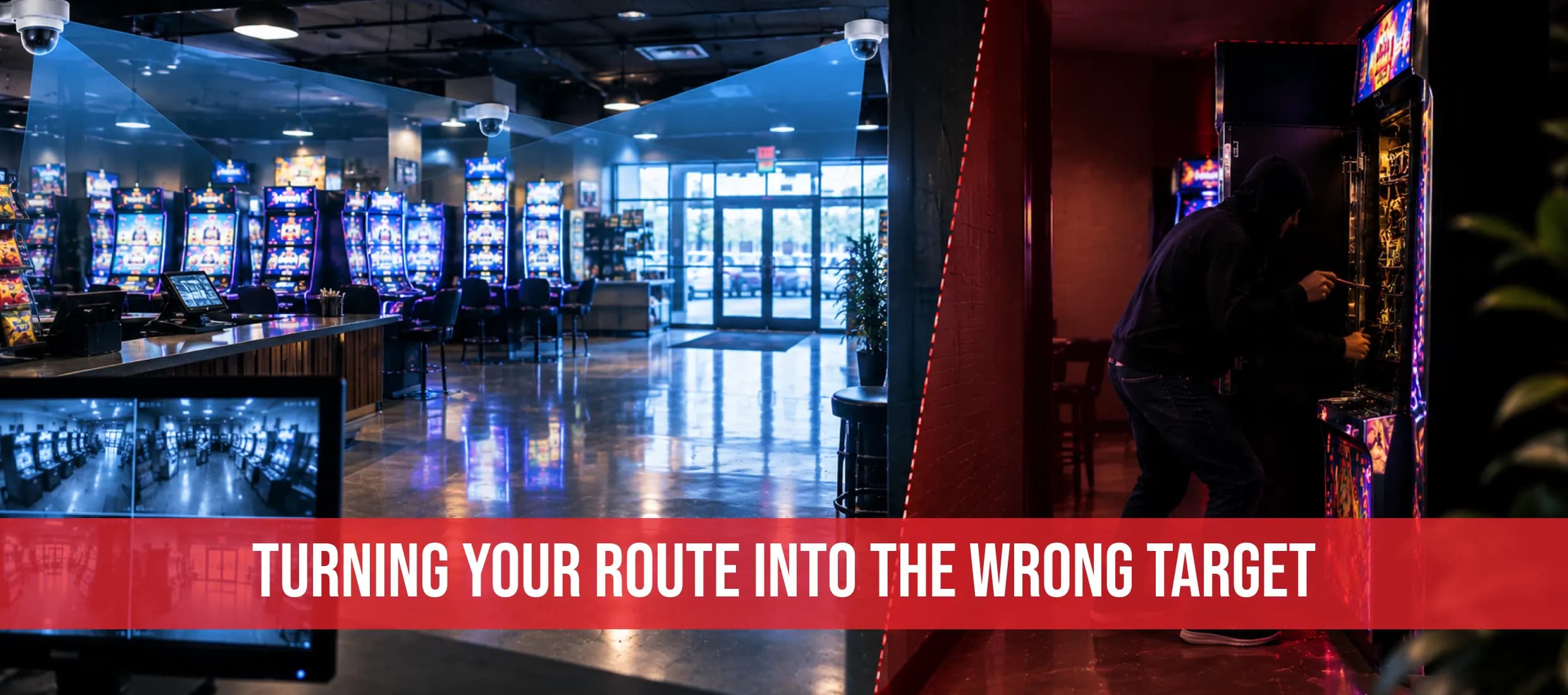
Turning Your Route Into the Wrong Target for a Repeat Attempt
Oct 7, 2026
A technician finds a pried door on a Tuesday route stop. Nothing major is missing, the lock still turns, and the location owner never called it in. It gets logged as a nuisance and forgotten. Three weeks later, the same door gets tried again, and this time the cash box is gone. What separates those two visits isn't the lock or the cabinet. It's whether that location ever stopped being the wrong target to try in the first place.
TL;DR: Why the Wrong Target Doesn't Stay That Way By Accident
- The First Try Is a Test: A quiet break-in with no response tells a thief the location is worth trying again.
- Repeat Targeting Is Real: A location that's been hit once without consequence is more likely to be hit again, not less.
- What Actually Changes the Odds: A thief who expects an alarm treats the same cabinet as the wrong target the next time.
- What Closes the Gap: A hardwired cabinet alarm gives a location a real answer the second time someone tries the door.
What a Quiet First Attempt Actually Tells a Thief
A forced door that doesn't trigger anything isn't neutral. It's a data point, and thieves use it the same way a route operator uses a collection report: to decide where to go next. If a lock gets worked and nothing happens, that location just moved up the list, not down it.
The thing is, most operators think about a break-in as a single event to clean up after. A thief thinks about it as one data point in a pattern across several stops. A quiet attempt on your cabinet answers a question for them: does this location respond, or doesn't it?
Why No Response Reads as a Green Light
If the door opens and nothing happens, either the alarm isn't there, or it isn't working. A thief who gets that answer once won't guess twice. That choice stays with them on the next visit. This is true even if no one knows a first attempt happened.
Why the Same Location Gets Tried Again
Repeat targeting isn't a special case. It's what happens by default when the first attempt costs nothing and confirms something. Treating a repeat theft as unlucky misses the actual mechanism: the thief already ran the test.
This ties back to a bigger mistake in how operators think about risk assessment generally. The wrong signal, like the time of day or how quiet the last visit was, ends up driving attention. Meanwhile, the one signal that really matters: whether the door made noise, never gets tracked at all.
Route Patterns a Thief Learns Faster Than an Operator Does
A thief working several locations a week builds a mental list of which doors respond and which don't, long before an operator connects the dots across a route. By the time a pattern appears in collection numbers, the thief has usually moved on. They are no longer testing. They are repeating what worked.
Becoming the Wrong Target: What Actually Changes the Calculation
None of this is about the lock getting stronger. A thief who expects a door to trigger an alarm isn't running the same math as one who expects silence. The presence of an alarm, not its appearance, is what shifts a cabinet from an easy repeat to the wrong target to try again. A location doesn't have to look any different. It just has to stop giving quiet answers.
This tracks with how deterrence works in general: a thief who's unsure whether a target will respond has less reason to test it a second time than one who already knows the answer. Route cabinets work the same way. A thief doesn't need proof an alarm exists, just enough uncertainty to make trying it again feel like a bad bet.
What Changes the Second Time a Door Gets Tried
A door-contact alarm doesn't make the cabinet stronger. It makes the second attempt something the thief can't test quietly. The CG-1000 wires directly into the door circuit using spring-cage terminals, which makes sense on a route where the same standard has to go into a dozen different cabinet styles without a custom setup for each one.
Once it's in, the door opening without authorization is what fires the 100+ dB siren, regardless of how carefully the lock was worked. That volume is the whole point: an alarm too quiet to notice doesn't change anything for a thief testing a door. A technician or collector still gets in and out on a scheduled stop using the keyfob, which puts the unit into service mode for the length of that visit. Outside of that, the door contact treats any opening as unauthorized.
If someone tries to kill power first, thinking that disables the system the way it might disable a camera, the optional battery backup keeps the alarm armed anyway. The workaround that worked on a quiet system doesn't work here. That's a small detail, but it's the one that actually closes the loop a repeat thief is counting on staying open.
Standardizing that setup across a route fixes more than one door. It removes the inconsistency a thief could otherwise use to figure out which stops on the route still respond and which ones don't. A lock alone stays passive no matter how many times it's tested. That's exactly why a quiet first attempt and a quiet second attempt look identical from the thief's side until something changes that.
What This Looks Like Across a Mixed Route
Most routes aren't one machine type. A stop with skill games might sit two doors down from one running VGTs or amusement machines, and the same repeat-targeting pattern shows up across route gaming cabinets regardless of what's actually inside the door. The mechanism doesn't care what game or unit is behind it. It cares whether the door responded last time.
Vending units aren't exempt from this either, even on a route where they're one piece of a larger, mixed setup rather than the main focus. A vending cabinet that's already been quietly opened once carries the same repeat risk as any other door on the stop. That is why theft prevention works best as part of a route-wide standard. It should not be a separate plan added just for one machine type.
What Repeat Targeting Doesn't Mean
This isn't about catching someone in the act or knowing who came back. The alarm doesn't identify a person or keep a record of past visits, and it doesn't need to. It only has to answer the same question whenever a door opens without authorization: yes or no, right now.
It's also not a night-shift problem. Many thefts happen even when you are present, even during broad daylight, and a quiet first attempt is just as likely to happen at 2pm during a normal shift as it is after close. Repeat targeting isn't about when the door gets tried. It's about what happened the last time it did.
Ready to see the full spec sheet before deciding what a route-wide rollout would actually look like? Review the CG-1000 specifications.