Cash Box Security: Why Most Cabinets Are Easier to Open Than You Think
Jun 24, 2026
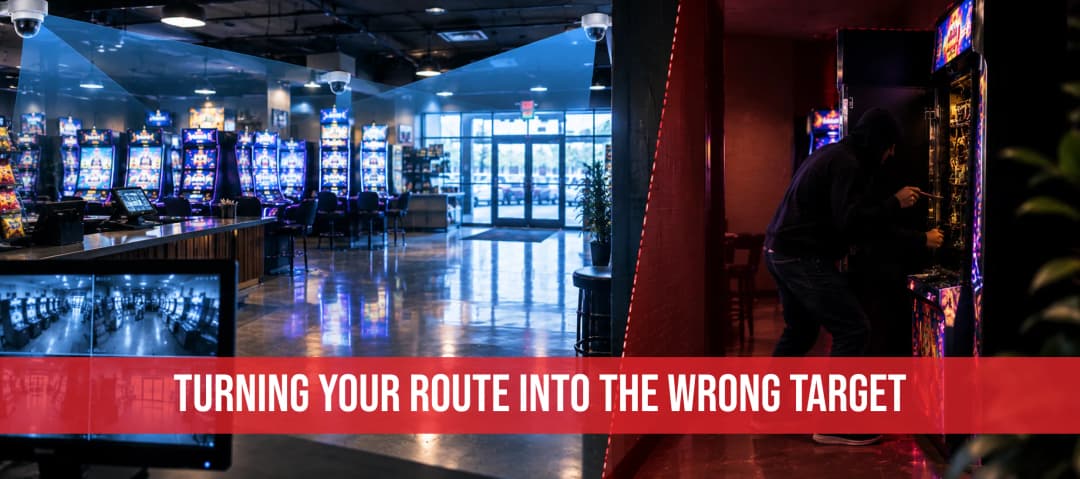
Every machine on your route holds cash in the same place. One compartment, one outer door, one access point between a thief and everything that unit has collected since your last visit.
That's what cash box security actually comes down to. Not the box itself. Not the hardware behind the door. The outer door is the line, and what happens when that door opens without authorization determines whether the cash is still there when you arrive.
Most operators have a lock on that door. Some have a quality one. Very few have anything that actually responds when that lock gets defeated.
TL;DR: Cash Box Security: What Every Route Operator Should Know
- Why These Machines Get Targeted: Cash concentrates in one predictable spot on every unit, one door is all that separates it from anyone willing to force it
- The Lock Problem: A standard lock makes entry harder but stays completely silent when defeated, that silence is the real vulnerability
- What the Losses Look Like: Forced entry means stolen cash plus cabinet damage, downtime, parts, and dispatch all stacking up at once
- What Changes It: An alarm wired to the door switch fires the instant that door opens without authorization, not after the cash is gone
- Route-Wide Thinking: High-cash machines aren't the only targets, consistent coverage across every stop is what actually closes the gap
Why the Cash Box Makes Every Cabinet Worth Targeting
Route operators sometimes think about security as a location problem. High-crime areas mean higher risk. Quieter spots mean lower risk. The thing is, people targeting route machines aren't always picking stops based on foot traffic or neighborhood. They're picking targets based on what's inside.
One Compartment, Predictable Across Every Machine
Skill games, vending units, ATM cabinets ,the cash sits in roughly the same place across all of them. A vending machine money box, a vending machine coin box, an ATM cash box or ATM cash cassette ,different names, same situation. One outer door controls access to all of it.
Anyone who has been inside one machine already knows where to look in the next one. That's not a flaw in your operation. It's a predictable pattern that comes with running a route at scale, and it puts the outer door at the center of every security decision you need to make.
The Risk Doesn't Follow Your Schedule
Thinking of cash box robbery as something that happens at 2am at an empty location leaves a lot of exposure uncovered. Many thefts happen even when you are present, even during broad daylight. A machine at a busy convenience store isn't automatically protected by the foot traffic around it. The outer door is still the only thing separating the cash from whoever is working on it, regardless of when or where that attempt happens.
Those tamper events that go unnoticed between collections are often the ones that cost the most ,by the time they're discovered, the full loss has already accumulated.
What a Standard Lock Actually Does
A quality lock makes forced entry harder. That's worth acknowledging. A solid lock filters out opportunistic attempts and slows down someone who isn't committed to the effort. The comparison between cabinet locks and alarms isn't about whether locks have value ,it's about what a lock can't do on its own.
The Silence Problem
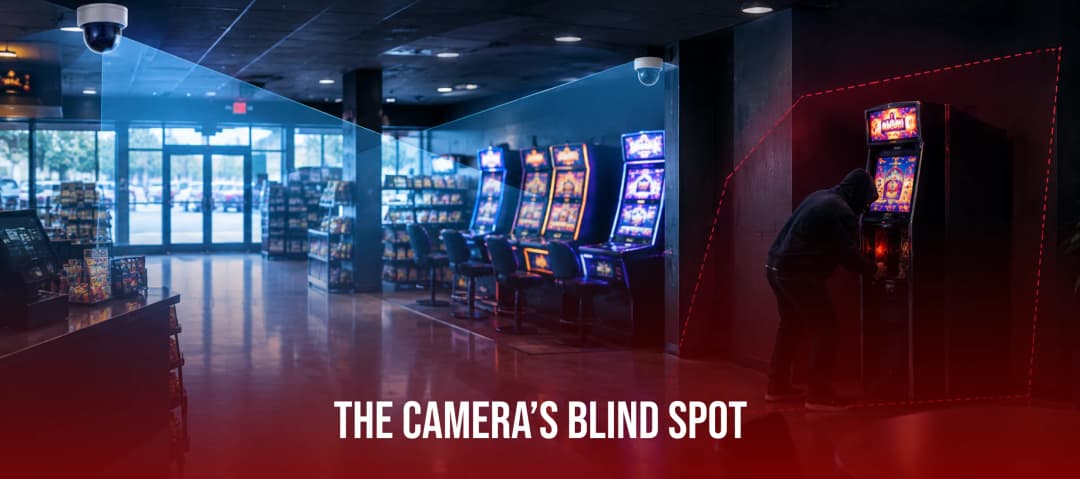
When a lock gets defeated, nothing happens. No signal, no sound, no alert. The cabinet doesn't know the door was forced. You don't know. Nobody at the location knows unless someone is standing there watching it happen. The thief gets however long they need to work the door, get inside, collect the cash, and leave.
That silence is the real gap. Not the lock grade, not the door construction. The absence of any response at the moment the lock stops doing its job. A better lock delays that moment. It doesn't change what happens after it arrives.
This is worth sitting with, because it changes how you think about the whole problem. A lock is a passive barrier. It does its work right up until it doesn't, and at the point it fails, it has nothing left to give. That's a category of problem a lock can't solve, regardless of how good the lock is.
What Passive Protection Still Covers
None of this is an argument for removing locks from the conversation about vending machine theft prevention. A solid lock handles low-effort attempts well. Most opportunistic attacks don't get past a properly maintained door. That value is real.
The gap shows up when someone is willing to put in the time and come with the right tools. At that point, all that's left protecting the cash is silence. And silence is not a security layer ,it's what cheap sensor setups rely on when they fail at the moment they're actually needed.
What the Event Actually Costs
The cash taken is the number that's easiest to focus on. It's rarely the biggest number.
Cabinet damage from a forced entry runs $1,000 or more depending on how the door was attacked and what broke in the process. Downtime while parts get sourced and a technician gets dispatched runs 24 to 72+ hours. Dispatch costs $150 to $250. Parts run $400 to $2,000 depending on what failed. Then there's the stolen cash sitting on top of all of that.
The Talius Annual Commercial Break-In Protection Report 2026 puts average commercial break-in losses at $3,000 to $8,000 per incident in combined costs. For route operators specifically, a single successful machine break-in can cost operators $10,000+ when stolen cash, cabinet damage, downtime, and service response are combined. Why stolen currency alone is rarely the full story is something most operators only fully understand after the first event hits their route.
One incident at one machine on a route running dozens of units makes that number land differently. This is a specific loss tied to a specific door that had nothing wired to it when it mattered.
What Actually Protects a Cash Box
The answer isn't a better lock. A stronger lock is harder to defeat, but it's passive ,it doesn't do anything when someone starts working on it. It just takes longer to beat.
The Trigger Point That Matters
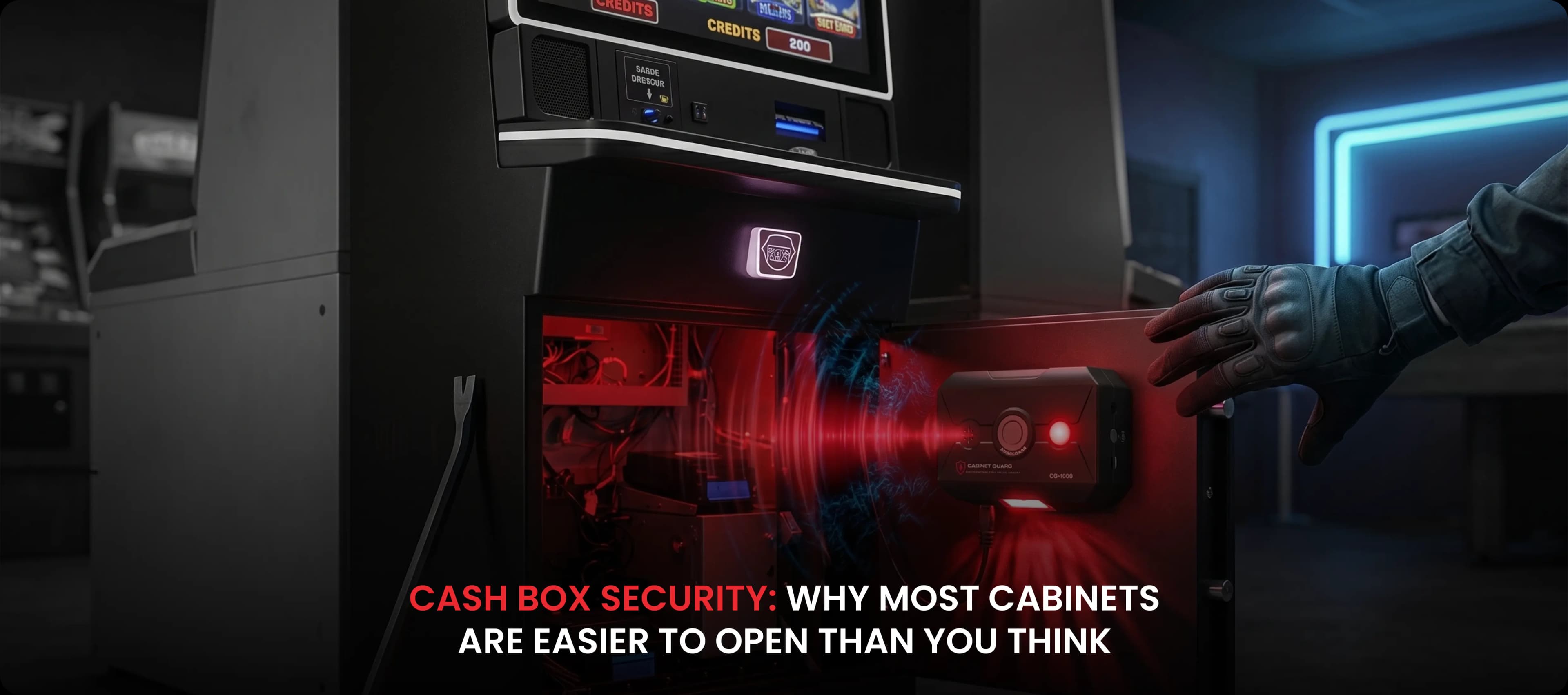
The cash compartment has a door. That door has a contact point. Wire a door-contact alarm to that access point and you have something that responds the moment the compartment opens, not after the cash is gone, not after the door frame is bent.
That's what makes sense here: the alarm doesn't care how the outer door was opened. Whether a legitimate technician used a keyfob or someone forced the cabinet, when the compartment opens without authorization, it fires. A 100+ dB siren at the exact trigger point where the value is, not somewhere across the room at the outer shell.
The CG-1000 wires to that trigger point through its SW-IN / SW-OUT interface. It uses spring-cage terminals that connect cleanly without specialty tools. It runs on 12-24V AC/DC from the machine's existing supply. Built-in rechargeable backup power stays active even if the primary supply gets cut. Operators use a keyfob to manage service access on-site, so a technician collecting cash doesn't trigger the siren during a legitimate visit.
Why the Alarm Has to Be at That Level
An outer door alarm still has value. But it answers a different question than what the CG-1000 addresses.
The outer door alarm tells you the cabinet was opened. The CG-1000 fires when that opening happens without authorization. Those aren't separate events ,the outer door is the access point, and operator-grade alarm protection means that door triggers an immediate, loud response the moment it opens without a keyfob. Anyone who gets past a passive lock operates in a dead zone if nothing is monitoring that door. The CG-1000 closes that dead zone.
Secure Cash Box Coverage Across Your Route
Starting with the highest-cash machines when rolling out alarm coverage makes sense as a first step. Stopping there is where most routes end up with an incomplete picture.
Machines that haven't been targeted aren't necessarily safer. A vending machine cash box at a stop with a longer service cycle may be holding more cash than expected by the time you reach it. An ATM cash cassette at a quieter location doesn't attract less attention than one at a busier stop. Any machine that hasn't had an incident yet is just one that hasn't been hit yet.
The ATM cash box and cassette vulnerability isn't different in kind from what affects vending or gaming units. One outer door, all the cash behind it, one alarm trigger that either exists or doesn't.
Route-wide vending machine theft prevention means the same response fires at every stop, regardless of location, cash volume, or how long a machine has been sitting without a problem. Consistent coverage across the full route is what actually closes the gap ,not picking the machines you think are at risk and hoping the rest stay quiet.
If you have questions about wiring alarm coverage into your existing cabinet setup ,whether that's one unit or a full route ,the contact page is the right place to start. Reach out with your setup and we can go from there.