What Actually Happens When a Skill Game Machine Gets Broken Into
Jul 8, 2026
The call comes in at 11 in the morning. Not an alarm. Not a notification. A convenience store manager calling because a customer mentioned the door on one of the skill game units looked off. Slightly open. Nothing obviously broken.
The operator drives out expecting a latch issue. He opens the machine, and the stacker is gone. Pry marks on the door frame. The bill acceptor mounting is cracked at the base. The collection is short by more than two thousand dollars. Based on where the cash should have been, the theft happened sometime in the last 48 hours.
Nobody called when it happened. There was no signal. The machine sat there running while customers played through the weekend.
Theft targeting skill game cabinet doesn't usually announce itself. That's the first thing most operators learn the wrong way.
TL;DR: What Skill Game Operators Need to Know About Cabinet Break-Ins
- Who gets targeted: Skill game and gaming terminals in convenience stores and gas stations, high cash density between collections, limited dedicated supervision
- How fast it happens: Commercial break-ins average under four minutes; cabinet-specific hits often run faster
- What they go for: The cash stacker and bill acceptor, the two components most accessible once the door is forced
- When it happens: Many thefts occur during open hours, with staff and customers present
- The discovery problem: Most operators find out hours or days after the event, not in the moment
- What determines the outcome: Whether the cabinet responded when the door opened, not what the operator does when they arrive.
Why Convenience Store and Gas Station Locations Get Targeted
The Cash Density Problem
A skill game cabinet running well in a busy convenience store or truck stop accumulates skill game cash fast between collection runs. That's the point. But that also means a cabinet that hasn't been serviced in three days holds significantly more than one collected daily. Thieves who work this type of target understand collection schedules, sometimes better than operators realize.
The math isn't complicated from their side. High foot traffic means high cash volume. Predictable service windows mean predictable opportunities. Gas station gaming and convenience store locations are attractive precisely because they run hot and get serviced on a routine that's easy to observe.
A good operator tracks collection frequency carefully for revenue reasons. The same interval that tells you how much a machine earns also tells a thief how much it's holding.
The Supervision Gap
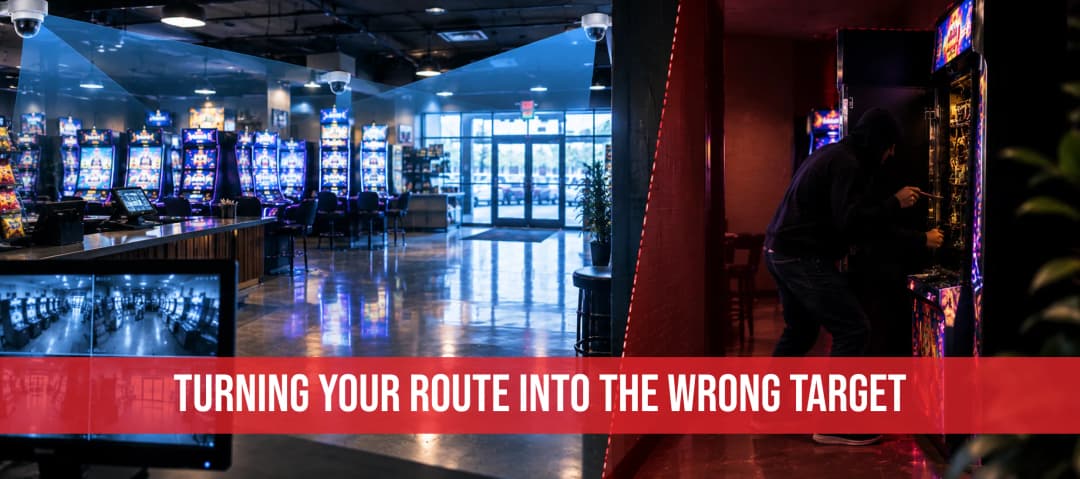
A convenience store cashier has a job. That job is running transactions, managing inventory, handling customers. Watching the gaming area isn't part of it. At a gas station machine location, there's often one person working the counter and the forecourt simultaneously. Three or four skill game units against the far wall might as well be in a different building in terms of active visibility.
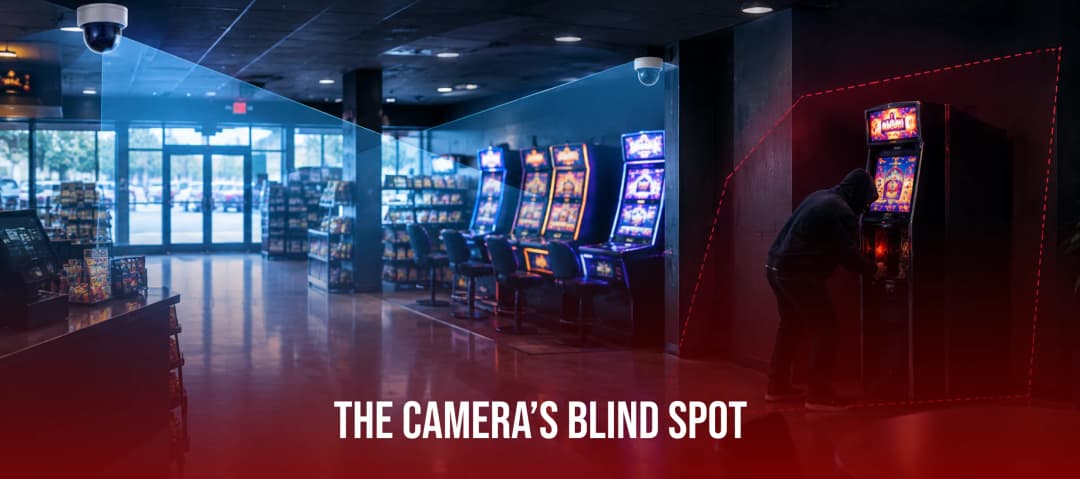
These aren't failures of management. They're just how these locations operate. Anyone who's spent time in convenience store and gas station environments understands the layout. A thief who's done one walkthrough knows exactly where the blind spots are.
The thing is, operators sometimes assume a busy location is a protected one. Foot traffic doesn't equal eyes on the machine. It just means more witnesses who weren't watching.
What the Break-In Sequence Actually Looks Like
The Entry
Most skill game cabinet break-ins don't involve complex tools or planning. A pry bar against the door frame is the most common method. The door on most cabinets is designed to be opened efficiently by technicians during service, not to resist sustained physical force applied from the frame side.
What that means in practice: the frame bends before the lock gives. Force applied at the right point on the door edge creates a workable gap in under a minute. The lock cylinder often stays intact. The frame around it doesn't.
This is why locks fall short when the force isn't applied to the lock itself. It's a different problem than what a lock cylinder is designed to solve. Recognizing that distinction is what changes how operators think about door break-in prevention.
What Thieves Actually Target
Once inside, the focus is narrow. The cash stacker and the bill acceptor are the primary targets. Both are accessible near the door. Both contain or have recently contained cash machine theft value. A thief who knows the cabinet layout can locate and remove the stacker in under 90 seconds.
The machine itself isn't the target. The wiring, the display, the logic board, none of that matters to someone moving fast. Damage to those components happens as a byproduct of speed, not intent. A stacker yanked hard snags the wire harness. A bill acceptor forced from its mount cracks the bracket. The theft is clean in concept and messy in execution.
Cheap sensor failures in the bill acceptor area are also worth checking after any forced entry event, since the mounting stress from a break-in can introduce intermittent faults that don't show up until weeks later.
The Timing
Here's where a lot of operators get the mental model wrong. Many thefts happen even when you are present, even during broad daylight. A crowded convenience store at 10am is not protection. According to the Talius Annual Commercial Break-In Protection Report 2026, the average commercial break-in takes under four minutes. Cabinet-specific hits frequently run shorter than that.
A busy location reduces risk but doesn't eliminate it. Someone who's identified the machine position and picked the right 90-second window in a high-traffic environment can complete the entire event before the cashier has finished the transaction they're handling.
Gas station theft targeting gaming machines follows the same pattern. Forecourt noise, customer movement, general distraction, all of it works in the thief's favor, not the operator's.
What Operators Actually Find When They Arrive
The Scene
Pry marks on the door frame, usually concentrated at the latch side. A stacker that's either gone or partially ripped from its mounting. Wiring near the door that got snagged during the exit, sometimes pulled clean from the connector, sometimes just stressed. Occasionally the door is still open. More often it's been pushed mostly shut, which means nothing looks obviously wrong from across the room.
That last part matters. A cabinet with the door pushed shut can power on normally. The display works. The machine accepts play. The first clear signal is a collection that doesn't match the meter, which the operator only sees at the next scheduled stop.
The Discovery Gap
This is where the real machine risk assessment problem lives. Not the theft event itself. The time between when it happened and when anyone knew.
Two days of a machine running with nothing in the stacker. A week before a technician makes the scheduled service call. The discovery gap is where the full cost compounds. Every hour after a break-in that goes undetected adds lost revenue on top of the theft itself.
Route risk assessment that doesn't account for detection speed is incomplete. Knowing a location has a problem is only useful if you find out fast enough to respond. After a break-in, the service call is already reactive. The question is how many days of damage you're absorbing before that call gets made.
What's Actually Damaged
Forcing a cabinet door puts stress on the frame, hinges, and mounting hardware around the lock housing. If the thief had to work for the entry, the bill acceptor mounting takes secondary damage from the door flexing. Wire harnesses near the door edge get caught.
A clean hit costs the stacker contents and possibly the acceptor. A rough one costs the stacker, the acceptor, a wire harness, and sometimes the door assembly. A single successful machine break-in can cost operators $10,000+ when stolen cash, cabinet damage, downtime, and service response are combined.
Why the Response Window Is Everything
The First Thirty Seconds
A thief who meets resistance the moment the door opens almost always abandons the attempt. Not because they can't continue. Because the risk calculation changed the second a loud alarm fired.
University of North Carolina at Charlotte research surveying 422 convicted burglars found that 83% check for an alarm before attempting a break-in, and 60% say finding one would cause them to choose a different target entirely. Faster incident response starts with a cabinet that doesn't wait for someone to notice something is wrong. It starts with the machine itself responding.
The machine that makes noise immediately is not the machine that gets cleaned out.
What Locks Actually Do
A lock slows entry. It doesn't end an attempt. A pry bar doesn't need the lock to fail cleanly, it needs the door frame to flex enough to create a gap. That's a different problem than what a lock cylinder solves.
This makes sense when you think about where the force actually goes during a pry attack. It goes into the frame, not the lock mechanism. The lock can stay completely intact while the door is forced open around it. Understanding that is what changes how operators evaluate what "secure" actually means for a gaming cabinet in a convenience store setting.
What Changes When the Cabinet Responds
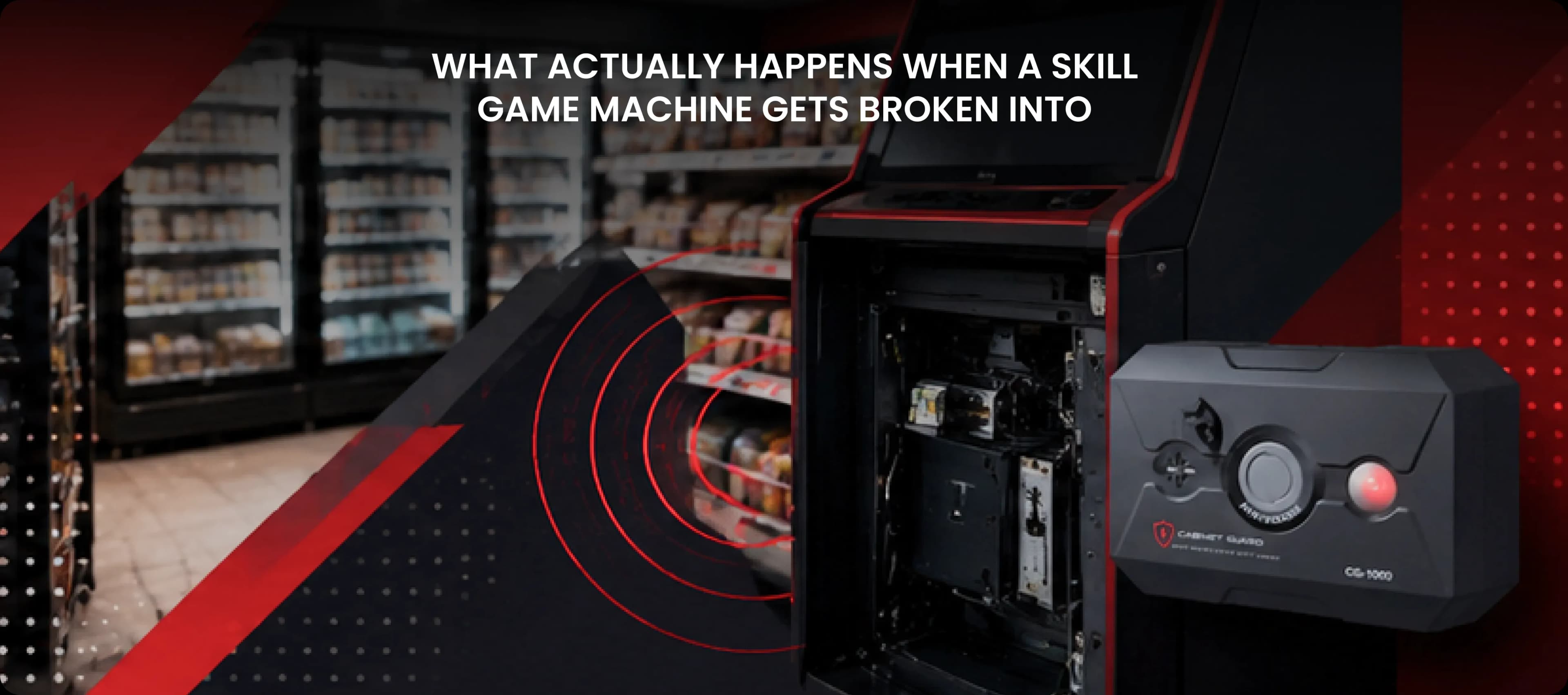
A machine security system built around a 100+ dB siren that fires the moment a door contact opens does something a lock never can. It puts the thief on a clock they didn't plan for. In a convenience store, that sound carries to the counter and to the parking lot. At a gas station, it's audible from the forecourt.
Why volume matters in this environment isn't about annoyance. It's about changing the thief's decision in the first few seconds of an attempt. Research consistently shows that the presence of an alarm changes target selection before the break-in begins. A cabinet with a hardwired door alarm that fires immediately isn't just harder to rob. It's more likely to be skipped entirely.
The CG-1000 uses a door-contact circuit, not a vibration sensor or motion detector. The alarm fires when the door physically opens. No false triggers from machine operation. No nuisance alarms from foot traffic nearby. Just an immediate response to the one thing that matters, which makes gaming response time a function of hardware design rather than how fast an operator can return a phone call.
If you want to understand what the numbers look like after a break-in, this full cost breakdown covers everything operators absorb beyond what was in the stacker, from frame repair to emergency dispatch to location trust.