How to Reduce Emergency Service Calls from Cabinet Break-Ins
Mar 23, 2026
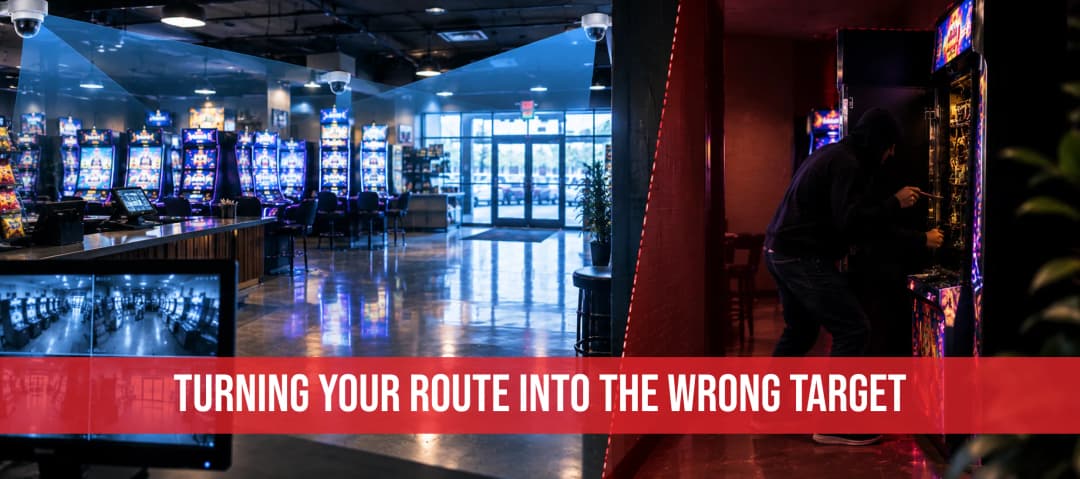
For a route operator, the sound of a phone ringing at 2:00 AM is rarely good news. Usually, it means a skill game cabinet has been pried open, a bill validator is gone, or a machine is sitting dead on a retail floor. But the real sting isn't just the stolen cash, it’s the emergency service calls that follow. Between the technician’s labor, fuel, and the revenue lost while the machine is "Out of Order," a single breach can wipe out a month of location profitability.
To reduce emergency service calls and improve equipment reliability, operators are moving away from reactive repairs and toward a physical security infrastructure that stops the damage before the "truck roll" even begins.
TL;DR: The Proactive Security Standard
- The Problem: Traditional locks don't stop prying; they only slow it down, leading to high vandalism repair costs.
- The Solution: Standardize routes with a hardwired alarm system like the Cabinet Guard CG-1000.
- The Result: Instant 100+dB deterrence stops thieves before the door is destroyed, significantly reducing machine downtime cost and unnecessary technician dispatches.
The Hidden Math of a Cabinet Breach
When we talk about route profitability analysis, most operators focus on the "hold." However, the "leak" is often found in the service department. Let’s look at a simple operator scenario:
In a typical skill-game route, a mid-level breach involves more than just a broken lock. It's helpful to realize that stolen currency is often the least of your problems; the structural damage and logistical nightmare cost far more. Consider the overhead of a single "reactive" service event:
- Emergency Technician Dispatch: $150–$250 (after-hours rates).
- Replacement Cabinet Doors/Parts: $400–$2000, depending on the model.
- Machine Downtime Cost: 48 hours of $0 revenue while waiting for parts.
- Operational Friction: Rescheduling a week’s worth of routine maintenance to handle one emergency.
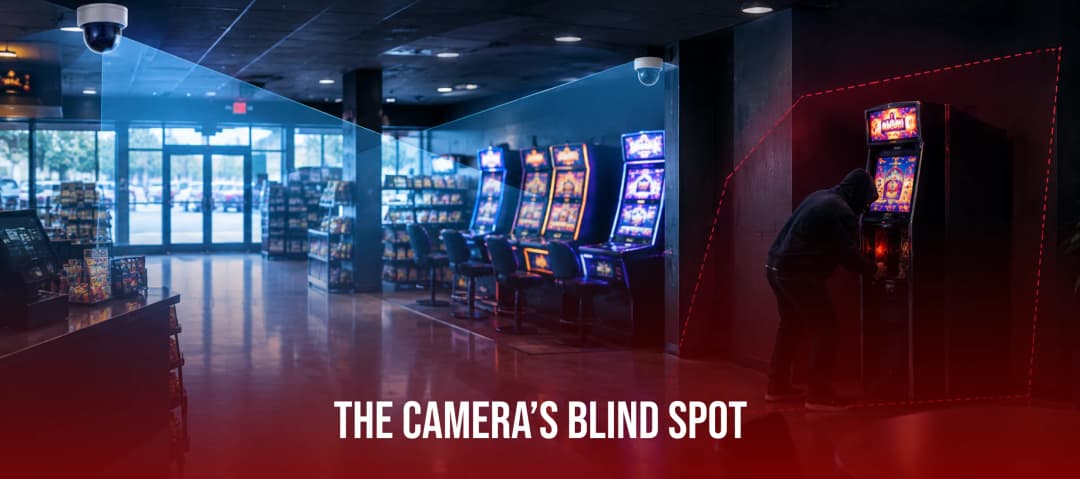
By implementing a theft deterrent system that triggers the moment a door is tampered with, you change the math. A 100+dB siren and strobe light don't just alert the intruder; they force them to flee before the cabinet frame is bent or the wiring is cut. Understanding the true cost of machine downtime is the first step in protecting your route revenue.
Hardening the Route: A 3-Step Physical Security Standard
To truly reduce truck rolls, security cannot be an afterthought or a "DIY" fix of magnetic sensors and tape. It requires a professional anti-tampering device strategy.
1. Establish a Technical Security Standard
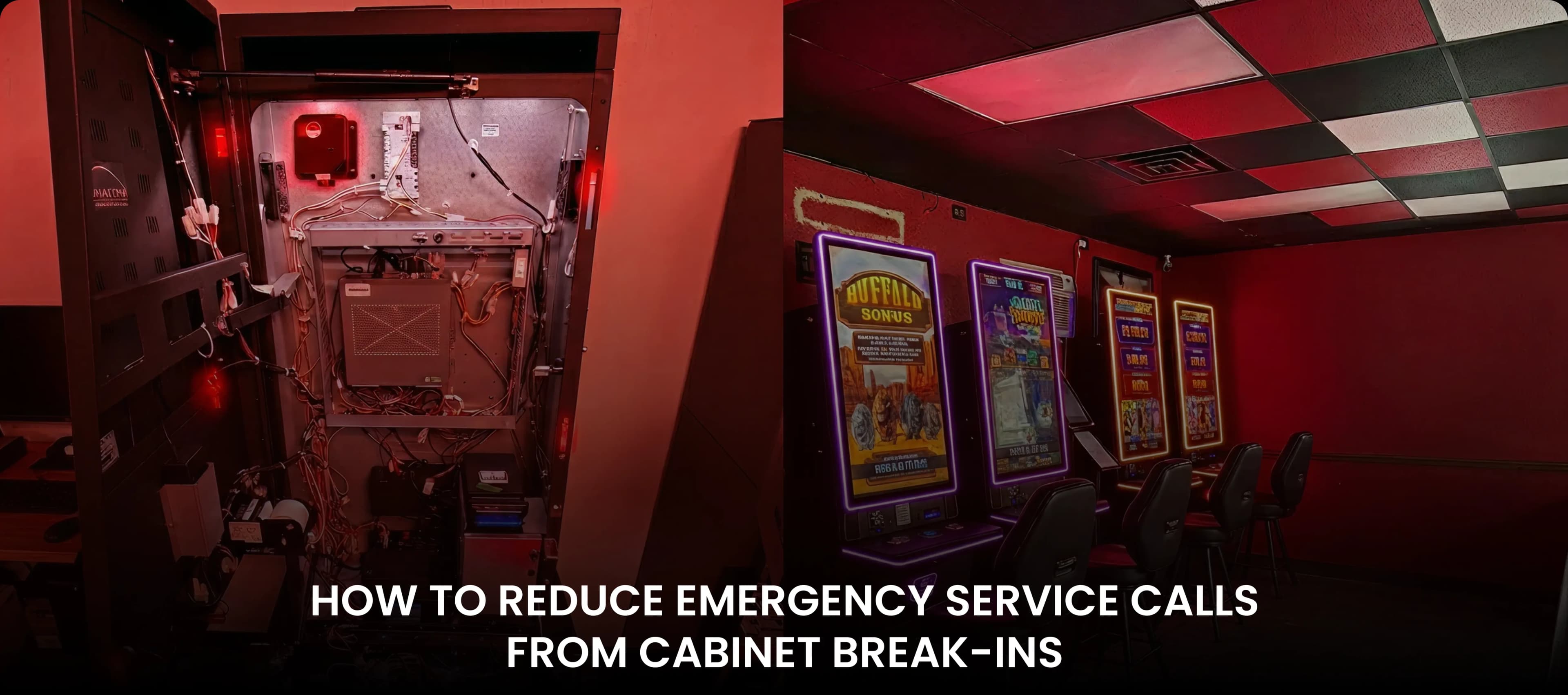
A mixed fleet: skill games, arcades, and vending, often suffers from "spaghetti wiring." Reliable vending machine security requires a hardwired alarm that supports 12–24V AC/DC power. This allows you to choose a scalable protection system that you can standardize across every machine in your warehouse.
2. Eliminate "Nuisance Alarms"
One of the biggest drivers of unnecessary service calls is the false alarm. Cheap, wireless sensors fail due to cellular interference or low batteries, and the real cost of bad security quickly adds up in wasted fuel and labor. A professional cabinet tamper alarm uses spring cage terminals (like the SW-IN / SW-OUT on the CG-1000) to ensure a vibration-proof, permanent connection.
3. Implement Managed Access Control
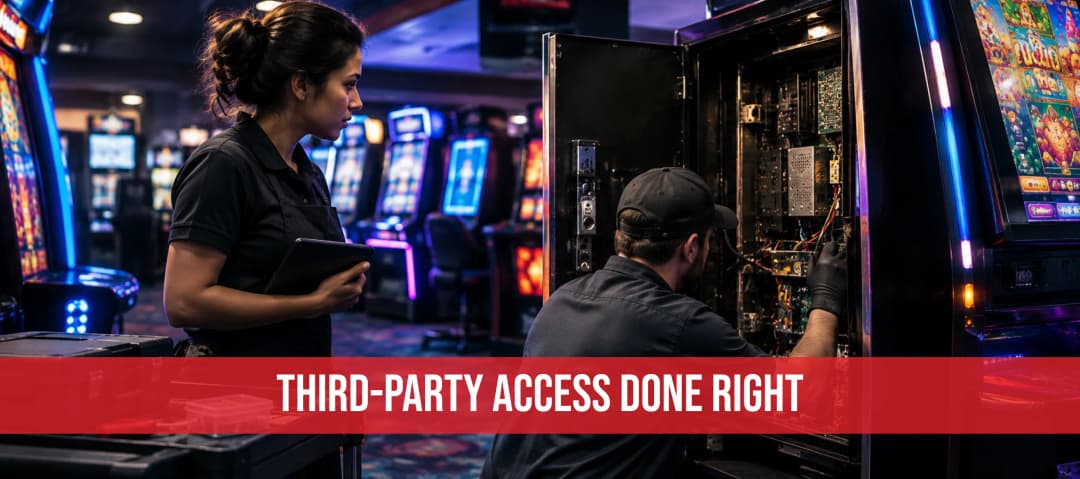
Internal shrinkage is a reality of the route business. Traditional keys are easily duplicated, which is why mechanical locks often fail to stop tampering. Moving to iButton access control allows you to track who opened a cabinet and when. The CG-1000 features a dedicated service mode that allows authorized collectors to bypass the alarm without user error, reducing the risk of service calls.
Why "Wired" Beats "Wireless" for Field Reliability
In the world of asset protection systems, there is a push toward IoT and "Cloud" alerts. For a street operator, this is often a trap. DIY cabinet alarms frequently fail in the field because they aren't built for the electrical noise of a gaming floor.
- Signal Jamming: Thieves are increasingly using localized jammers to kill WiFi and cellular alerts.
- Infrastructure Costs: WiFi-based machine access control requires a stable internet connection, something many retail spots can't provide.
- Maintenance: Changing batteries on 50 wireless door sensors is a logistical nightmare.
A decentralized security model, where the alarm is self-contained and hardwired, is the only way to ensure 100% uptime. If you are noticing warning signs that your security is outdated, a wired transition is the most reliable move you can make.
The Operational ROI of Cabinet Guard CG-1000
The Cabinet Guard CG-1000 was built by operators who were tired of field failures. It was designed as an active defense solution specifically for the skill game and amusement industry. By providing voltage spike protection and a deafening 100dB alert, it stops the breach in seconds.
Investing in a no-nonsense security solution means you aren't just buying an alarm; you are buying the ability to keep your trucks in the shop and your games on the floor. When the cabinet can defend itself, the "emergency" vanishes, and your route becomes a predictable, profitable machine again.
If you’re ready to stop the cycle of emergency repairs and start protecting your bottom line, see how the CG-1000 can standardize your route security.
Talk to the Cabinet Guard team about the CG-1000.