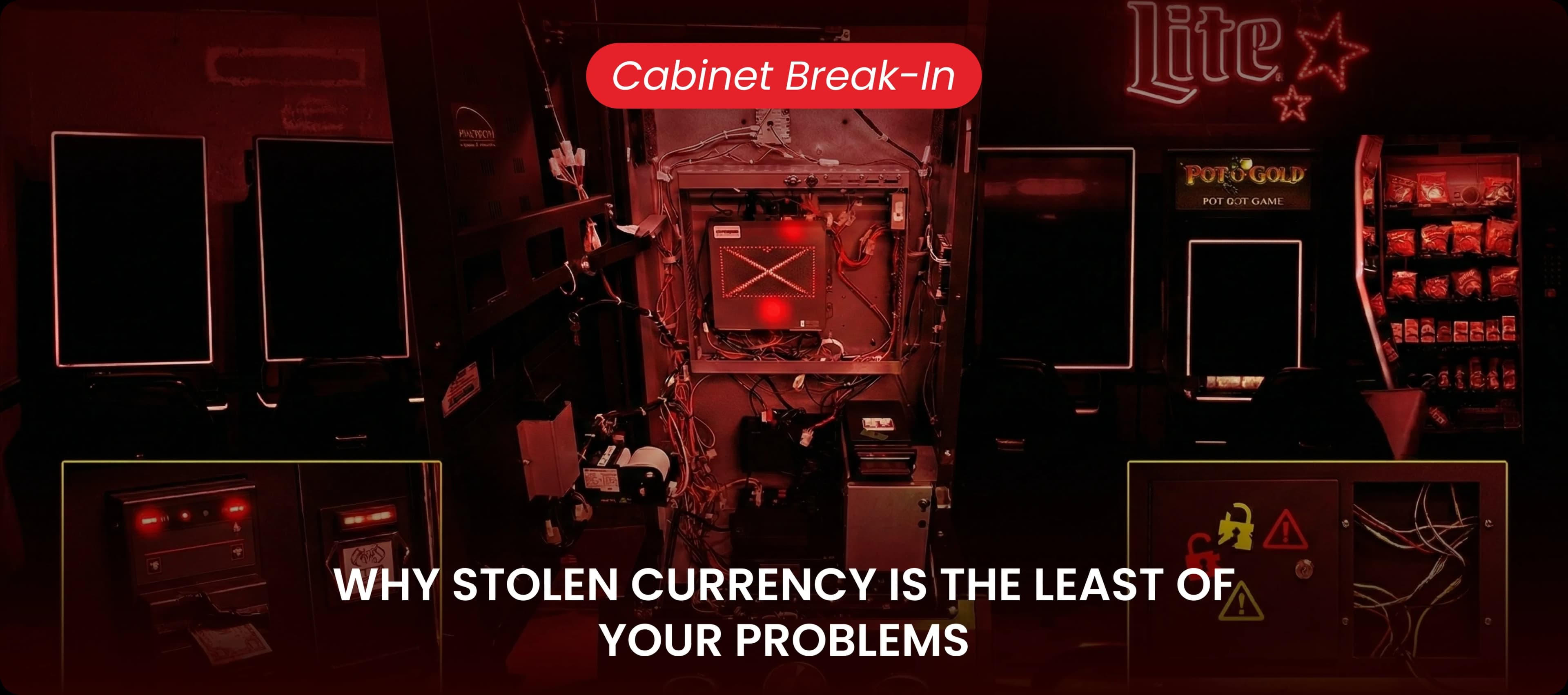
Cabinet Break-In: Why Stolen Currency is the Least of Your Problems
Mar 6, 2026
Every route operator has a mental "threshold for pain." It’s that dollar amount where a loss shifts from a minor annoyance to a serious operational setback. Usually, we calculate that pain by how much cash was sitting in the bill acceptor. But if you only look at the missing currency, you’re missing the "Invisible Invoice", the cascading series of expenses that hit your bank account long after the thieves have left the scene.
From emergency service calls at 3:00 AM to the skyrocketing lock replacement costs after a frame is mangled, the true price of a breach is rarely about the money in the stacker. It’s about cabinet security as a whole, protecting your hardware, your technician’s time, and your most valuable asset: your reputation with the location owner.
TL;DR: The High Price of Inaction
- Hardware Hemorrhage: A $400 cash theft often triggers a $4,000 to $10,000 total loss in components, labor, and downtime
- The Trust Tax: Frequent "Out of Order" signs lead to location owners shopping for a new operator.
- Operational Friction: Every emergency service call pulls a tech away from a revenue-generating install.
- The Fix: The Cabinet Guard CG-1000 stops the damage before the "Invisible Invoice" starts mounting.
The Hard Costs: Why "Cheap" Security is Expensive
When a door tamper alarm isn't present, a thief has the luxury of time. Time is what allows them to move from prying the door to actually gutting the internal components. For a convenience store or truck stop operator, this is where the real bleeding begins.
Physical Damage vs. Cash Loss
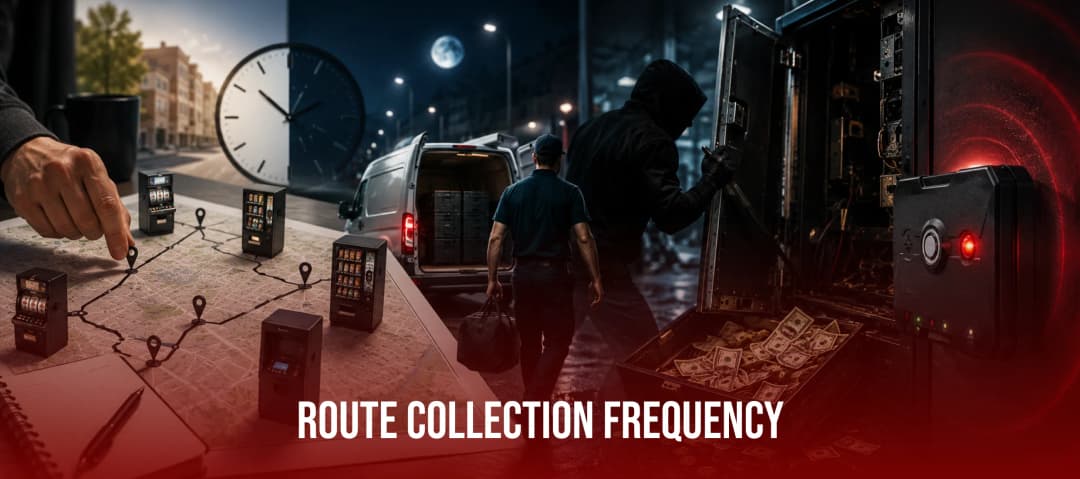
Let’s look at a realistic operator scenario. A thief targets a skill game in a high-traffic gas station. They pry the door, grab $400 from the cash box, and vanish.
- The Stolen Cash: $400.
- The Frame Damage: Prying a steel cabinet often bends the frame beyond the point of a simple "hammer-out." You’re looking at a full cabinet swap or a specialized metal repair.
- The Component Hit: In the rush to pull the stacker, they often rip through the bill acceptor mounting or snag the main wire harness.
Replacing a proprietary wire harness isn't just a $150 part; it’s the beginning of a massive financial drain. Experienced operators report that once you factor in a destroyed monitor, a proprietary logic board, and weeks of machine downtime, the real cost of a single loss event is usually a minimum of $4,000 to $10,000. This isn't just a repair; it’s a total asset hit that can take months of revenue to recover. This is why choosing the right cabinet security system is an investment in uptime, not just an expense.
Lock Replacement Costs and the "Drill Tax"
If you rely solely on high-end locks, you are essentially daring a thief to destroy your door. Lock replacement costs are high, but the labor to remove a drilled-out lock core is higher. We’ve seen operators spend four hours on a single site just trying to get a mangled lock housing out of a cabinet so they can secure the machine for the night.
The Operational Drain: The "Truck Roll" Nightmare
In a typical vending route or amusement arcade operation, your profit is tied directly to your technician's efficiency. Every time you have an unplanned truck roll, your margin on that machine for the month evaporates.
The Impact of Emergency Service Calls
When a break-in happens, it’s never at a convenient time. Emergency service calls mean paying time-and-a-half to a technician who was supposed to be doing a new install the next morning.
- Fuel and Wear: The cost of the vehicle.
- Overtime: The premium for the tech's time.
- Opportunity Cost: The new location that didn't get their machine because your tech was busy dealing with a smash-and-grab.
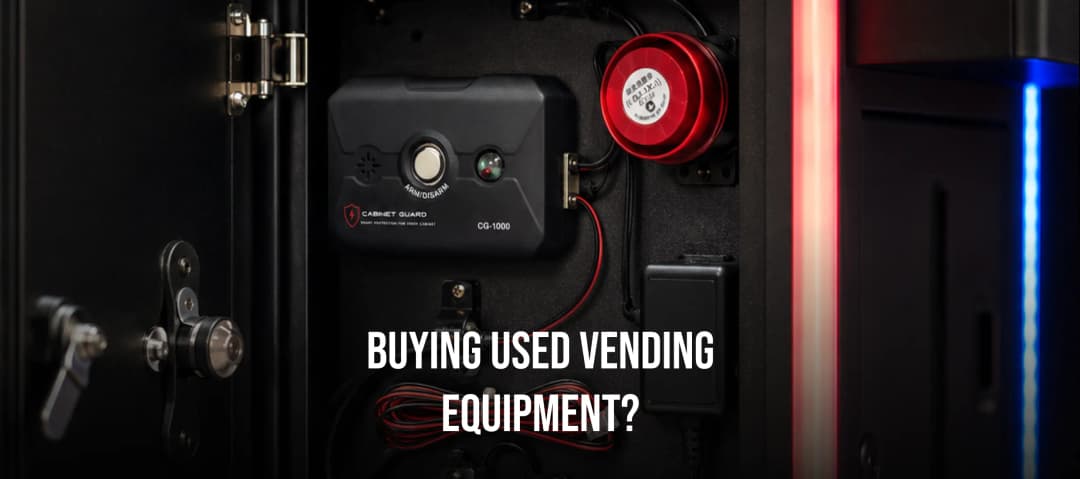
By installing an active defense like the CG-1000, you utilize a 100+ dB siren to end the break-in attempt the second the door moves. Deterrence means the thief runs before the harness is cut, which means no emergency repair is needed. You can read more about how active defense solutions solve tampering in our deep-dive guide.
The Soft Costs: Reputation and the "Quiet Quit"
In Texas gaming or PA skill markets, competition for the best locations is fierce. Your relationship with the tavern games owner or the convenience store manager is built on one thing: reliability.
The Death of Location Trust
A vandalized machine is an eyesore. It signals to the location’s customers that the environment is unsafe. If a machine sits with "Out of Order" tape for a week, the owner doesn't just see a broken game; they see lost commission.
"A location owner who feels your equipment is a liability will eventually stop taking your calls."
If you can’t provide reliable security in high-traffic locations, you are essentially giving your competitors an opening to walk in and pitch a "more professional" operation.
The Mental Tax on the Operator
There is a profound difference between sleeping soundly and jumping every time your phone pings at 2 AM. Asset protection is as much about your own mental health as it is about the money. Knowing your machines are equipped with a tamper-resistant enclosure and a hardwired intrusion detection system allows you to scale your business without scaling your anxiety.
Why Hardware Reliability Matters (The CG-1000 Edge)
Most diy alarms fail because they weren't built for the "dirty power" and vibration of a route environment. We’ve seen operators try to use magnetic door alarms or cheap wifi sensors, only to be plagued by nuisance alarms and dead batteries.
Engineering for the Real World
The Cabinet Guard CG-1000 was designed after 7 prototypes and years of field testing. We focused on the specific pain points of the route manager:
- Spring Cage Terminals: Forget tiny screws. We use spring terminals that hold tight even in high-vibration environments.
- Tamper-Resistant Enclosure: If a thief gets inside the cabinet, they can’t just "clip the wire" to the alarm. The unit is housed in a rugged metal enclosure.
- iButton Operator Key: Forget lost passcodes or false alarm triggers by your own staff. The iButton allows your techs to enter service mode instantly.
Unlike traditional cabinet locks, the CG-1000 is an active participant in your security. It doesn't just sit there; it reacts.
Wiring for Success
The CG-1000 supports daisy chain configurations, allowing you to protect the main door, the cash box, and the bill acceptor all on one loop. Using our detailed wiring diagram, your techs can retrofit a cabinet in under 20 minutes. No specialized "IT" knowledge is required because it’s a hardwired alarm, not a finicky IoT device.
Conclusion: Stop the Hemorrhage
When the real cost of a single loss event is a minimum of $4,000-$10,000, the price of an unmonitored cabinet is simply too high to ignore. A break-in is more than a theft; it’s a disruption of your entire business model. From the cost of replacing locks to the damage to customer relationships, the price of an unmonitored cabinet is simply too high to ignore.
If you're tired of the "Invisible Invoice," it’s time to move toward an active defense. The Cabinet Guard CG-1000 was built by operators who were tired of losing money to the "aftermath."
Talk to the Cabinet Guard team or view the CG-1000 specifications to see how we can help you lock down your route and protect your bottom line.