
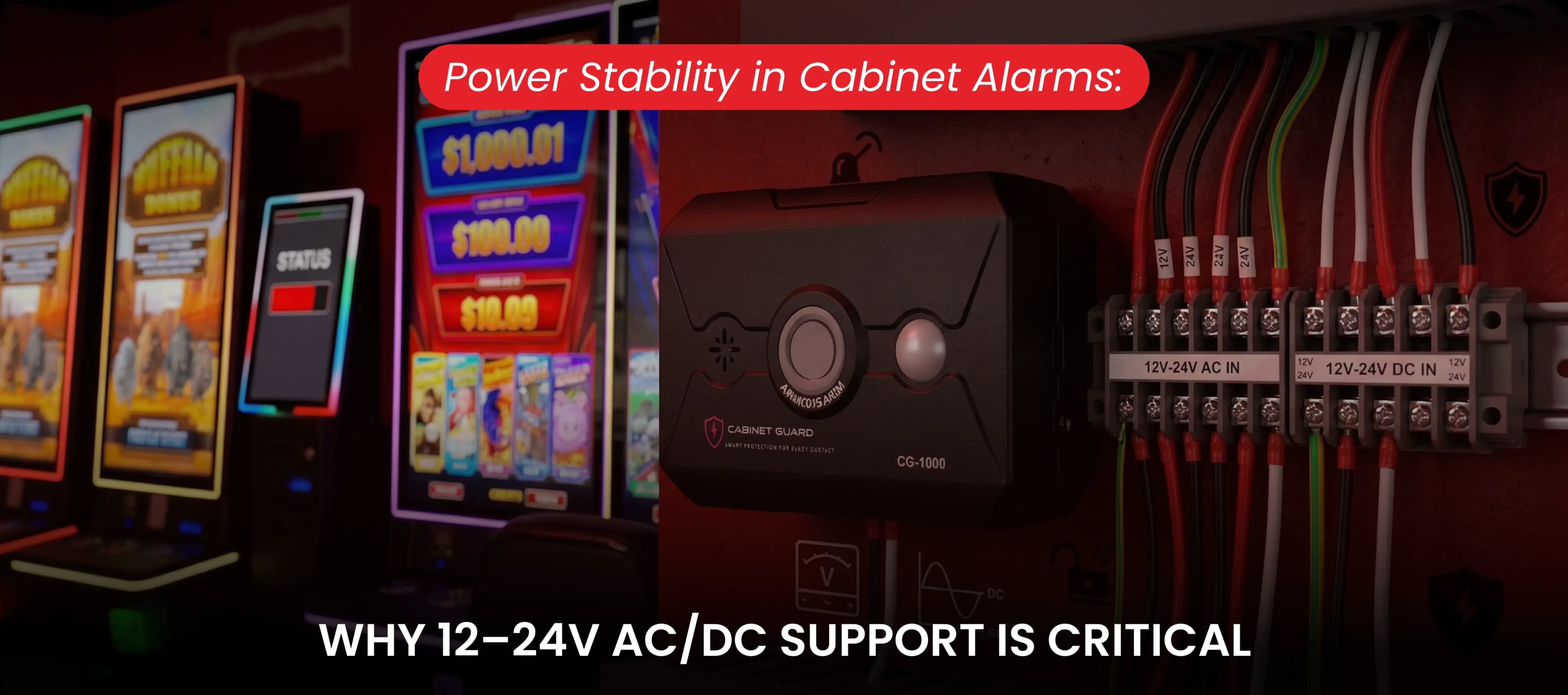
Power Stability in Cabinet Alarms: Why 12–24V AC/DC Support is Critical
Apr 17, 2026
The temptation when looking at security hardware is to flip straight to the back of the spec sheet to check the decibel levels or the number of sensor inputs. While those specs matter, they are secondary to a much more boring but vital reality: power. If a security module cannot handle the "dirty" power common in older amusement machines or the fluctuating rails of a modern skill game, it isn't an asset; it is a liability.
In the world of route operations, your hardware is only as good as its ability to stay powered and stable under harsh conditions. Reliability starts with electrical resilience, ensuring that your security stays online even when the machine's internal environment is less than ideal.
TL;DR: Power Stability: Why Voltage Matters More Than Features
- Universal Compatibility: True 12-24v ac/dc support allows one alarm to work across all machine types.
- Reduced Failures: Wide voltage tolerance prevents PCB fry-outs during machine reboots or power spikes.
- Eliminate False Alerts: Stable power regulation ensures the siren only sounds during actual tampering.
- Field-Ready Wiring: Features like spring-cage terminals make installation faster and more secure than traditional screws.
- Maximum Uptime: Hardware built for the field keeps machines running and revenue flowing without unnecessary service calls.
The Trap of Fixed 12V DC Systems
Most off-the-shelf security components are designed for a perfect 12V power supply environment, typically an indoor office or a controlled security closet. Route machines are not controlled environments. Between aging transformers, shared power rails, and the high-draw motors of older amusement games, the "12 volts" you think you are getting is often a noisy, fluctuating mess.
Why 12v-24v Flexibility is Mandatory
If you install a strict 12V DC alarm in a machine that experiences a 15% voltage spike, you risk blowing the capacitors on the board. Conversely, if the voltage sags, the alarm might trigger a false event or simply reboot. A professional 24V alarm system or a universal module like the CG-1000 is engineered to eat those fluctuations. By supporting a range of 12-24V ac/dc, the hardware remains indifferent to whether it is sitting in a brand-new skill game or a legacy cabinet.
Protecting Against Dirty Power
"Dirty power" refers to the electrical noise and surges that occur when a machine draws heavy current, like when a coin hopper fires or a monitor degausses. Without high-level electrical resilience, this noise can bleed into the alarm circuit. This is a common reason why diy cabinet alarms fail in the field. Professional hardware uses internal regulators to clean this signal, ensuring that the logic board doesn't interpret a power flicker as a door-open event.
Engineering for Modern and Legacy Cabinet Rails
Route operators often manage a mix of equipment. You might have a route with brand-new machines in Pennsylvania and 15-year-old amusement cabinets in Georgia. Carrying different security SKUs for each voltage requirement is a logistical nightmare and a recipe for technician error. Understanding what makes an alarm operator-grade often comes down to this exact flexibility.
Integrating with Existing Power Supplies
Standardizing on hardware that offers a wide input voltage means your techs don't have to carry step-down converters or specialized power bricks. Whether the machine has a standard power supply of 12V or an older 24V AC transformer, the installation remains identical. This consistency is the secret to scaling a route without scaling your headaches.
Faster Installation with Better Terminals
It isn't just about the voltage; it is about how that power gets to the board. Traditional screw-down terminal block wiring is notorious for backing out over time due to machine vibration. This creates high-resistance connections that lead to heat and failure. Using spring-cage terminals ensures a constant, vibration-proof grip on the wire, maintaining electrical integrity for the life of the machine. This is a small engineering detail that significantly impacts long-term machine uptime. Proper cabinet alarm wiring is the foundation of a reliable route.
How Wide Voltage Support Reduces Service Calls
Every time a technician has to drive out to a location to "reset" an alarm that went off for no reason, you lose money. Often, these "phantom" alarms are caused by the security hardware losing its mind during a momentary power sag. Reducing these events is the most effective way to reduce emergency service calls over time.
Preventing False Alarms at the Source
Effective false alarm prevention starts with power management. When the alarm hardware can comfortably operate anywhere within the 12v-24v spectrum, it ignores the minor sags that happen when a machine is under heavy load. The system stays armed and quiet until a physical breach occurs. This keeps your location owners happy and your gas budget under control.
Durable Housing for Harsh Environments
Finally, the electronics must be protected physically as well as electrically. A tamper-resistant enclosure ensures that even if a bad actor gets a hand inside the cabinet, they can't easily short out the power terminals or clip the wires. Combined with a solid alarm installation guide, this creates a multi-layered defense that protects your investment from both electrical surges and physical attacks.
Building a profitable route requires hardware that respects the reality of the field. The CG-1000 was designed by operators who grew tired of fragile electronics failing in high-traffic locations. When you prioritize power stability and universal compatibility, you spend less time on maintenance and more time on growth. Contact our team to see how we can standardize the security across your entire fleet.