
Why Spring-Cage Terminals are the Standard for Cabinet Security
May 18, 2026
Most route operators have dealt with a "ghost" alarm. It is that frustrating moment when a machine triggers a tamper alert for no visible reason. You send a tech out to the location. They check the door and find nothing. They reboot the system and leave. Two hours later, your phone rings again with the same issue.
The thing is, these alerts are rarely caused by a software bug. They are usually the result of a physical failure at the connection point. In the world of route-based machines, the way you terminate a wire is just as important as the alarm itself. Most traditional systems use old-fashioned screw terminals. These are fine for a house that sits still. They are a nightmare for a gaming cabinet or an ATM that lives on a high-traffic floor.
If you want to stop the profit bleed, you have to look at the engineering of your hardware. Moving toward spring-cage terminals is one of the smartest moves an operator can make. It changes the way your machines handle the daily stress of the route. Understanding the physics of these connections is the first step toward a more reliable business.
Spring-Cage Terminals: The Engineering Logic for Operators
- Vibration Resistance: Constant tension prevents wires from backing out during machine operation.
- Eliminate Human Error: Push-in designs allow fast install performed by trained technicians without the risk of stripped components.
- Gas-Tight Reliability: Prevents oxidation at the contact point for long-term signal integrity.
- Faster Deployment: Reduces installation time by up to 50% compared to traditional methods.
The Physics of the Machine Floor
Every cabinet on your route is under constant physical stress. This isn't just about people playing the games. It is about the environment itself. Cooling fans spin at high speeds. Coin hoppers and bill validators create sudden jolts. Even the floor of a busy bar vibrates as people walk by.
The Impact of Vibration Frequency
In engineering, we talk about vibration frequency. Every machine has a specific rhythm. Over time, this rhythm acts like a slow-motion jackhammer on your internal components. If you use a static connector like a screw terminal, that vibration is transferred directly to the threads. Eventually, the metal relaxes. The connection becomes loose.
Understanding Harmonic Vibration
Sometimes a machine hits a specific harmonic vibration. This happens when the internal movements of the cabinet sync up perfectly. This creates a high-energy pulse that can rattle a loose screw out in seconds. If your security loop is interrupted for even a millisecond, the alarm triggers. These are the wiring gremlins that drive technicians crazy. They are hard to find because the wire might look connected even when it isn't making a solid electrical contact.
The Cost of Wiring Fatigue
When a wire is held too tightly by a screw, the metal can actually deform. This is called wiring fatigue. Over months of vibration, the copper strands can snap right at the terminal. You won't see it through the insulation. But your machine will see it as a "tamper" event. This is why what actually makes a cabinet alarm operator-grade comes down to the small mechanical details.
Why Screw Terminals Fail: The Engineering Gap
Screw terminals have been around for a long time. They are cheap and easy to manufacture. However, they were never designed for the modern gaming route. They rely on a static force to hold the wire in place. The problem is that nothing in a cabinet is static.
The Problem with Cold Flow
When you tighten a screw onto a copper wire, the copper actually begins to move. This is known as "cold flow." Under the pressure of the screw, the metal flattens out over time. As the wire thins, the screw is no longer tight. This creates a gap. Once that gap exists, vibration finishes the job. This is a primary cause of poor connectivity issues in older machines.
Stripped Threads and Installation Errors
The truth is, manual screw terminals require perfect torque. If a trained technician tightens a tiny screw just a bit too much during a quick component swap, the threads strip out right away. But if they don't tighten it enough, the wire can back out when the machine is moved to a new location. These small installation errors end up causing massive, hidden costs across your entire route business.
The Thermal Expansion Trap
Cabinets get hot. Then they cool down when the location closes. This cycle causes the metal in a screw terminal to expand and contract. Because the screw is rigid, it cannot adjust to these changes. Over hundreds of cycles, this movement works the screw loose. It is a slow process, but it is inevitable. It often leads to the true cost of skill game downtime because the machine goes offline during peak hours.
The Logic of Spring-Cage Terminals
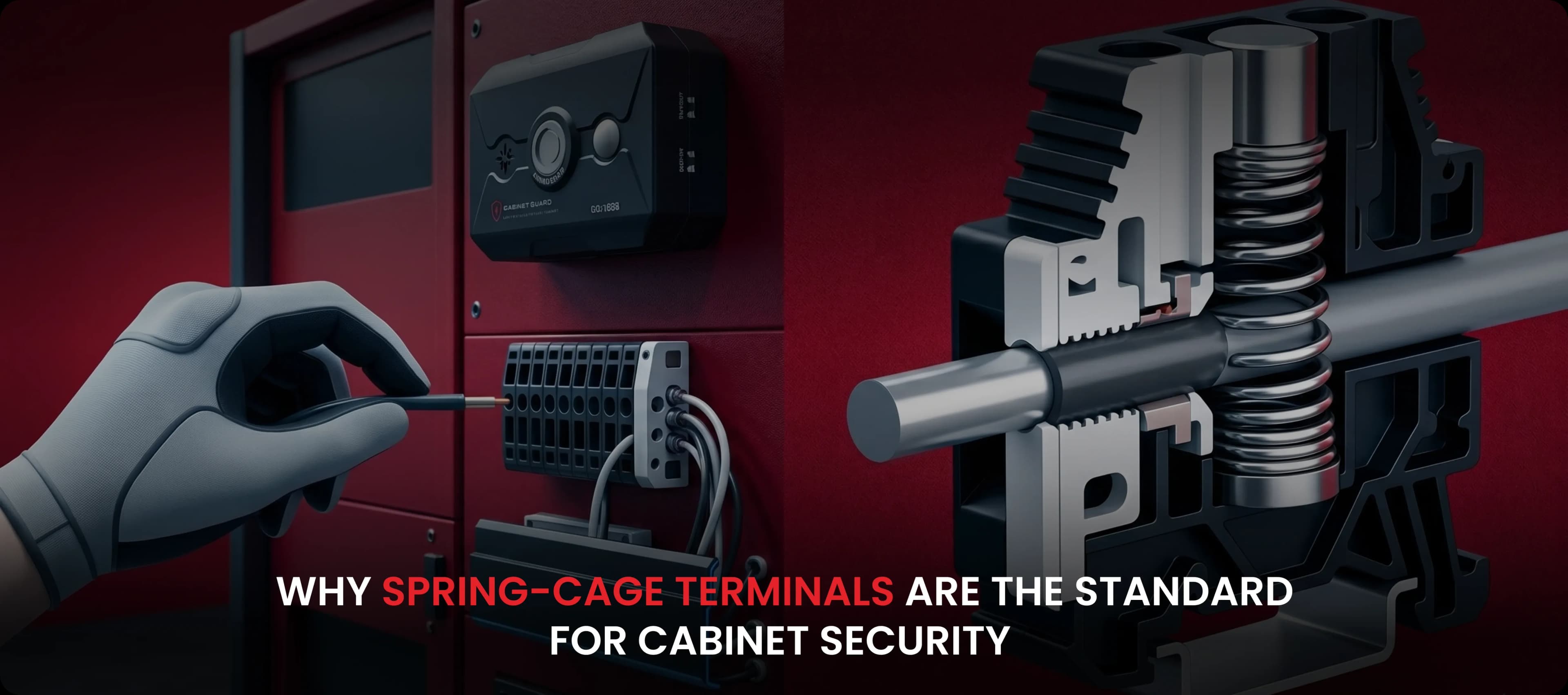
This is where industrial engineering saves the day. Instead of a screw, the CG-1000 uses spring-cage terminals. These are designed to be dynamic. They don't just hold the wire; they actively grip it.
The Power of Constant Force Springs
Inside the terminal is a high-grade metal spring. When you insert the wire, the spring applies a specific amount of pressure. This is a constant force spring. No matter how much the machine vibrates, the spring stays tight. If the wire thins due to cold flow, the spring simply moves in to take up the slack. It is a self-adjusting system that never needs to be retightened.
Creating Gas-Tight Connections
One of the biggest enemies of electronics is oxidation. When air gets between the wire and the terminal, a layer of "rust" forms. This increases resistance and kills the signal. Spring-cage terminals create gas-tight connections. The pressure is so high that it squeezes the air out. This keeps the metal-to-metal contact clean for years. This is why the purpose of battery backup in cabinet security matters; even if the power is cut, the mechanical connection must stay perfect.
Pull-Force Testing and Reliability
In a lab, we use pull-force testing to see how much weight a connection can handle. Spring-cage designs consistently beat screw terminals. They grip the wire across a larger wire surface area. This means the wire is less likely to snap or slip out. It provides a level of physical security engineering that a simple screw cannot match.
Professional Field Service Efficiency
Route management relies on maximizing your team's specialized skills. Every minute a skilled employee spends adjusting terminal strips is time taken away from high-level diagnostics. Using push-in wire connectors optimizes your workflow.
Streamlining Route Deployments
The CG-1000 allows a fast install performed by trained technicians. Your team can complete standard security integrations without dealing with fragile tool tolerances. This improves overall field service efficiency. When deploying hardware across fifty machines, these saved minutes preserve valuable technical billing hours.
Maintaining Workmanship Standards
Precision wiring requires focus. Even with an expert team, manual screw terminal blocks introduce unnecessary physical variance into your fleet security. By using spring-cage terminals, you ensure uniform connection pressure on every single job. This reduces mechanical errors and maintains professional installation standards across your entire route.
Standardizing the Workflow
When every machine on your route uses the same terminal block design, training becomes simple. You don't have to explain different wiring methods for different brands. Whether it is an ATM or a skill game, the process is exactly the same. This standardization is how you reduce your cabinet alarm false triggers across the entire fleet.
Operational Impact: From Wiring to Revenue
At the end of the day, an operator cares about one thing: uptime. If the machine isn't running, it isn't making money. Wiring might seem like a small detail, but it is the foundation of your uptime.
Reducing Truck Rolls
A "truck roll" is the most expensive thing you can do. Between gas, insurance, and labor, it can cost $200 just to show up. If the fix is just tightening a screw, that is a $200 loss that should have been avoided. By using spring-cage terminals, you are reducing truck rolls before they even happen. You are building a machine that can survive the bumps and bruises of the field.
Field-Driven Design in Action
The CG-1000 was built by people who have actually worked the route. We spent years testing 7 different prototypes. We saw where the cheap alarms failed. We watched wiring gremlins eat away at profits. That is why we chose to use industrial-grade ruggedized electronics. We wanted a system that was beyond the spec sheet.
The Long-Term ROI of Quality
It is easy to buy the cheapest alarm you can find. But a cheap alarm with poor wire termination methods will cost you more in the long run. Between the service calls and the frustrated location owners, the "savings" disappear quickly. Investing in a system with constant force springs is a preventative maintenance strategy. It ensures that your wired cabinet alarm is more reliable than wireless alternatives that suffer from signal drops.
The CG-1000 is more than just a loud siren. It is a piece of industrial hardware designed to live in the real world. By focusing on the engineering of the connection, we have built a tool that helps operators sleep better. No more 2:00 AM "ghost" alarms. Just solid, gas-tight security that stays exactly where you put it.
The reality is simple. Screws fail. Springs don't. Just like that.
Standardizing your fleet with the CG-1000 is a smart move for your bottom line. If you are ready to eliminate the wiring issues that cause downtime and frustration, we can help. Our hardware is built to handle the toughest routes in the country.