Why Your Cabinet Alarm Keeps Going Off: Stopping False Triggers
Apr 10, 2026
In the world of route operations, there is no sound more frustrating than a siren wailing for no reason. When an operator receives a call that a machine is screaming at 2:00 AM, but the technician finds the cash box untouched and the door locked tight, you have a false alarm prevention problem.
Nuisance triggers do more than just annoy location owners. They burn fuel, waste technician time, and eventually lead to "alarm fatigue," where real break-ins are ignored because the system has cried wolf too many times. To protect your bottom line, you have to move past DIY fixes and understand the industrial realities of cabinet security.
TL;DR: Stopping the Ghost in the Machine
- Mechanical Failure: Cabinet flex and door sag are the primary causes of sensor misalignment.
- Electrical Noise: Unstable DC power leads to a low-voltage trigger that trips cheap sensors.
- Internal Access: Most "false" alarms are actually unauthorized internal access or improper service procedures.
- The Fix: Use a hardwired alarm system with terminal block wiring and mechanical-grade logic.
The True Cost of Nuisance Alarms
Every time a technician has to visit a site for a non-event, it’s a "truck roll" that costs the business money. On a high-density route, these costs compound. If your security hardware is prone to nuisance alarms, you aren't just losing the cost of the hardware; you are losing field service security efficiency.
A reliable cabinet alarm system should only trigger when there is an actual threat. If it triggers because a patron bumped the machine or the compressor kicked on, the system is a liability, not an asset. Understanding why false alarms hurt is the first step toward improving your route's bottom line and ensuring your security measures don't fail and cost you thousands in wasted labor.
Mechanical vs. Magnetic: Why Sensors Fail
One of the most debated topics in the shop is magnetic switch vs mechanical switch setups. Many off-the-shelf kits use cheap magnetic reed switches. While these work fine for a stationary window in a home, they are often a nightmare for a skill game or vending machine.
- Magnetic Reed Switches: These require precise alignment. Over time, heavy steel doors sag on their hinges. When the gap grows even a fraction of an inch, the circuit breaks, and the alarm triggers.
- Mechanical Plunger Switches: These are far more forgiving of "cabinet flex." A heavy-duty mechanical switch maintains physical contact even if the cabinet is nudged or the door isn't perfectly flush.
If you are seeing frequent triggers on older cabinets, the issue is likely physical door alignment rather than a faulty board. Learning how to choose the right sensor for your specific cabinet type can significantly reduce these mechanical failures.
Solving the Power Fluctuation Problem
Most gaming and vending cabinets are "noisy" electrical environments. When a bill validator cycles or a cooling fan starts up, the voltage on the 12V rail can dip momentarily. For a low-grade alarm, this looks like a power cut, resulting in a low-voltage trigger.
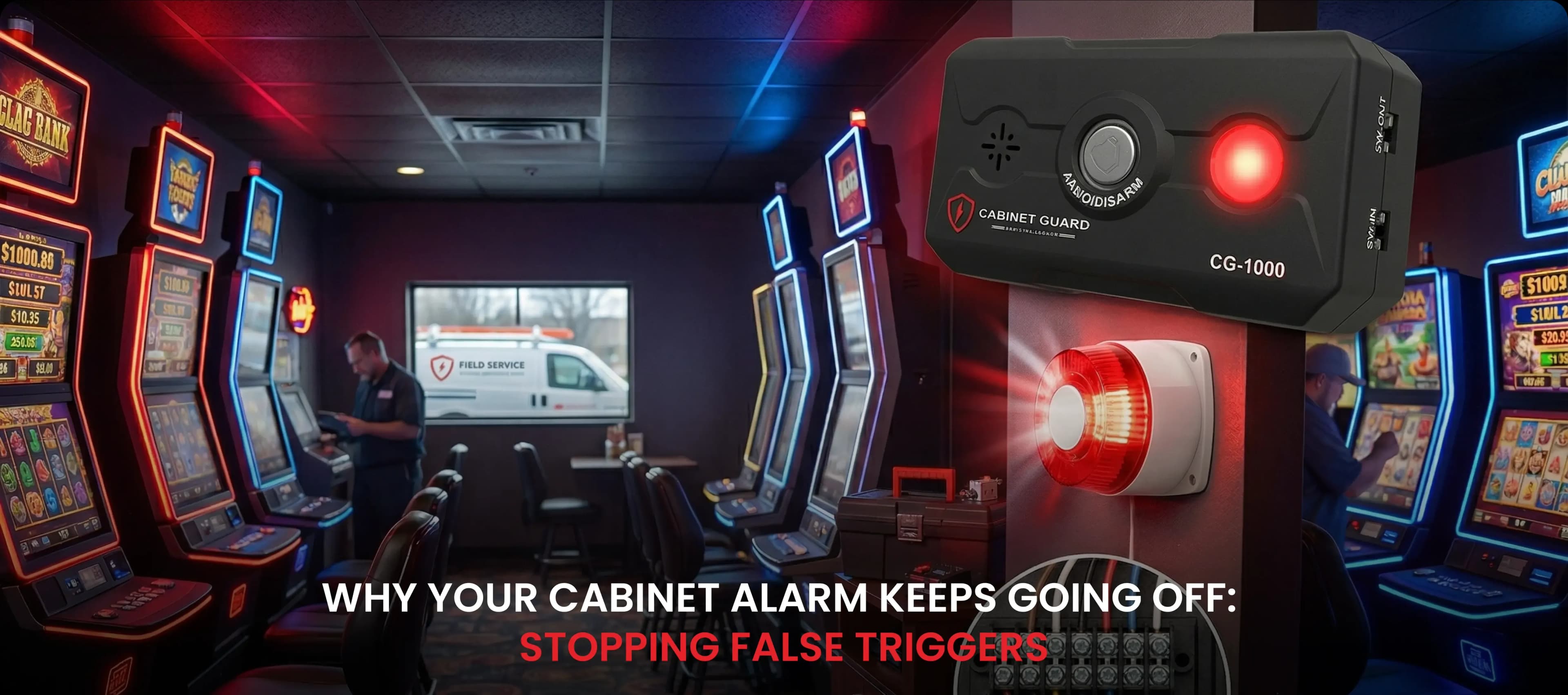
The CG-1000 was designed to handle this field reality. Because it supports 12–24V AC/DC power, it remains stable even when the machine's power supply fluctuates. Additionally, having a robust power failure backup ensures that even if a thief pulls the plug, the 100+ dB siren still has the juice to do its job. Correctly wiring a tamper alarm ensures these electrical dips don't result in ghost triggers.
The Importance of Professional Wiring
A common point of failure in route security is the connection point. Crimp connectors and electrical tape vibrate loose over months of machine use. Professional terminal block wiring is non-negotiable for long-term reliability. Using spring cage terminals ensures that once a wire is seated, vibration from the machine or the surrounding environment won't cause a "flicker" in the circuit that triggers the alarm.
Human Error and Service Access
Sometimes, the alarm is doing exactly what it was told to do, but the operator didn't have a clean way to bypass it. Unauthorized internal access, or even a technician forgetting to disarm the unit, accounts for a large percentage of reported false triggers.
This is where ibutton access control changes the game. Instead of fumbling with a remote that might lose battery or a keypad that gets grimy, a technician simply taps their key to the reader. The LED status indicators provide immediate visual feedback, showing that the system is in service mode. Implementing an operator SOP for your team ensures that every site visit is documented and silent.
Stop the Bleed on Your Route
If you are tired of chasing ghost triggers and want a system that stays silent until it actually matters, it is time to upgrade to operator-grade hardware. The CG-1000 Universal Cabinet Door Tamper Alarm is built to withstand the physical and electrical noise of the real world. By focusing on reliable cabinet security, you can finally stop the unneeded truck rolls and get back to growing your route.
Build your route on trust, not "maybe" security.