Why DIY Cabinet Alarms Fail And How False Alarms Cost You Thousands
Mar 4, 2026
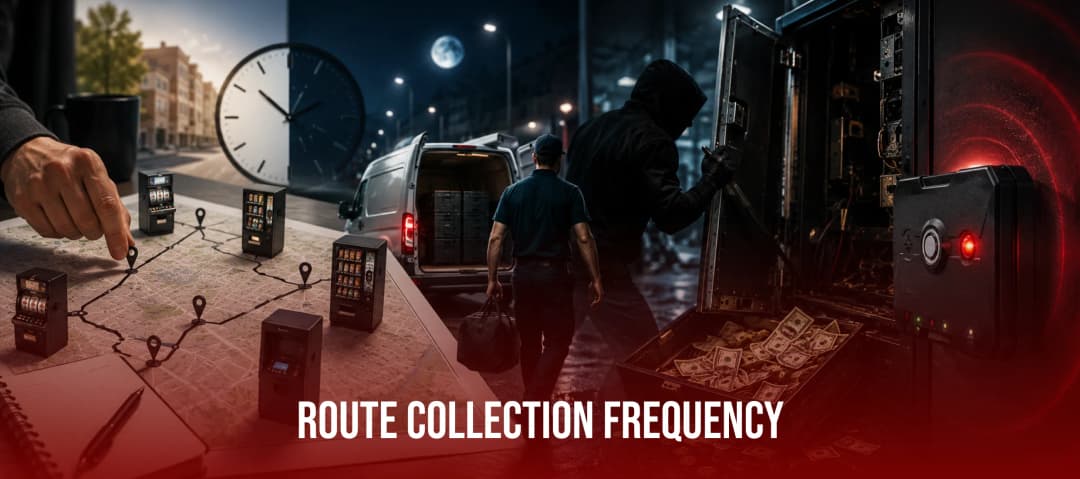
In the route business, profit is measured in uptime and efficiency. Whether you are managing 8-liner machines in a Texas gaming room or skill games in a tavern, every minute a machine is down, or a technician is on the road for a non-revenue task, is a direct hit to your bottom line. Route operators depend on the reliability of security systems to protect revenue across skill gaming, COAM, vending, and amusement routes.
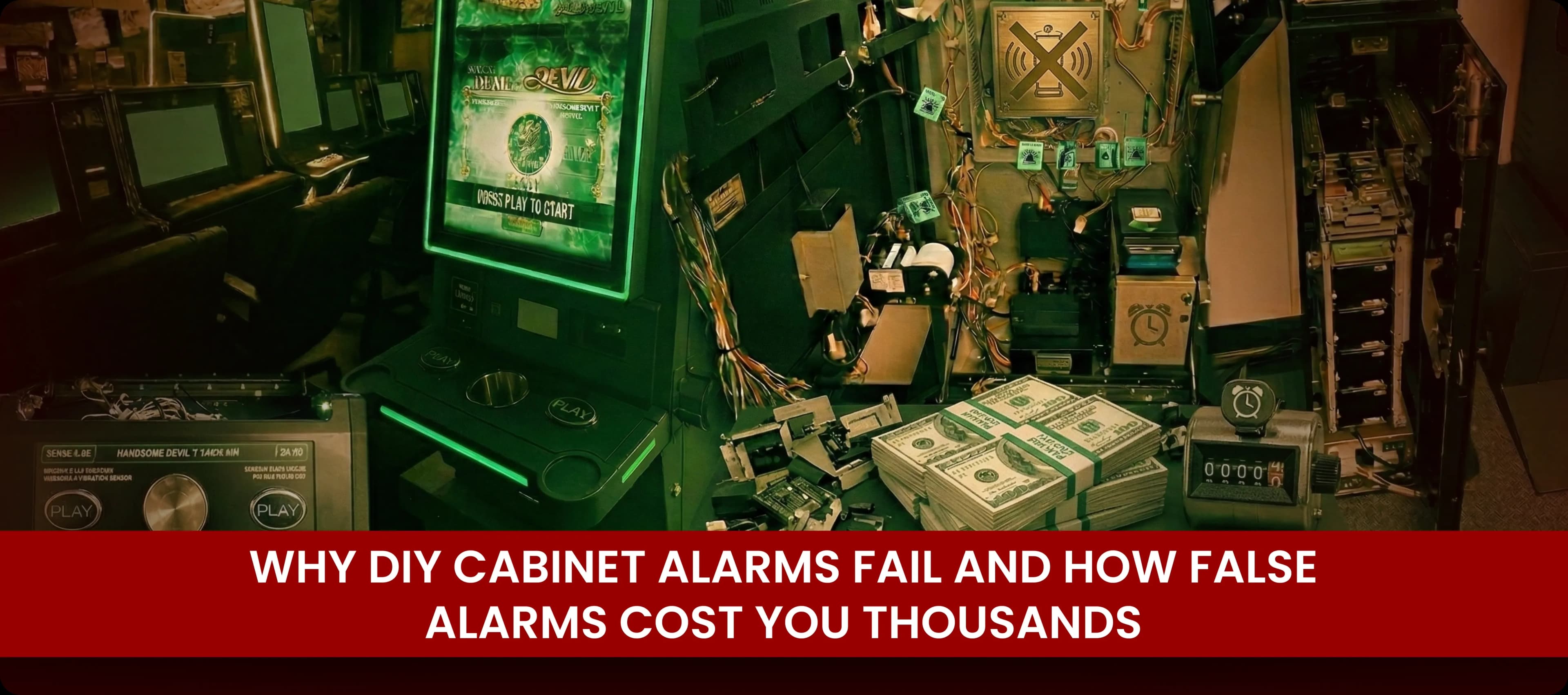
Many operators initially rely on DIY security systems, thinking a $20 battery-powered sensor is "good enough." However, these consumer-grade fixes often fall short in real-world machine break-ins, when operators are trying to prevent theft and protect their capital. According to industry observations, nearly 32% of operators report tamper events annually, meaning the risk is constant, and the cost of a failed alarm is high.
What looks like a saving on your balance sheet today can quickly turn into a "Cheap Alarm Tax" that drains your profits through route losses, excessive labor costs, and increased theft risk. Furthermore, excessive machine downtime on gaming machines due to faulty sensors doesn't just cost you money; it costs you the trust of your location partners.
Key Takeaways for Route Operators
- Nuisance Alarms Drive Costs: A single 2:00 AM truck roll for a false alert can wipe out a month’s worth of machine revenue.
- Batteries Fail When Needed: Dead battery issues mean your security is either nonexistent or a constant maintenance headache.
- Wireless Vulnerabilities: Metal cabinets can act as Faraday cages, often leading to signal drop and wifi failure.
- Deterrence is the Priority: A loud, field-tested siren is designed to stop a smash-and-grab before the damage is done.
The 2:15 AM Call Every Operator Knows (The Cost of False Alarms)
Let’s look at a scenario familiar to anyone in the amusement industry: It’s 2:15 AM on a Tuesday. Your phone buzzes. A location owner is calling because a machine in the back of their bar won't stop "chirping." You dispatch a tech, a 40-mile round trip, only to find that a cheap 9V battery in a DIY sensor has finally died.
There was no theft, no tamper, and no security breach. Yet, between fuel, overtime labor, and the frustration of the location owner, that "cheap" alarm just cost you $200. At Cabinet Guard, we believe it isn’t just an alarm; it’s a route reliability tool. Every unnecessary truck roll compounds costs across your fleet, turning a profitable week into a deficit. By moving toward a hardwired alarm system, you eliminate the "battery-swap treadmill" and focus your team on revenue-generating maintenance.
Field Insight: We’ve seen routes where nuisance alarms caused more service calls than actual theft incidents. In those cases, the hardware itself becomes the primary driver of operational loss.
Why False Alarms Hurt Location Relationships
The financial cost of a service call is easy to track, but the human cost is just as dangerous to your route's longevity. When gaming machines trigger nuisance alarms repeatedly, it strains the partnership that makes your business possible.
- Annoyed Bar Staff: Bartenders are on the front lines. If an alarm triggers every time a player bumps the machine, staff will view your equipment as a headache.
- Unplugged Machines: To stop the noise, staff may simply unplug the machine. Now, you aren't just losing money on a service call; you are losing hours of active play.
- Risk of Removal: In competitive markets, a "high-maintenance" machine is often the first one to be replaced. A location owner wants a partner who provides reliable income, not 2:00 AM phone calls.
Anatomy of a Bypass: Why DIY Can’t Stop a "Machine Break In"
While false alarms bleed your labor budget, the physical failure of a DIY sensor during a machine break-in is a catastrophic loss. Thieves understand the limitations of residential-grade hardware.
The Magnet Spoofing Trick
Most consumer kits use a simple reed switch. This magnetic sensor stays "closed" as long as a magnet is nearby. A savvy thief can place a strong neodymium magnet on the outside of the metal enclosure right over the sensor. This tricks the DIY security systems into thinking the door is still closed while they work on lock drilling or prying the frame.
The Faraday Cage Effect
Inside a thick steel cabinet, wireless signals often struggle to escape. Hardwired systems consistently outperform battery-powered consumer devices in commercial cabinet settings because they don't rely on Wi-Fi or Bluetooth that can be blocked by the machine's own chassis.
Environmental Noise and Vibration
In a loud convenience store or bar, an 80dB DIY buzzer is easily ignored. You need the "scare factor" of a high-decibel siren to ensure break-in prevention. Furthermore, cheap sensors aren't built for the electrical noise and physical vibration of a skill game, leading to machine downtime when they fail under stress.
Technical Failure Analysis: The Physics of a Route
To understand why DIY alarms fail, you have to look at the physics of a commercial location. Most consumer electronics are designed for static environments like a home hallway. Gaming machines are subject to 24/7 abuse.
- Adhesive Failure: DIY sensors usually rely on double-sided foam tape. Inside a cabinet that generates heat around the clock, that adhesive dries out. Eventually, the sensor falls off, the circuit breaks, and you get a false alarm call.
- Vibration Stress: The constant "button mashing" of a skill game creates micro-vibrations. Over time, this rattles loose flimsy battery clips or "twist-on" wire connectors.
- Dirty Power: Locations like older bars or rural truck stops often have inconsistent power. A voltage spike can easily fry a DIY circuit board that lacks industrial-grade protection.
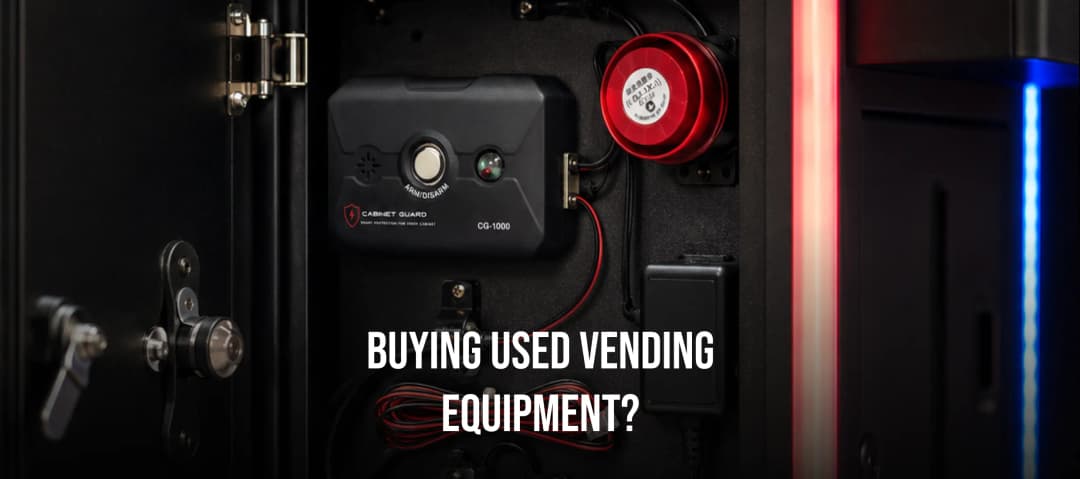
The CG-1000 was engineered specifically for commercial gaming environments where reliability matters. We utilize spring terminals for bus wiring that won't shake loose, ensuring your wiring diagram stays intact through years of gameplay.
The Cabinet Guard CG-1000: Built by Operators
The CG-1000 isn't a repurposed home security gadget. It was built by people who have spent years in the trenches of the vending route and amusement industry.
- Universal Fit: Designed to protect the bill acceptor, cash box, or logic box in almost any cabinet.
- Daisy Chain Capability: One unit can protect multiple doors simultaneously via a simple wired loop.
- iButton Key Access: Secure service mode allows your team to perform a collection without triggering the siren.
- No-Nonsense Hardware: A standalone, wired solution that works without apps or Wi-Fi.
Conclusion: Stop the Revenue Leakage
Every nuisance alarm is a distraction, and every service call is a cost. If you are still relying on DIY alarms, you aren't just risking your cash; you’re risking your operational efficiency.
The Cabinet Guard CG-1000 is a field-tested risk mitigation solution. It was built by operators who were tired of the "Cheap Alarm Tax" and wanted a solution that worked as hard as their route does. Avoiding just one major machine break-in or one week of unnecessary service calls can pay for the system's entire lifecycle.
Stop the revenue leakage and start protecting your profits with a system designed for the long haul. Contact the Cabinet Guard team today.