Service Mode in Cabinet Alarms: Why Technicians Actually Depend on It
Jun 17, 2026
If you’ve spent any time on a route, you know the sound of a 100+ dB siren. It’s designed to be unbearable. It’s meant to drive a thief away from your cash box as fast as possible. But there is a major problem. That same siren doesn't know the difference between a crowbar and a technician’s key.
When a security system treats your staff like intruders, the staff will eventually treat the security system like an enemy. This is where field service efficiency starts to break down. If a tech has to fight a screaming alarm every time they clear a bill jam, they will find a way to stop the noise permanently. Usually, that means snipping a wire or leaving a door switch taped down.
Service mode isn't just a "nice to have" feature. It is the bridge between a secure route and a functional one. It allows your team to perform their jobs without the physical and psychological toll of high-decibel sirens. For an operator, this means your security actually stays active.
Field Service Efficiency: The Role of Service Mode
- Reduced Friction: Service mode allows technicians to enter cabinets without triggering a full alarm event.
- Auditory Protection: Prevents 100+ dB sirens from firing while a technician is working inside the cabinet.
- Maintenance Speed: Faster access means more stops per day and lower maintenance labor costs.
- Operational Integrity: Ensures the system is re-armed automatically so the machine is never left vulnerable.
The Hidden Friction: Why Technicians Sabotage Bad Security
The thing is, technicians are often the first people to bypass a security system. They don’t do it because they want to steal. They do it because they want to work in peace. A loud siren in a small, echoey bar or a quiet laundromat is more than an annoyance. It’s a distraction that leads to mistakes.
Alarm Fatigue and After-Hours Service Calls
When a tech handles after-hours service calls, they are already under pressure. They want to get the machine back online and move to the next location. If the alarm system is difficult to manage, it adds a layer of stress. "Alarm fatigue" is real. If the siren goes off every time the door opens, the tech stops taking the alarm seriously. Even worse, the location owner might start complaining about the noise during peak business hours.
The Silent Snip: When Maintenance Labor Costs Lead to Security Gaps
High maintenance labor costs often stem from inefficient workflows. If an installer has to spend ten minutes fumbling with a bypass switch, that time adds up across fifty machines. When the process is too slow, technicians take shortcuts. We’ve seen it dozens of times. A tech will simply disconnect the power to the alarm because they forgot their "special" bypass key or the toggle switch broke. This leaves the machine wide open to unauthorized service access from anyone who knows where the wires are.
How Service Mode Drives Field Service Efficiency
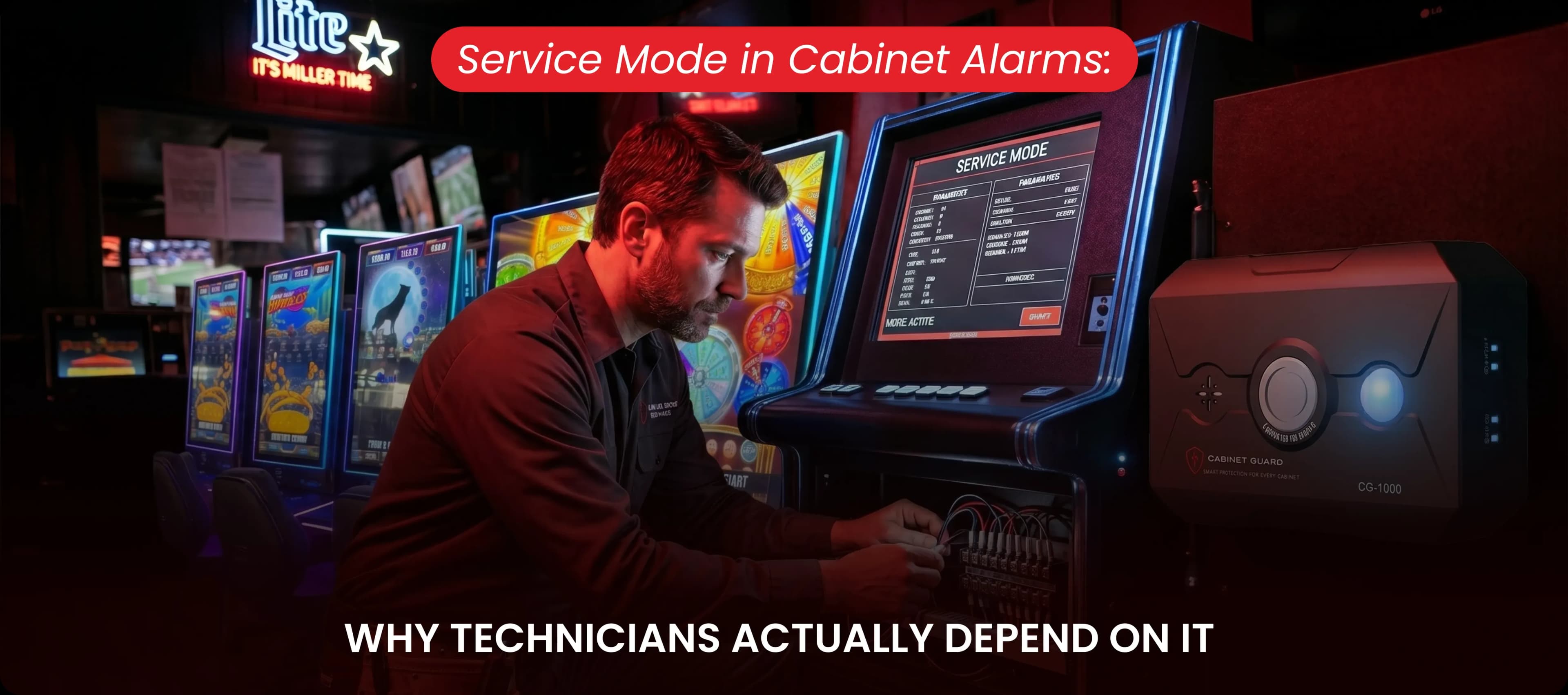
A professional service mode, like the one built into the CG-1000, changes the dynamic. Instead of a hidden toggle switch, the system uses a secure iButton. This digital "pass" tells the system that an authorized person is on-site. It silences the 100+ dB siren but keeps the rest of the system alert.
Eliminating Unauthorized Service Access Without the Noise
Security is about layers. You want the alarm to scream if a pry bar hits the door. But you want it to be silent when a collection is being made. By using a secure key to enter service mode, you ensure that only authorized staff can "hush" the unit. This prevents someone from using a simple magnet or a universal key to bypass the siren. It keeps the field service security tight while respecting the tech's ears.
Machine Downtime Reduction During Routine Collections
Speed is everything for a route driver. Machine downtime reduction happens when a tech can open a door, swap a cash box, and close the door in under sixty seconds. If they have to wait for a system to reset or enter a complex code, the machine stays dark longer. A one-touch service mode allows for a "quiet" window. The tech gets in and out, and the system re-arms itself the moment the door closes. It makes sense for everyone involved.
The Technical Advantage: Integration and Reliability
A good service mode is only as reliable as the hardware running it. The CG-1000 was designed after seven prototypes. We didn't just want a loud box. We wanted a tool that technicians actually liked using.
Security System Integration for Mixed Fleets
Most routes aren't uniform. You likely have a mix of skill games, ATMs, and vending machines. Security system integration is difficult when every machine has a different alarm setup. By standardizing with a universal unit that has a built-in service mode, every tech knows the protocol. They don't have to guess where the "bypass" is on a specific cabinet. They use their iButton, and the job is done.
Using Diagnostic Mode for Post-Install Verification
Installation can be a messy process. Diagnostic mode allows an installer to verify that every switch is working correctly before they bolt the cabinet shut. It provides a way to test the logic without ear-splitting noise. This ensures the install is right the first time, which prevents a callback later that night.
LED Status Lights: Knowing the System State at a Glance
Technicians depend on visual cues. Led status lights on the CG-1000 provide instant feedback. A tech can look at the unit and know if it is armed, in service mode, or if a tamper event occurred while they were away. It removes the guesswork. If the red light is flashing, they know they need to check the door alignment before they leave the location.
Improving the Install: Speed and Safety in the Field
Installation efficiency is just as important as service efficiency. If a system is a nightmare to wire, it won't be installed correctly.
Spring-Cage Terminals: A Field Technician’s Best Friend
We moved away from screw terminals for a reason. Spring-cage terminals are faster and more reliable. In a high-vibration environment, like an arcade floor, screws eventually back out. A loose wire causes a false alarm. A spring-cage terminal provides a constant, gas-tight grip. A tech can shove the wire in and know it isn't going anywhere. It’s a small detail that saves hours of troubleshooting over the life of the machine.
Field Technician Safety: Protecting Auditory Health
Field technician safety includes more than just avoiding electrical shocks. It includes protecting their hearing. Constant exposure to sirens in tight cabinet spaces is dangerous. A dedicated service mode is a safety feature. It allows the tech to maintain the machine in a "quiet" state. This keeps them focused on the task at hand, which reduces the chance of accidental injury or board damage.
Operational Efficiency Tools for the Modern Route
To stay profitable, you need operational efficiency tools that work without a cloud connection. You need hardware that is standalone and rugged.
Vending Machine Service Mode: A Case Study in Discrete Servicing
Imagine a tech servicing a vending machine in a busy hospital hallway. If the alarm triggers, it creates a scene. Using a vending machine service mode allows that tech to be a "quiet professional." They can restock the coils and test the bill validator without disturbing the environment. It preserves the relationship with the location owner.
Field Service Security: Closing the Window of Vulnerability
The biggest risk for an operator is the "window of vulnerability." This is the time between a door opening and the system re-arming. If a tech has to manually turn the alarm back on, they might forget. The CG-1000 solves this with automatic logic. Once the service window closes or the door is shut, the system goes back to high alert. This is how you stop the bleed.
Long-Term Route Health and Technical Debt
Every time you "hack" a security solution, you create technical debt. Eventually, those DIY fixes will fail. Using a professional grade alarm with a dedicated service mode is an investment in your route’s longevity. It keeps your staff happy, your locations quiet, and your cash boxes secure.
Route operators don't need more apps or complex dashboards. They need hardware that understands the reality of a Tuesday afternoon service call. The CG-1000 provides that balance. It is built for the guys with greasy hands who just want to get the job done right.
If your current security is making your technicians' lives harder, it’s only a matter of time before it fails you. Switching to a system that prioritizes both security and service mode isn't just about protection. It’s about making your entire operation run smoother.