The Night Myth: Rethinking Machine Risk Assessment for Operators
Jul 15, 2026
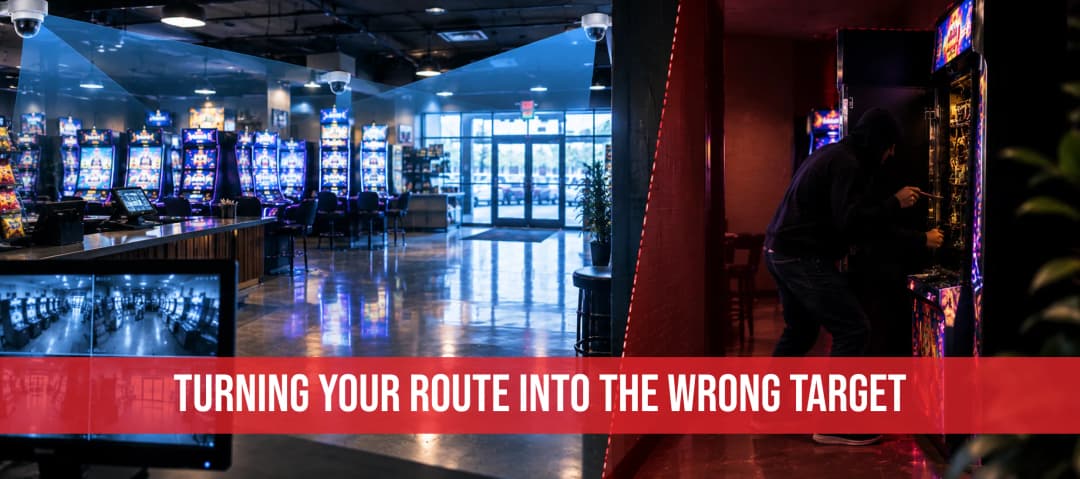
A route operator tightened up overnight checks on one stop after hearing "that's when break-ins happen." Six weeks later, the location that actually got hit wasn't the quiet one he'd started watching closer at night; it was the gas station across town, open until midnight, cashier on shift the whole time, cabinet sitting against the back wall where nobody was looking. Nothing about the timing matched what he'd planned for.
That's the problem with treating machine risk assessment as a question of what time it is. It isn't. The variable that actually predicts whether a cabinet gets hit has almost nothing to do with the clock, and building a check schedule around "nighttime risk" means missing the locations that actually need closer attention.
TL;DR: Machine Risk Assessment Beyond the Night Myth
- Timing myth: The idea that theft only happens at night doesn't hold up, many break-ins happen during business hours, at staffed locations
- Foot traffic isn't detection: A busy, watched location doesn't mean someone catches tampering the moment it starts
- Scheduling risk: Treating daytime or busy stops as automatically lower-risk leaves them checked less often than they should be
- The real gap: Presence and traffic can't guarantee real-time detection, no matter how staffed a location is
- The fix: A door-contact alarm closes that gap by firing the instant a cabinet is tampered with, regardless of time or crowd
The Clock Isn't the Real Risk Variable
The night-only assumption makes intuitive sense on its face: an empty lot, no witnesses, nobody around to hear anything. It's a reasonable guess. It's just not what plays out.
What Actually Happens
Many thefts happen even when you are present, even during broad daylight. A cashier on shift, a lot full of cars, a location that's been quiet for years, none of that stops someone from working a cabinet door while the business is fully open. The assumption that risk only rises after close is exactly what lets a busy daytime stop go unchecked longer than it should.
We've written before about what actually happens once a cabinet's already been hit, the gap between the break-in and when anyone notices. This is upstream of that. If the night-only myth is the reason a busy stop gets checked less often, the discovery gap gets longer, not shorter, at exactly the locations that feel safest.
What "Monitored" Actually Means for a Cabinet
"This location is staffed all day" and "this cabinet is being watched" are two different claims, and operators tend to treat them as the same one.
Foot Traffic Isn't Supervision
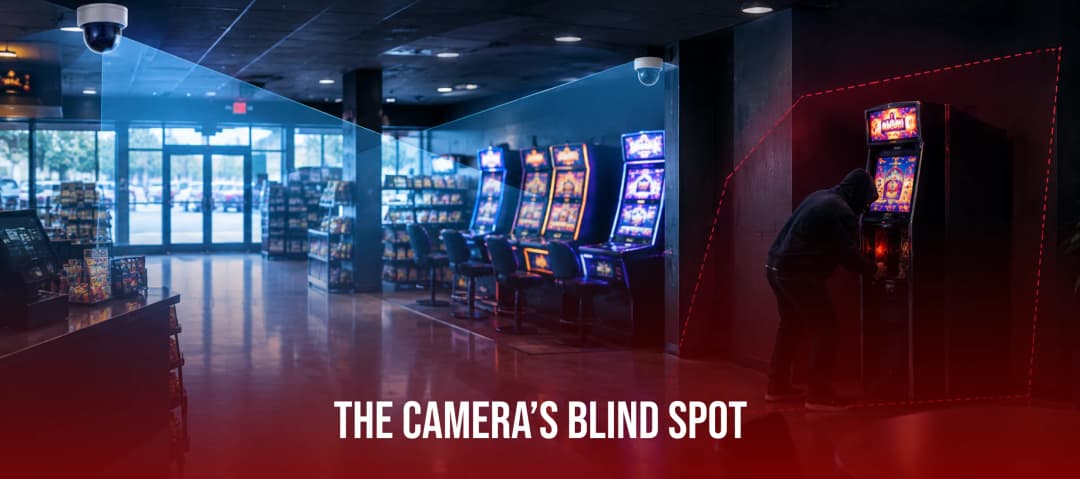
A cashier's job is running the register, not tracking a gaming cabinet in a back corner. A busy high-traffic location can have plenty of people moving through it without a single one of them positioned to notice a cabinet door being forced. The same gap shows up at amusement locations with heavier daytime traffic; more people around doesn't automatically mean better sightlines on the specific machine that matters.
That distinction is the whole problem with clock-based scheduling. "Open during the day" gets treated as a stand-in for "supervised," when what actually matters is whether someone's line of sight includes the cabinet itself. Plenty of daytime locations don't clear that bar. Plenty of overnight-adjacent ones, with a cabinet near the register and a clear sightline, do.
How the Night-Only Myth Skews Route Scheduling
This is where the myth stops being just a wrong idea and starts costing money, not through the theft itself, but through the decisions it shapes before anything happens.
Deprioritizing "Safe" Daytime Stops
A location that's busy, staffed, and open all day gets treated as low-risk almost by default. Checks get spaced further apart. It's not a conscious decision most of the time, it's just what "feels" safer, the same instinct that makes an empty parking lot at midnight feel dangerous. But a stop that goes unchecked for longer because it "seems" supervised is exactly the kind of high risk location the clock-based model misses. The cost shows up later, in downtime and lost collections that a tighter check schedule would have caught sooner.
Overloading Overnight-Only Assumptions
The flip side is just as costly. Locations assumed to be "the risky ones" get extra attention that a busier stop needed more. It's one of the more common route scheduling mistakes, not a lack of effort, just effort aimed at the wrong variable. Time budgeted for a genuinely low-supervision overnight stop is time not spent on a high-traffic location that only looks safe.
Rebuilding Machine Risk Assessment Around Detection, Not Presence
Here's the part that trips up even careful scheduling: a location that's genuinely staffed, busy, and watched all day is still not the same as a location where tampering gets caught the second it starts. In a crowd, mid-shift, at the counter, nobody's job is to watch one cabinet closely enough to catch a few seconds of forced entry. That's not a scheduling failure to fix. It's a limit of relying on people at all, no matter how present they are.
Why Presence Alone Can't Close the Gap
The Talius Annual Commercial Break-In Protection Report puts the average commercial break-in at under four minutes. Even a fully staffed, wide-awake location can miss a window that short if nothing is actively flagging it. That's the real case for a cabinet tamper alarm wired to the door contact: it doesn't depend on anyone noticing, at 2pm or 2am, quiet stop or packed one. It fires the instant the door is forced, regardless of who's in the room. University of North Carolina at Charlotte research surveying 422 convicted burglars found 83% check for an alarm before attempting entry, and 60% say finding one changes their target. The presence of an alarm changes the calculation before anyone gets close enough for foot traffic to matter one way or the other.
Good scheduling still matters; it's how you catch downtime or a short collection sooner. It's just not the thing that catches an attempt while it's happening. That's a detection problem, not a scheduling one.
For a route running skill game, vending, or ATM cabinets across a mix of daytime and overnight locations, a cabinet alarm system that doesn't depend on presence closes exactly the gap the night-only myth creates.
Curious whether an alarm like this fits your specific setup; different cabinet types, wiring, and layouts all factor in. Worth a look at what the CG-1000 works with before assuming one size covers your whole route.