The Camera Blind Spot Your Venue's Security System Doesn't Cover
Sep 30, 2026
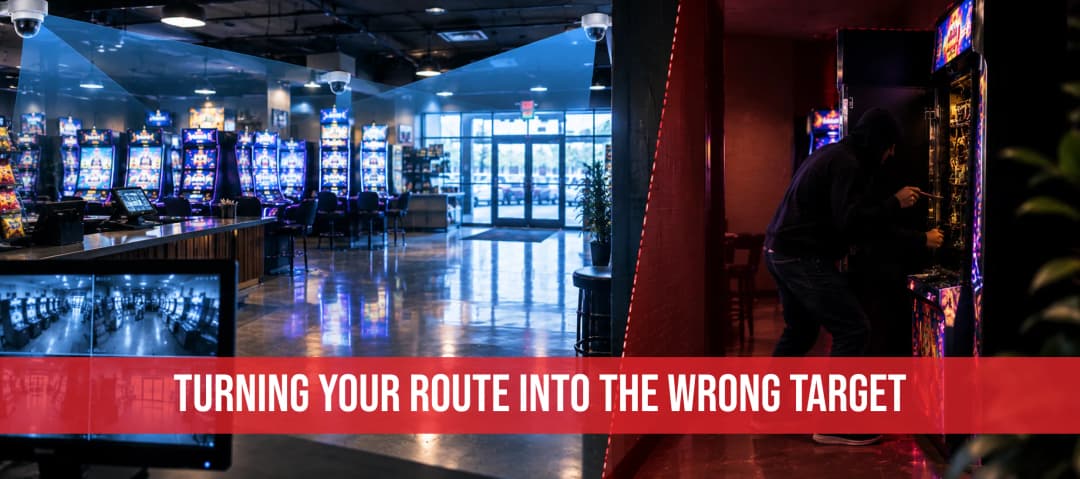
A route operator picks up a new stop and likes what they see. Cameras cover the register, the aisles, and the front door. A monitored burglar alarm sticker sits right on the window. It looks well covered, which is exactly the kind of location that hides a camera blind spot most operators never think to check.
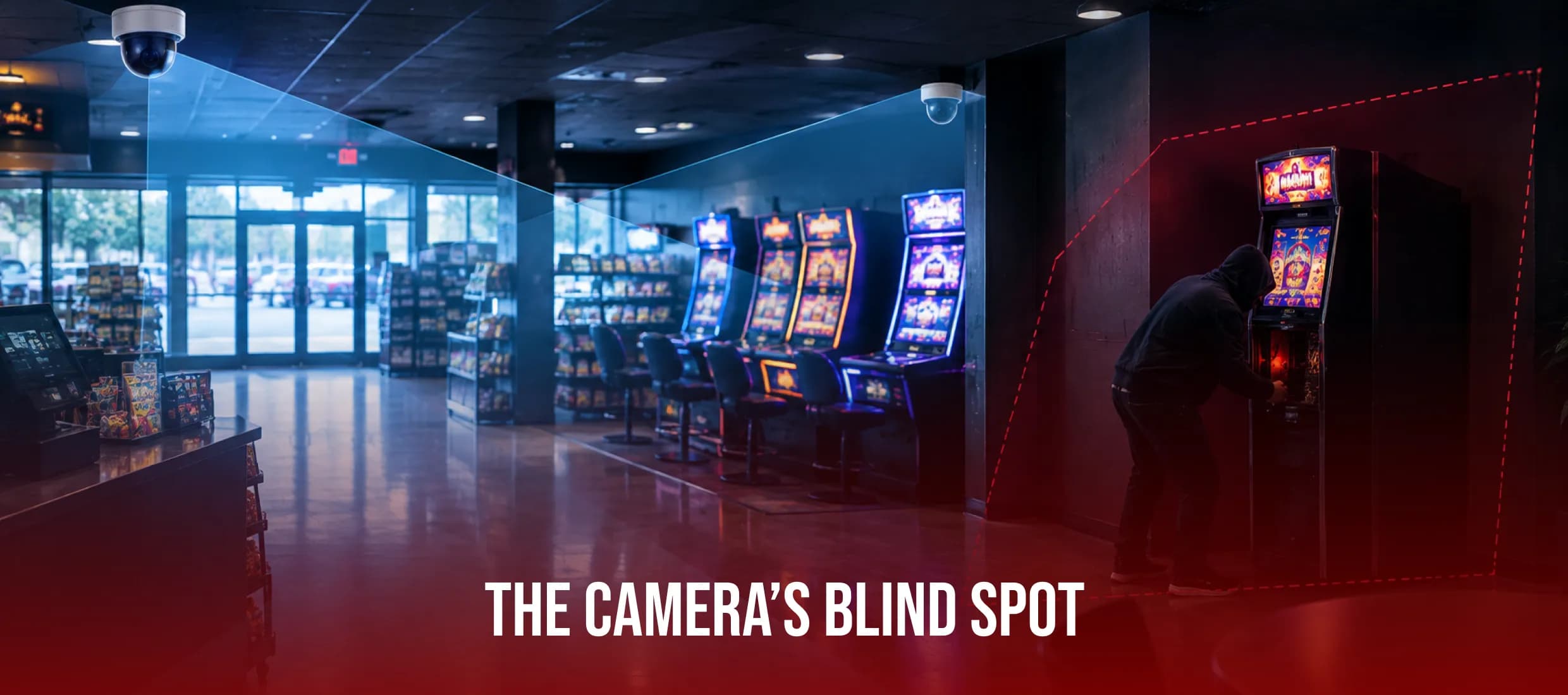
The cabinet sits inside all that coverage and still isn't actually watched, not the way the door of one specific machine needs to be. A few weeks later, a technician finds the door pried and the cash gone. The footage shows the whole thing happening in the middle of a normal afternoon, recorded start to finish, with nobody flagging it until it was already over.
TL;DR: Cabinet Alarm and Camera Blind Spot Basics
- Different Jobs: A venue's cameras and burglar alarm protect the building and its entry points, not the inside of one specific cabinet.
- The Real Gap: These systems mostly record or report after the fact, so a cabinet break-in can sit on camera until someone reviews the footage.
- A Cabinet Needs Its Own Layer: A door-contact alarm on the cabinet catches an unauthorized opening the moment it happens, independent of whatever the venue already has running.
- No Integration Required: The two systems don't need to talk to each other or share data. Each does its own job.
- Operator Takeaway: Treat cabinet-level detection as something you add, not something a well-covered venue already includes.
Why a Store's Security System Leaves a Camera Blind Spot
Most venue security setups are built around two jobs: recording what happens in the space, and reporting when someone forces their way into the building. Nobody designed either one with a specific cabinet door in mind.
That's not a flaw. It's just not what the system was built to do.
What Cameras and Burglar Alarms Actually Protect
A typical CCTV camera setup points at registers, aisles, parking lots, and doors. It records activity across a wide, general area, not one piece of equipment sitting against a wall. A burglar alarm usually watches the building's own entry points, exterior doors and windows, and reports when one of those gets forced. Both do real work. Just not that specific kind.
Neither system is built around the seam of a cabinet door six feet from the counter. That's a real security gap, not a rare oversight, and it exists at many locations that treat "we have cameras" as the whole answer.
The Camera Blind Spot Cabinets Sit In
A cabinet can sit well inside camera coverage and still get missed in real time. Recording isn't the same as watching.
Most footage only gets reviewed after somebody already knows to go looking for something. Nobody's sitting in front of a monitor watching one machine, live, minute by minute, all day. A busy afternoon looks the same as a quiet one to a lens that's just recording.
The same blind spot shows up regardless of what's sitting in that spot. It shows up just as easily on a vending machine in a back room, prone to its own unnoticed tamper events, or on an ATM near the entrance, where physical security still matters even with a camera pointed right at it.
Two Systems, Two Jobs
The venue owns its cameras and its burglar alarm, tied to a monitoring contract. That contract has nothing to do with whatever machines happen to sit inside. The operator owns the cabinet and whatever protects it specifically. Nobody asked the two systems to merge, and they don't need to.
That's fine. Between the two, it's still layered security, with the security layers split across two different owners instead of stacked in one place.
Who Owns Each System
Nobody expects the venue's alarm company to know how a skill game or vending cabinet is wired. That was never part of the contract they sold the location.
The same logic runs the other way. A cabinet alarm doesn't need to report to the venue's monitoring company, sync with their camera feed, or show up on their alarm panel. Two vendors, two contracts, no overlap required. We've already covered what stacking a lock and alarm does at the cabinet level. This is the same idea, one level up, at the building instead of the door.
What Happens When the Only System Watching Is the Venue's
A Break-In the Cameras Catch, and Nobody Sees in Time
Picture the same stop from the opening scenario. The camera runs the whole time, timestamped and clear, catching someone working at the cabinet door mid-afternoon while customers are still walking through.
Many thefts happen even when you are present, even in broad daylight, and a camera recording that moment doesn't stop it.
The footage exists. The alert doesn't.
A break-in like this is quiet, fast, and over before anyone reacts. That's the point behind foot traffic and supervision: a busy location isn't a watched cabinet.
What Changes When the Cabinet Has Its Own Alarm
A cabinet-level alarm doesn't replace the venue's cameras or its burglar alarm. It fills the part neither one was built to cover.
Real-Time Alert vs. Recorded Footage
The problem isn't that the cameras aren't recording. It's that recording isn't the same as watching.
Real-time detection is what actually closes the gap, not a better camera angle or a second monitor at the front desk. A door-contact alarm reports an unauthorized opening as it's happening. The venue's cameras are still just collecting footage nobody's reviewing yet. One watches. One acts.
Built to Run Independently of Whatever Else Is Already in Place
The CG-1000 is wired, standalone, and runs offline. It doesn't need to connect to the venue's cameras or its burglar alarm to work. It runs on 12–24V AC/DC power. Where a factory door switch circuit exists, wiring ties into it through SW-IN/SW-OUT terminals. For other setups, approved trigger accessories such as a magnetic contact trigger or a clip/separation trigger cover the door instead. Connections use spring-cage terminals, designed to simplify installation and reduce unnecessary wiring complexity.
None of that depends on what the venue already has running, and none of it changes if the venue switches alarm companies next year.
Staff should also know how to respond when the cabinet alarm goes off, since it's a separate system from the building alarm.
If you're weighing how this fits alongside whatever a location already has in place, reach out with installation questions, and we'll walk through it for your specific setup.