What a Cabinet Door Contact Alarm Is For, and What to Pair It With
Oct 21, 2026
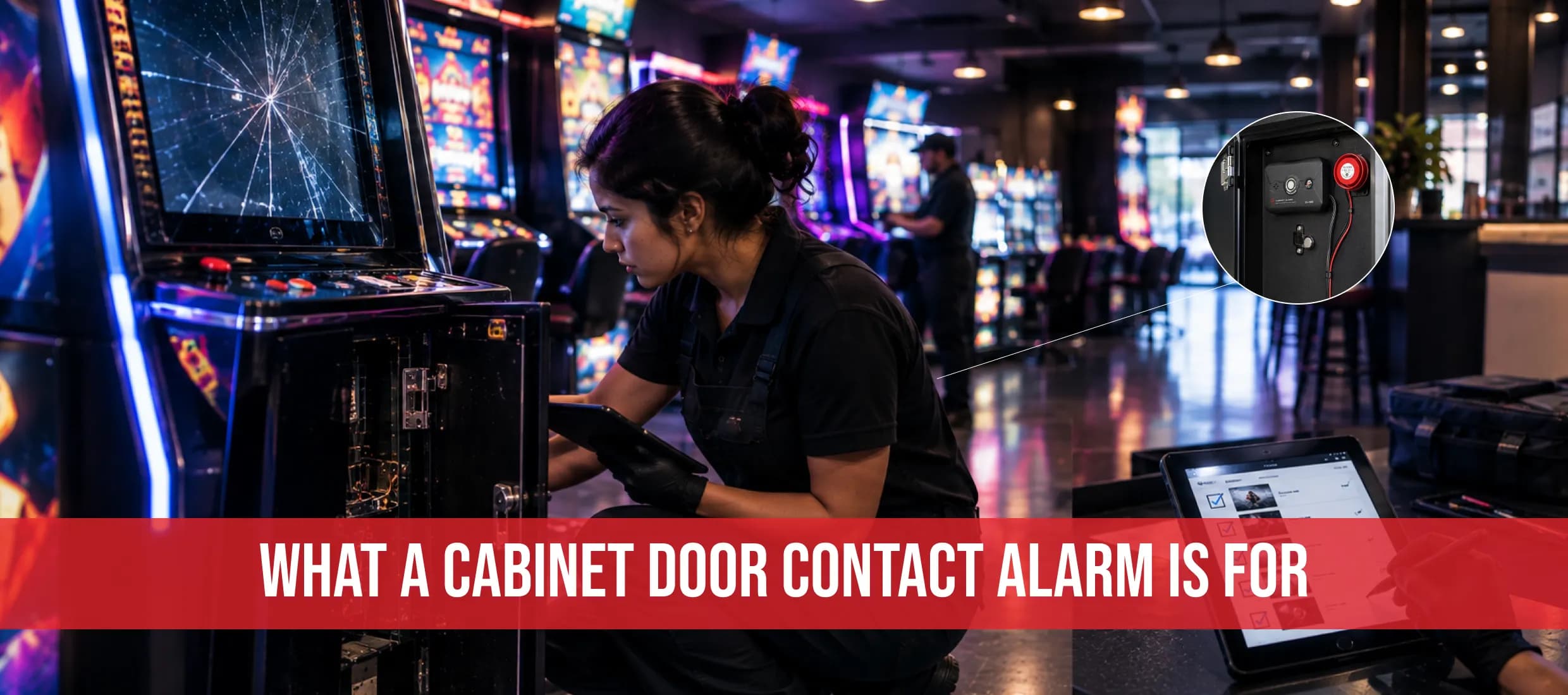
Picture a regular collection stop. The skill cabinet has a cracked screen and two dead buttons, and the location owner can't say when it happened. The door is shut, the lock is intact, and the alarm never made a sound.
The alarm wasn't broken.
The door never opened.
That one fact is what a door contact alarm is built around. This guide covers what the alarm handles on a cabinet, where its limits sit, and what operators usually run beside it.
TL;DR: What a Door Contact Alarm Covers and What Sits Beside It
- One Trigger: The alarm responds when the cabinet door physically opens without authorization.
- What It Covers: An unauthorized door opening, answered on the spot by a 100+ dB siren.
- What It Is Not: Not a camera, not a cage, and not an outside lock.
- Outside Its Scope: Vandalism damage with the door closed, activity around the bill validator area, and a cabinet leaving a location with its door shut.
- What Sits Beside It: A cabinet walk at each stop, validator service, a staff protocol, a sensible collection schedule, and a good lock.
- Fit Check: Match the alarm to the concern, then cover the rest with other tools.
What a Door Contact Alarm Is Built to Do
One Trigger: The Door Physically Opens
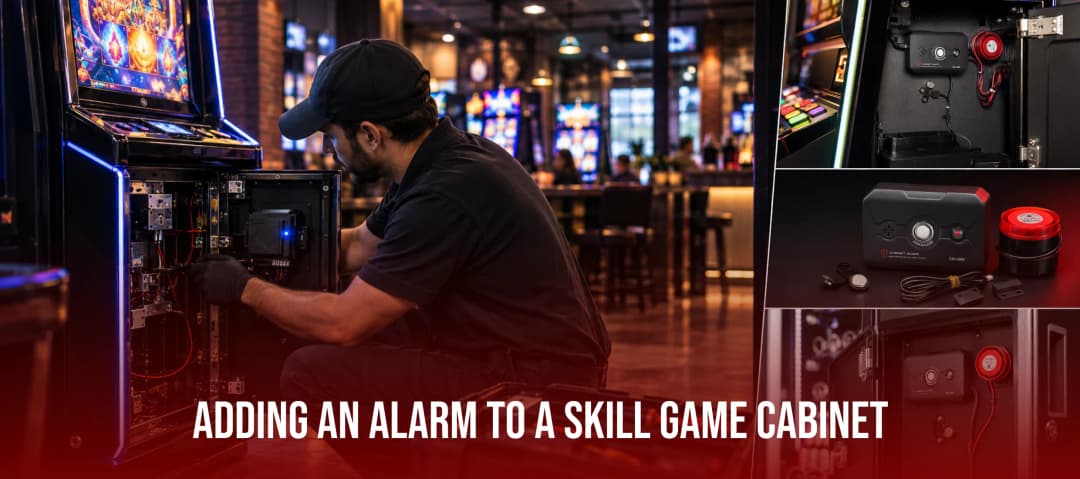
We built the CG-1000, our Universal Cabinet Door Tamper Alarm, around a single trigger. The door-contact circuit only fires when the door physically opens. When that happens without authorization, the 100+ dB siren sounds.
A scheduled service call needs a different answer, and the design has one. The technician or collector carries the keyfob to put the unit into service mode for the duration of a scheduled stop. Without it, the door contact treats the opening as unauthorized.
The unit doesn't read a schedule. The keyfob is what tells it a stop is legitimate.
A standard cam lock stays silent when it gives way, and that silence is the gap an alarm fills. The alarm doesn't keep the door from opening. It answers an unauthorized opening the moment it happens.
Narrow is the point. One clear trigger keeps the unit easy to reason about. You always know what it responds to and what it leaves to other tools.
What It Is Not: A Camera, a Cage, or an Outside Lock
It doesn't watch the cabinet. A camera records what happens near a machine, and a venue burglar alarm covers the building's own entry points, so a cabinet door can sit in a blind spot. The CG-1000 doesn't record footage, and it isn't meant to.
It isn't a cage, and it isn't an outside lock. Nothing about the unit holds the door shut.
It's an alarm. It reads a door switch or contact on the cabinet. It is wired, standalone, and offline, and when the door opens without authorization, the 100+ dB siren sounds.
If you were expecting a barrier or a camera, adjust that expectation now. The alarm sits next to those tools, not instead of them.
Cabinet Concerns That Never Open the Door
Knowing the alarm's limits is part of using it well, and most of them show up with the door closed.
Screen and Button Damage
Go back to the cracked screen. Vandalism damage or ordinary wear, either one can happen without the door opening, so a door contact alarm has nothing to react to.
That's the edge of what a door contact does, not a flaw in the alarm. A cabinet inspection at each stop catches it: a quick look at the screen, the buttons, and how the door seats. Catching it early gives you something concrete to bring to the location owner, and it keeps the repair on your schedule.
A dated photo of what you find gives that conversation something to stand on. It turns "I think it happened last week" into a clear before and after.
The Bill Validator Area
Concerns around the bill validator area don't always involve the door, and a door contact only speaks to the door.
The one validator problem it does speak to is damage from a forced door, since that starts with the door opening. For everything else around the validator, regular service and cleaning on the manufacturer's guidance is the practical answer. Your validator manufacturer is also the right place to ask about validator-specific protections.
Add-On Hardware on the Outside of the Cabinet
A cabinet carries more than a door. Depending on the cabinet, card readers, ticket outlets, button panels, and side panels sit on the outside, and damage to any of them can happen with the door shut.
A door contact has no connection to those parts, so it stays quiet when they are damaged. Add them to the same cabinet inspection you run for the screen, so a loose reader or a cracked panel gets caught while it is still a small repair.
Everyday Wear and Rough Use
Not every cabinet problem is a security event. Sticky buttons, worn bezels, and a sagging hinge show up on busy routes whether or not anyone meant harm.
The door contact stays quiet through all of it. The cabinet walk is where you decide which of these is ordinary wear and which needs a conversation with the location.
A door that no longer seats cleanly is worth a repair early, since the door is the one part of the cabinet the alarm responds to.
Whole-Cabinet Removal and Placement
What the Door Contact Has to Work With
A cabinet that leaves a location with its door shut gives the door contact nothing to react to. The door-contact circuit only fires when the door physically opens, and in that situation the door never does.
We would rather say that plainly than let anyone assume otherwise. Machine removal needs its own answer, and the alarm isn't it.
If a concern doesn't start with the door opening, plan another layer for it.
Placement and Location Agreements
Where a machine sits, and what the location agrees to do about it, are part of the answer. Talk with the location owner about how the cabinet is positioned and who is allowed to move it. Put what you agree on in writing, so the next manager hears the same thing.
A remodel or a deep clean can also shift a cabinet, so ask the location to check with you before anyone rearranges the floor.
Your machine supplier can speak to how a particular cabinet is best secured in place. The right method depends on the cabinet and the venue, and we would be guessing if we named one.
Is a Door Contact Alarm the Right Fit? A Short Check
Run each cabinet through a few questions before you decide. Good route security comes from matching each tool to the job it does well.
Questions to Ask Before You Buy
Start with the concern. The alarm's coverage is unauthorized door openings. Damage with the door closed and a cabinet leaving a location sit outside it, so an honest alarm fit starts with naming which concern is on your mind.
Next, ask what you need beyond an alarm. If it's something that holds the door shut or watches the cabinet, that's a lock or camera job, and the alarm sits beside it.
Then look at the cabinet itself. Where a cabinet has a door switch circuit, the alarm can use it through SW-IN and SW-OUT. Other setups use a magnetic contact or a clip trigger, and the right one depends on the cabinet.
Cabinets with more than one door can use multi-door expansion support. One unit still protects one cabinet.
Last, plan for upkeep. A door contact is a physical part, and contacts wear down in busy locations, so check that it is seated and in good shape at each service visit.
What to Run Alongside It
A few habits cover what the alarm leaves alone. Walk the cabinet at each stop, and service the validator per the manufacturer's guidance. Give the location a short staff protocol before the siren ever sounds, so nobody has to improvise.
Put the walk on a short checklist so it runs the same way at each stop: screen, buttons, door seating, contact, validator area. A fixed order keeps a quick walk quick, and a change from the last visit is easier to spot.
Set your collection frequency by how much cash a cabinet holds between stops, since the alarm has no effect on that.
Keep a good lock on the door too. A lock holds the door, and the alarm answers when the door opens. Most routes are better served by layering locks and alarms than by leaning on either one.
If a door contact alarm sounds like the right fit for the cabinets you run, review the CG-1000 specs and check them against your own setups. If a cabinet needs a different tool, this check will have told you that as well.