Adding an Alarm to a Skill Game Cabinet You Already Have on Route
Oct 28, 2026
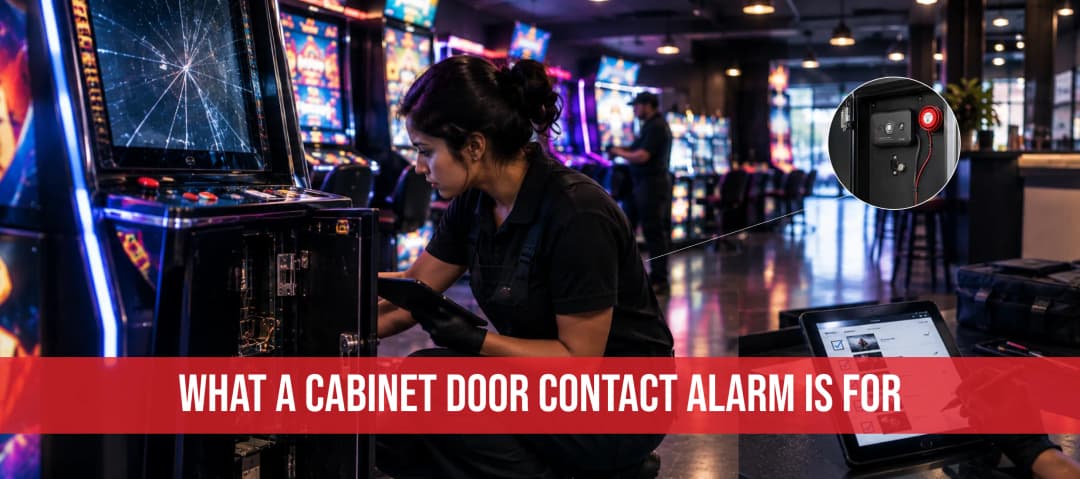
A skill game has been sitting at the same location for a couple of years. The lock still turns, the cash gets collected on schedule, and nobody has had a problem. Then the operator decides to add a retrofit alarm, and the plan starts with a cabinet that was never built with a game alarm in mind.
That's a normal place to start. A game that's already placed isn't coming out just to take an alarm, so the retrofit has to fit the cabinet as it is.
This guide covers what to settle before the visit, so the install goes the way you planned it.
TL;DR: What a Retrofit Alarm Needs on an Existing Skill Game
- Trigger First: The alarm reads the door, so the first job is deciding how this cabinet's door reports that it opened.
- Three Methods: The existing factory door switch circuit where available, a magnetic contact, or a clip or separation trigger. Which one fits depends on the cabinet.
- One Unit Per Cabinet: Each cabinet gets its own unit, even when several sit at one location.
- Fit It Into a Scheduled Stop: The technician or collector carries the keyfob, so the visit doesn't read as unauthorized.
- More Than One Door: Extra doors on the same cabinet can be covered with multi-door expansion.
- Know the Limits: The alarm answers a door opening. It doesn't replace a lock or read damage done with the door closed.
Can a Retrofit Alarm Go on a Cabinet That's Already on Location?
Yes, on most cabinet types. A game doesn't have to be new for you to add an alarm to it. The alarm responds to the door, and a door is a door whether the game shipped last month or three years ago.
Picture a technician arriving for a scheduled collection at a location with four skill games. Three still have the factory lock, and one had its lock swapped a year back. None has an alarm, and nothing about the visit suggests anyone has been thinking about one.
In that spot, the games work, and the locks are in place. The operator wants a second layer behind the lock for the case where a lock gets picked, drilled, or otherwise defeated.
The lock stays.
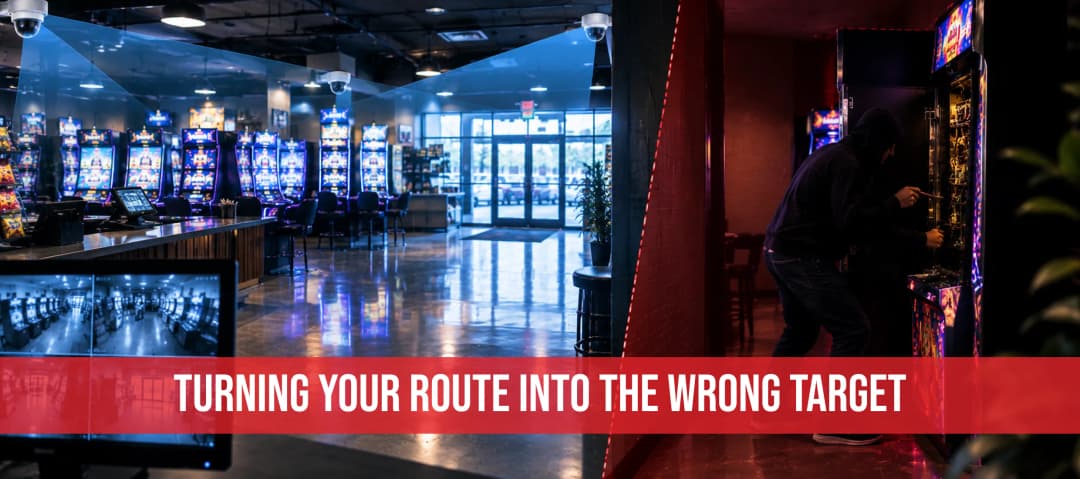
Many thefts happen even when you are present, even during broad daylight, so a spot with steady foot traffic can still want an alarm on its cabinets. Presence alone isn't protection, and a thief who suspects an alarm is there will often choose a different target.
The Question That Decides It
Before you plan anything else, ask how the door will report that it opened. The CG-1000 is a wired alarm, so it needs a signal from the cabinet door itself. The way you get that signal changes from one cabinet to the next.
The question isn't which add-on alarm to buy.
It's how this door will tell the alarm it opened.
That answer shapes the rest of the visit. It's easier to settle at your desk than in front of an open cabinet.
Three Ways a Cabinet Can Feed the Alarm
The CG-1000 has three ways to get a door signal, and no single method works for every setup.
The Factory Door Switch, Where the Cabinet Has One
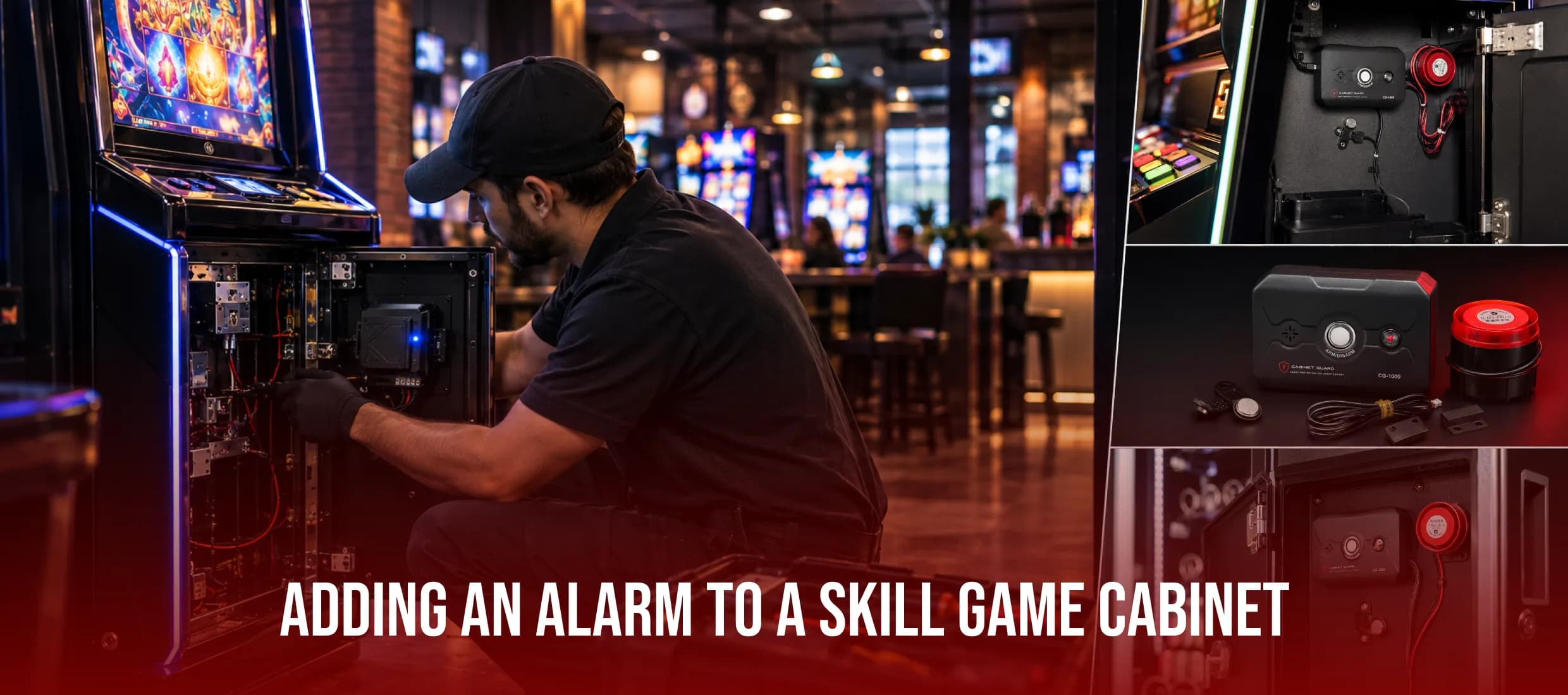
Some cabinets already have a door switch wired in from the factory. Where that's the case, the CG-1000 can use the existing factory door switch circuit through its SW-IN / SW-OUT wiring.
Its connections go to spring-cage terminals. The design aims to simplify installation and reduce unnecessary wiring complexity. That matters on a retrofit, because the game is already in service and nobody wants a wiring job that grows once the door is open.
Confirm on the game itself that the switch is there and connected. On an older game, the cabinet door switch can be missing, worn, or disconnected. A door switch alarm is only as good as the signal it gets from the door.
Magnetic Contact and Clip or Separation Triggers
When a cabinet has no usable factory switch, the other two methods cover it. A magnetic contact puts a magnet on the door and a contact on the frame, and the alarm picks up the door opening when the two move apart.
The clip or separation trigger is the third method, for setups the other two don't suit. A location with several skill games can have cabinets that call for different methods, so treat each one on its own.
While you sort that out, keep the CG-1000 specs handy.
Planning the Retrofit as a Scheduled Stop
A technician is already booked for a collection at a venue with two skill games. The visit is on the calendar and the cabinets will be open anyway, which makes it the natural window for the alarm install.
What Changes for the Technician
The technician or collector carries the keyfob to put the unit into service mode for the duration of a scheduled stop. Without it, the door contact treats the opening as unauthorized. That's the habit to plan around once the alarm is on.
When the door closes again, the unit re-arms.
Treat the keyfob as part of the plan. With a keyfob alarm, the visit goes smoothly when the right person carries it, and it doesn't when nobody decided who that would be.
When an outside technician does the work, decide before the day who holds the keyfob. The person at the cabinet has to be the one carrying it.
One Unit Per Cabinet at a Location
One CG-1000 unit covers one cabinet. A venue with three skill games needs three units, so count units against cabinets before you load the truck.
Starting with one game at a time makes sense when a location has several. What you learn on the first one carries over to the rest, or tells you the others need a different approach.
Cabinets With More Than One Door
Some skill games have a main door and a separate door to the cash area. On a multi-door cabinet, a cabinet door alarm watching only one of the two leaves the other as the way in.
Multi-door expansion adds access points on the same cabinet. It doesn't extend one unit to cover other games at the location.
If the cash area sits behind its own door, plan for the cash compartment door as well as the main one. Each door you decide to cover gets added to that cabinet's coverage.
What a Retrofit Alarm Doesn't Settle
An alarm retrofit isn't a full security plan.
It answers one thing: what happens when the door opens without authorization.
Everything around that stays a separate decision, and treating the alarm as the whole plan leaves gaps you'd rather find on paper than at a location.
Lock and Key History: Stay Your Call
A cabinet picked up from another route can come with unknown key history, and an alarm doesn't change that. Rekeying or replacing the factory lock is its own decision, and the alarm doesn't stand in for it.
Damage With the Door Closed
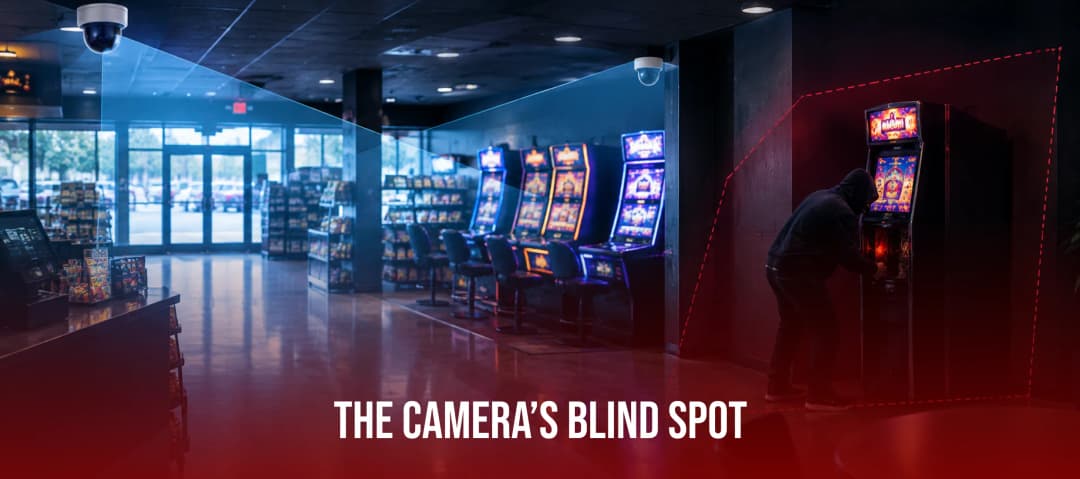
The door-contact circuit only fires when the door physically opens, so machine vibration has no way to trigger it by design. The flip side is that damage done to a cabinet with the door closed isn't something the door contact reads.
That gap is one of the limits of a door contact, and it's why the alarm sits alongside other protection instead of standing in for it.
Questions to Settle Before the Stop
Five questions cover most of the planning for a retrofit alarm on an existing cabinet.
- Does the cabinet have a usable factory door switch, or will it need a magnetic contact or a clip or separation trigger?
- Does it have more than one door that needs coverage?
- Who is carrying the keyfob on the day, your own technician or an outside one?
- How many cabinets are at the location, and is there a unit for each one?
- What is the condition of the lock, and what do you know about its key history?
The thing is, a retrofit goes smoother when the door question is answered before the visit, not during it. If you're working through a location now and aren't sure which trigger suits a cabinet, send us your installation questions, and we'll help you sort it out.