Letting an Outsider Into Your Cabinet: Third-Party Access Done Right
Sep 23, 2026
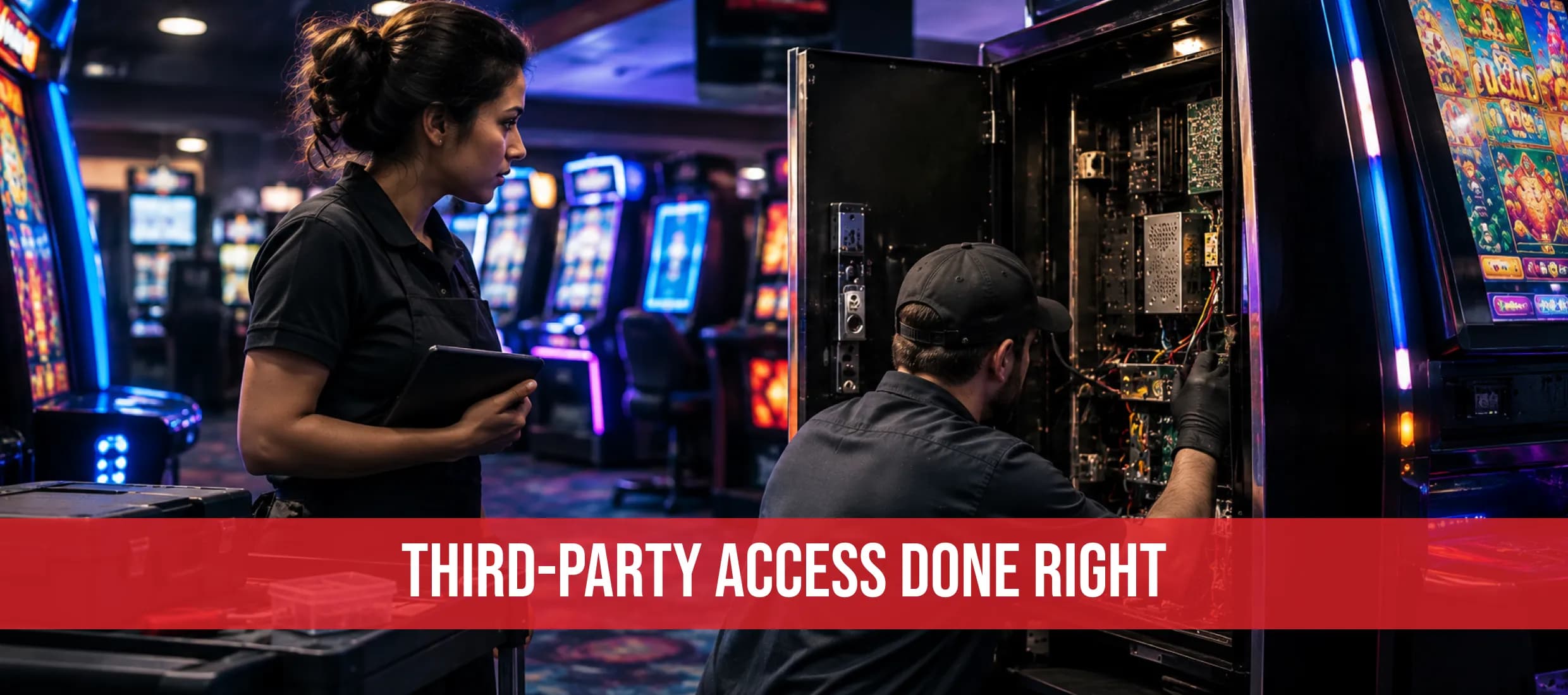
A distributor tech calls ahead to schedule a board swap on two machines at a laundromat stop. A manufacturer rep needs an hour with a skill game that's been throwing an odd error code. Neither one works for you. Both need the cabinet door open, and neither should trip a 100+ dB siren doing legitimate, scheduled work.
That's third-party cabinet access: managing entry for someone who isn't on your payroll but has a real reason to be inside the cabinet. It's a different problem than running your own crew's route.
Managing Third-Party Cabinet Access on a Route
- Different Relationship: A manufacturer rep or distributor tech doesn't have the ongoing trust that comes with your own crew, so the access question matters more, not less.
- Same Keyfob Mechanism: The keyfob puts the unit into service mode for the length of that one stop, no matter who's carrying it.
- No Advance Scheduling Built In: The system doesn't know a visit is coming. It only checks for a valid keyfob the moment the door opens.
- One Cabinet, One Opening: Multiple machines touched in the same visit each need their own authorized opening.
- Software Updates Stay Separate: Updating a machine's own software has nothing to do with the CG-1000, which is wired, standalone, and offline.
- No Visit History Stored: The alarm decides in real time whether to fire. It doesn't keep a log of who came through.
Why Third-Party Visits Are Different From Your Own Crew's Stops
Your own route techs are a known quantity. You hired them, and most operators stop thinking about the keyfob access for their own crew after the first few stops.
A manufacturer rep or a distributor tech is a different situation entirely. You didn't hire them. You don't manage their schedule, their training, or what happens after they leave your location.
There's no ongoing relationship to fall back on if something about the visit doesn't add up.
The thing is, that gap in familiarity doesn't mean you can't grant access. It means the process needs to be tighter, not looser.
What Counts as a Third-Party Visit
A few examples make the shape of this clearer. A manufacturer technician coming out under warranty to look at a machine that's been acting up. A distributor tech running scheduled board swaps across several stops on the same day. Someone installing new hardware inside the cabinet, or a machine that needs its own software updated on-site.
None of these people work for you. All of them have a legitimate, scheduled reason to open your cabinet door, and treating that access differently than your own crew's routine stop just makes sense.
The Trust Gap: Why "Who's Allowed In" Gets Harder With an Outsider
Picture a route with a dozen stops split across Texas and Missouri. A distributor calls to schedule three board swaps for the following week, at three different locations. The visit is legitimate, and it's on the calendar. It's also someone the operator has met maybe twice.
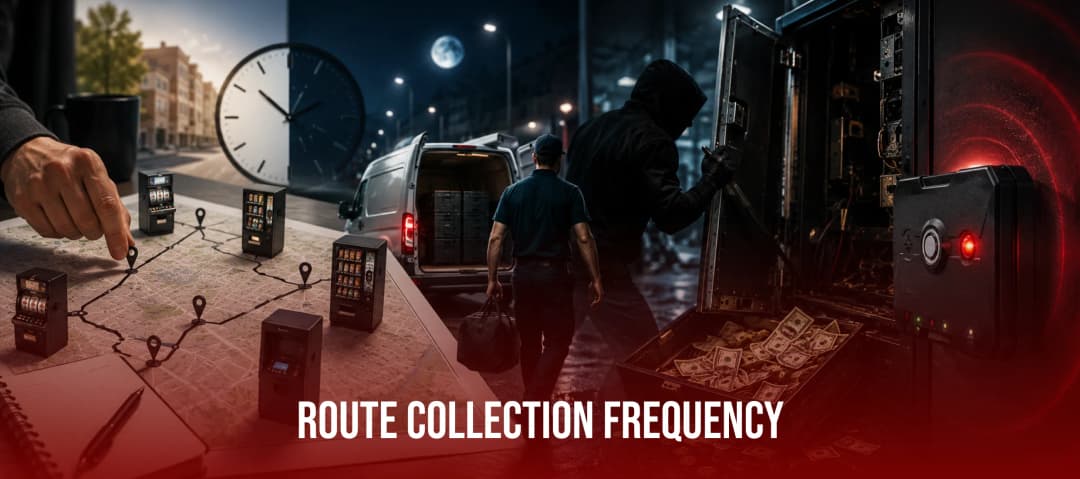
A cabinet door opening during that scheduled stop is nothing. The same door opening at one of those locations with no service call booked, on a day nobody was expecting a visit, is the thing the alarm exists for.
That's the door-contact trigger doing its job, whether the person at the door is someone on staff or someone from three states away.
The lock on the door isn't the real question.
It's whether the door reports back the instant it opens.
That's what separates a scheduled visit from an alarm event, regardless of who's standing at the cabinet.
Route operators managing route gaming machines, vending, and ATM cabinets across states like Texas, Pennsylvania, and Missouri run into this constantly. The paperwork says the visit is authorized. The cabinet door doesn't read paperwork.
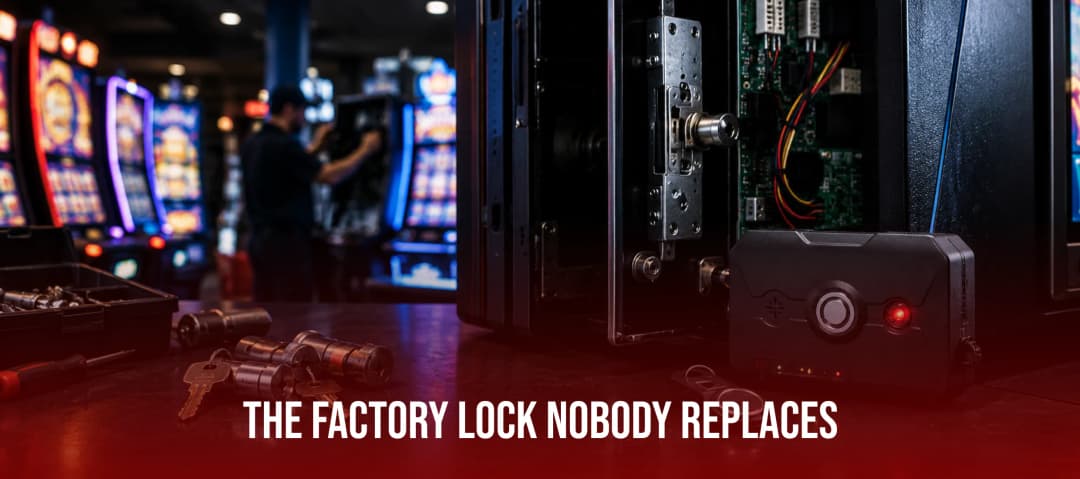
It's the same blind spot that shows up with an aging factory lock still sitting on a cabinet nobody's gotten around to replacing. The door itself doesn't know whether whoever's opening it is supposed to be there.
How the Keyfob Handoff Actually Works
This is where the CG-1000 handles the actual key handoff, and it's worth being precise about what it does and doesn't decide.
The unit doesn't decide who gets into the cabinet. The door and whatever's already securing it handle that part. What the CG-1000 decides is whether opening that door sets off a 100+ dB siren.
The technician or collector carries the keyfob to put the unit into service mode for the duration of a scheduled stop. Without it, the door contact treats the opening as unauthorized.
For a third-party visit, that keyfob has to come from somewhere. Some operators keep one keyfob for scheduled outside visits and issue it at the start of the stop. Others coordinate directly with the rep or distributor tech ahead of time, so the keyfob doesn't get used until everyone's actually on-site and ready to start.
Either way, the mechanism doesn't change based on who's holding it. The same logic behind why key control matters most on the rest of the route applies here too.
The CG-1000 runs on 12–24V AC/DC power, wired directly into the cabinet. It's a standalone system, with no app and no cloud connection tied to it. Spring-cage terminals handle the wiring connection, which matters if a distributor tech is also doing hardware work in the same visit. SW-IN and SW-OUT wiring ties into the existing door switch circuit on most cabinets.
None of that matters much in isolation. What separates a spec sheet from hardware worth relying on is whether it holds up the same way on stop fifty as it did on stop one.
Coordinating the Handoff Across a Mixed Fleet
Route operators running route gaming machines alongside vending or ATM cabinets deal with this more than most, since a single distributor visit might touch three different cabinet types in one stop.
Multi-door expansion support means one stop covering several doors on the same cabinet doesn't need a separate unit for each opening. But it's still one CG-1000 per cabinet. A rep swapping boards on three separate units needs the keyfob at each one.
That consistency is also why SW-IN/SW-OUT wiring across mixed fleets makes this easier. A distributor tech who's serviced one cabinet on the route already knows what to expect at the next one, even if it's a different unit type entirely.
If you're planning ahead for a mixed-fleet visit, it's worth checking the current CG-1000 specs before the rep shows up, since not every trigger method fits every door.
What Happens When the Keyfob Isn't Used
Here's the scenario that actually matters. The board swap is on the schedule. The distributor tech shows up, opens the door, and the keyfob puts the unit into service mode first.
Nothing happens.
That's the visit working exactly as intended.
Now take the same door, same cabinet, but no keyfob and no service call booked for that day. The door contact doesn't know or care why it opened. It fires.
The alarm isn't judging intent. It's reporting a fact: this door opened without the keyfob that says it was supposed to.
That's a different problem than false triggers from loose wiring, which fire for reasons that have nothing to do with who's at the door. This one is exactly the alarm doing its job.
Board Swaps and Software Updates: Keeping the Visit Contained
Two of the most common reasons for a third-party visit are a board swap and a software update on the machine itself. It's worth being clear about where the CG-1000 fits into both, because it's easy to assume more connection than there actually is.
A board swap happens inside the cabinet, on the game's own logic board. It has nothing to do with the CG-1000's hardware.
The CG-1000 isn't part of the machine's software.
It's a separate, standalone unit that only watches the door.
Whatever software update happens inside the cabinet, the alarm's job stays exactly the same: decide if that door opening should trigger the siren.
That distinction matters for anyone who assumes a "smart" security system watches everything happening inside a cabinet. The CG-1000 doesn't. It's watching one thing: the door.
For an operator scheduling a software update alongside a board swap, the practical takeaway is simple. Whatever's happening with the machine's software, the door still needs the keyfob to open quietly.
That's also where reliable wiring matters. Spring-cage terminals hold their connection even after repeated cabinet openings, which is relevant if the same cabinet is getting visited more than once during a multi-step repair.
Route operators who've standardized their install across the fleet also tend to standardize how outside visits get handled. It's really the same discipline as installing alarms at scale, just pointed at a different part of the process.
If you're coordinating an upcoming visit across a mixed fleet and want to walk through how the keyfob handoff fits your specific setup, reach out with your installation questions and we'll go through it stop by stop.