The Factory Lock Nobody Replaces: A Route Operator's Blind Spot
Sep 9, 2026
Pick up a new skill game cabinet, an amusement machine, or an ATM top hat straight from the manufacturer. It already has a lock on it. Nobody on your team chose that lock. Nobody compared it against anything else. It's the factory lock. It shipped with the unit because the cabinets in that production run all needed something on the door before they left the warehouse. Most operators never stop to ask what that lock was actually built for. The honest answer changes how you should think about security across your route.
TL;DR: The Factory Lock Problem on Route Gaming and ATM Cabinets
- It's a shipping default, not a security choice: The lock on a new cabinet was picked for cost and production, not for the location it ends up at.
- The same lock covers a lot of ground: Route gaming cabinets from one manufacturer often carry the same keyed lock across a large production run.
- ATMs aren't fully exempt either: The vault lock is certified, but the outer cabinet door often ships with a generic, low-security lock.
- Vending follows the same pattern, briefly: A comparable shipping lock shows up there too, meant to hold a door shut in transit.
- Replacing the lock resets the clock; it doesn't close the question: A new lock still leaves the same open question about who else might have a key.
- A cabinet tamper alarm doesn't depend on the lock at all: It reports the moment the door opens, no matter which key or method got it there.
What's Actually On the Cabinet When It Ships
How Route Gaming Cabinets Get Their Lock
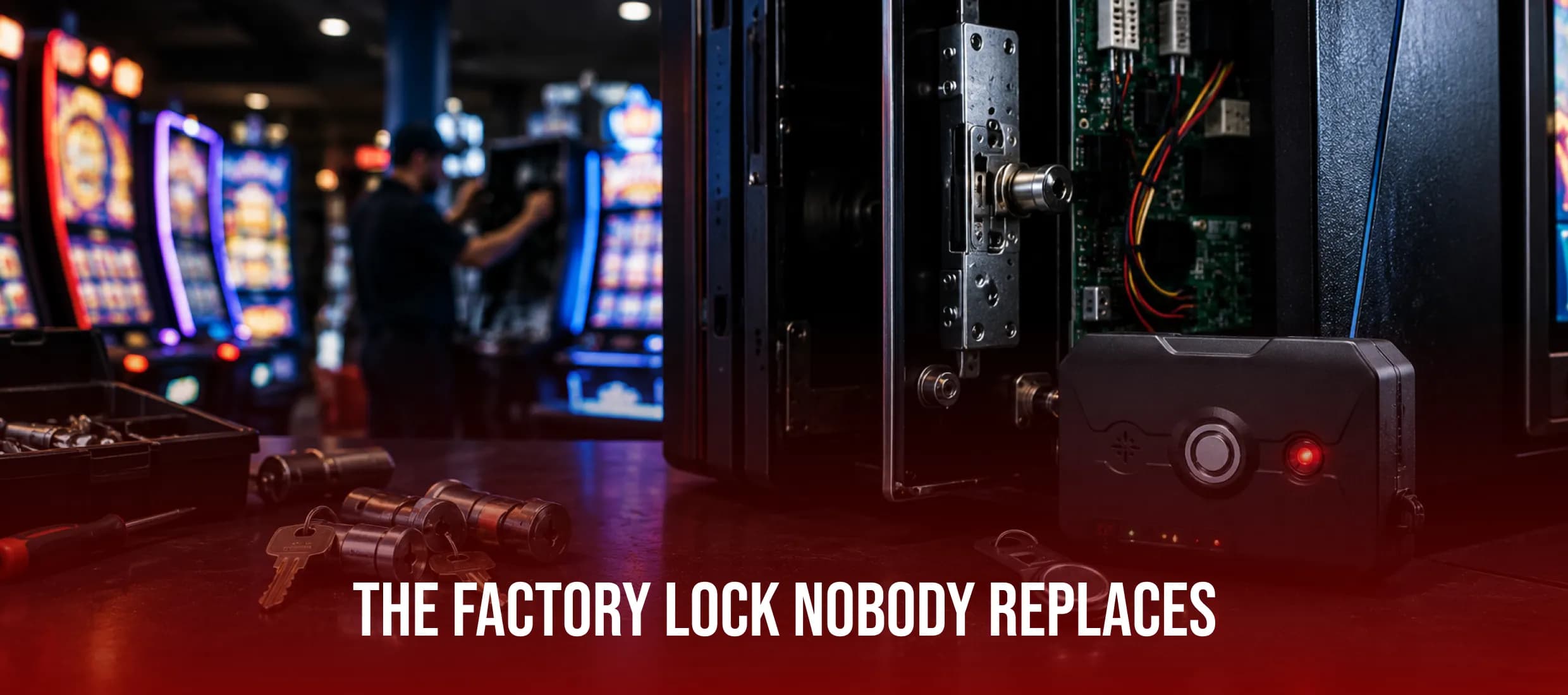
A skill game, VGT, or amusement cabinet doesn't arrive as a custom security enclosure. It arrives as a manufactured product. The lock on the door is part of that manufacturing run. It isn't a decision made for your specific location.
Cabinet manufacturers buy locks the same way they buy hinges or casters. They buy in bulk, from a lock supplier, matched to whatever hole pattern their cabinet design uses. That keyed lock ships on every unit in the batch. It wasn't chosen because it resists prying well. It was chosen because it's cheap, easy to source, and fits the hole the cabinet was built around.
That's especially worth remembering with equipment picked up secondhand rather than ordered new. A used cabinet's lock history is whatever the previous owner left behind, door lock included.
Vending Follows a Similar Pattern
Vending isn't the focus here. But the same idea shows up on that side of the business too. Manufacturers install what's often called a shipping lock or transport lock. It's built to keep a door shut in transit, not to stand up to anything once the machine is actually on location.
Why the Factory Lock Was Never a Security Decision
The lock on the cabinet wasn't chosen to stop anyone.
It was chosen to get the cabinet through shipping.
That's the entire reason a factory lock and a security decision aren't the same thing, even sitting in the exact same hole in the same door.
A Manufacturing Choice, Not a Threat Model
Nobody at the factory thought about what a route in Texas or Missouri looks like after closing. Nobody thought about what kind of person might try that door. That's not what a cam lock or keyed lock was built to answer.
The factory lock answers a different question. What's the cheapest, most available part that closes this door and survives shipping? That's a reasonable manufacturing question. It isn't a security question. The two get treated as the same thing far too often once the cabinet is sitting on a route.
The Same Key Opens More Than One Cabinet
Here's the part that surprises most operators the first time it comes up. The lock is bought in bulk. It's matched to one hole pattern. So the same lock, and often the same key, shows up across a large number of identical cabinets from that manufacturer.
Duplicate keys aren't the exception with a factory lock. They're closer to the norm. That's the key-control problem at scale, and it starts before anyone even counts how many people on a route have carried a master key at some point.
This doesn't mean every location running that cabinet model is somehow connected. It means the lock was never designed to be unique to your route in the first place.
The ATM's Outer Door Has the Same Problem
Why the Vault Isn't the Right Comparison
It's easy to assume ATMs are the exception here. Everyone knows the cash vault inside carries a serious, certified lock. That part is true, and it should be. But the vault isn't the only door on the machine.
Most ATM cabinets have an outer fascia or top-hat section. It opens separately from the vault and covers the card reader, receipt printer, and other serviceable parts. That's the door operators tend to forget about once the vault lock passes inspection.
The Outer Cabinet Lock Is Often the Weak Point
That outer door commonly ships with a generic, low-security lock. It's the kind a lock supplier sells specifically as a retrofit replacement, because so many ATM operators never think to swap the ATM lock they got at delivery. It's the same factory-default pattern on a different machine type. A certified vault a few inches away just makes the whole cabinet feel more secure than that particular door actually is.
That's the same case for why the outer door matters on any route machine, not just ATMs. An operator who checks the vault lock and stops there has checked the one part that was never really in question.
What Actually Changes the Factory Lock's Risk
Replacing the Lock Resets the Clock
Swapping the factory lock for a better one is a real step. It's worth doing, especially on any cabinet where the lock history is genuinely unknown. But a new lock only resets the question. It doesn't close it. Whoever gets a key to the new lock still needs to be tracked. That starts over with a shorter list, it doesn't disappear.
That's worth doing on its own. It just isn't the same as removing the question entirely.
What a Cabinet Tamper Alarm Changes About This
A better lock still depends on who has a key.
A cabinet tamper alarm doesn't.
It reports the moment that door opens. It doesn't matter if the door was picked, pried, or opened with a key nobody remembers handing out.
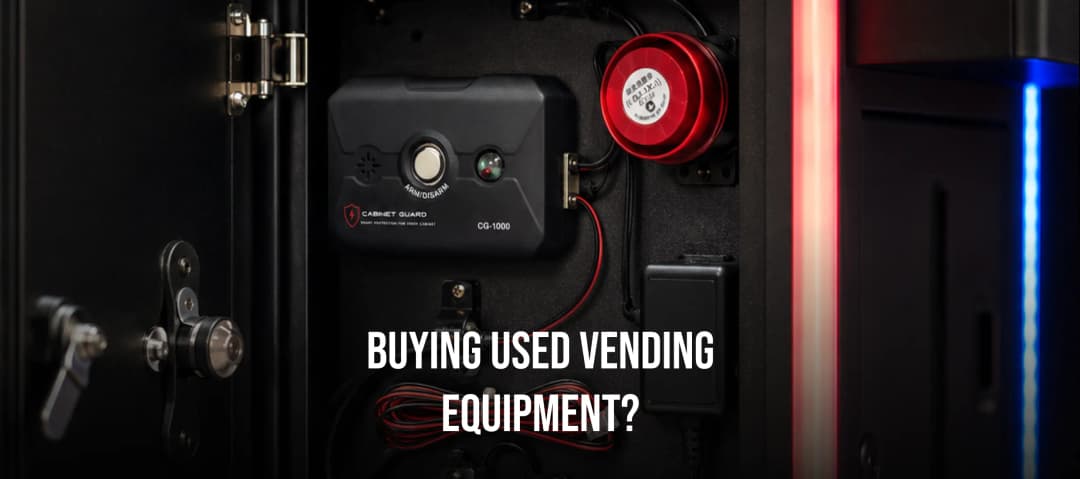
This is really just resisting entry versus reporting it, two separate jobs instead of one lock trying to do both. We built the CG-1000 hardware around exactly that idea. It mounts inside the cabinet and wires into the door circuit.
Most cabinets already have a factory door switch built in. The CG-1000 uses that existing SW-IN / SW-OUT wiring where it's available. Where a cabinet doesn't have one, a magnetic contact or a clip-style trigger covers the same job. The unit runs on 12–24V AC/DC. It also includes optional battery backup. If cabinet power gets interrupted, that backup keeps the alarm system armed. An unauthorized opening still triggers the 100+ dB siren either way. That's the instant a door opens without authorization, and it doesn't ask what kind of lock was on it first.
Authorized technician credentials manage service access on-site. The technician or collector carries the keyfob to put the unit into service mode for a scheduled stop. Without it, the door contact treats the opening as unauthorized, no matter what key was used to get there. None of that depends on whether the lock underneath is the factory original or a hardware-store upgrade. That's really the point. The lock stops being the only thing standing between a route and an opening nobody noticed.
If you haven't checked what's actually on your cabinets in a while, that's worth doing first. Pull the lock spec on a handful of machines across the route. See how many are still running exactly what arrived in the box. If it's most of them, building a broader route habit beyond just the lock is probably the next real step, not a lock swap on its own.