The Small Operator's Guide to Route Security That Actually Holds Up
Aug 5, 2026
A five-machine operator drives past a strip mall gas station three times a week and never gives route security a second thought. The math in their head feels obvious: small operation, low profile, nothing worth a thief's time. That math misses the one thing that actually decides whether a cabinet gets hit, and it has nothing to do with how many machines sit on the route.
Route Security Risks a Small Operator Overlooks
- Size Isn't the Filter: A thief sizes up whether one specific cabinet resists, not whether the operator runs five machines or fifty.
- Presence Beats Scale: What actually changes a thief's decision is whether they expect resistance, not how big the route looks from outside.
- Waiting Costs More Than Acting: Delaying protection until the route "earns" it leaves every current machine exposed in the meantime.
- One Machine, Full Exposure: A single unguarded cabinet carries the same risk whether it's your only machine or your fortieth.
- Standardizing Early Is Cheaper: Building consistent coverage from machine one avoids a scramble to retrofit later.
Why "Too Small" Misunderstands Route Security
Ask a small operator why they haven't wired alarms into their cabinets yet, and the answer usually sounds the same. Nobody's paying attention to a route this size. There's nothing here worth the trouble.
That logic feels reasonable from the office chair.
It falls apart in the field.
A thief walking a strip mall parking lot isn't running a headcount on how many machines a location has. They're looking at one cabinet, one door, one lock, and deciding in a few seconds whether it's worth the ten minutes it takes to get inside. The size of the route never enters that calculation. The condition of that one cabinet does.
Route security built this way stops being a scale question. It's a per-cabinet question, asked the same way whether there's one machine in the building or forty.
How Thieves Actually Pick a Target
The clearest way to think about this is presence, not scale. What changes a thief's target calculation isn't how big an operation looks; it's whether they expect this specific cabinet to fight back. A five-machine route where every cabinet gives that impression sits in a completely different position than a fifty-machine route where half the cabinets don't. Target selection runs on that logic, not on headcount.
Route size isn't the only variable operators get wrong this way. Time works the same way, and a route built around clock-based risk assessment misses the same signal a size-based one does: the assumption that some factor outside the cabinet itself changes what's actually at risk.
What a Small Footprint Actually Looks Like Up Close
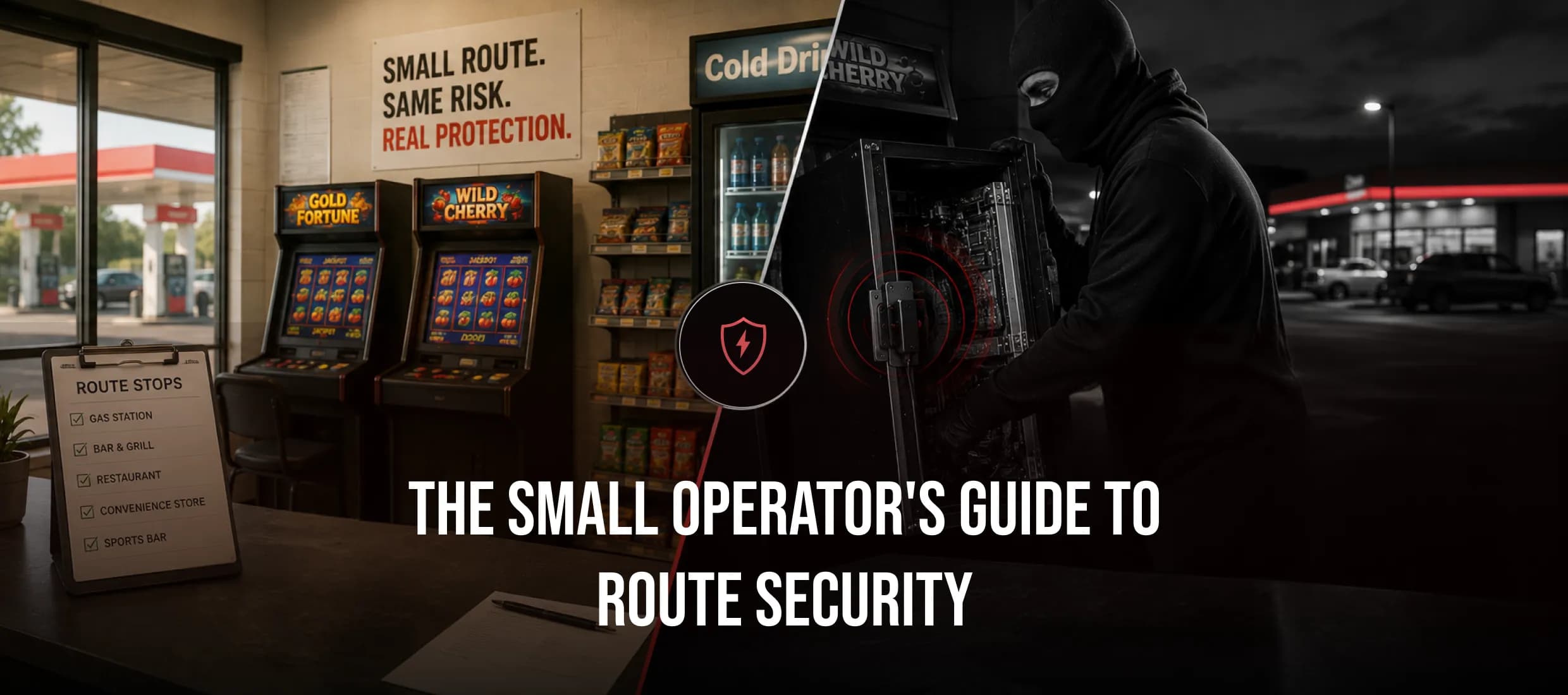
A lot of five- and six-machine routes live in exactly this kind of spot: one gas station, one bar, one corner restaurant. A single machine location doesn't get a pass because it's small. If anything, it's a simpler decision for whoever's casing it. One door, one point of entry, and it's usually the door itself, not the cash box behind it, that explains why cabinets open more easily than most operators assume.
The thing is, a minimal footprint doesn't reduce the number of ways in. It just reduces the number of cabinets you'd need to cover to close all of them. That's a smaller job, not a lower-stakes one.
Why Waiting Until You Grow Doesn't Actually Work
The plan to get serious about security once the route is bigger sounds sensible until you map out what it actually means in practice. It means running every existing machine unprotected for months or years while waiting on a growth milestone that has nothing to do with whether those machines are exposed right now.
Route growth changes plenty of things. Staffing, service scheduling, cabinet mix, geographic spread. It doesn't change whether an unprotected cabinet sitting in a gas station today is worth a thief's ten minutes. That risk exists on day one, not at cabinet fifty.
Makes sense when you put it that way. A route doesn't earn its way into needing route protection. It has it from the first cabinet placed. The same coverage that protects a single cabinet today becomes the baseline once a route starts scaling into new locations, which is a much easier position to be in than retrofitting after the fact.
What Actually Closes the Gap for a Small Route
Closing that gap doesn't require a different system for a small route than for a large one. We designed the CG-1000 to work the same way on every cabinet it's installed on, whether a route has one machine or forty, because the door-contact trigger that fires the alarm doesn't care how many other machines sit elsewhere on the route.
Each unit wires into a single cabinet's existing door switch circuit through SW-IN / SW-OUT, using the same installation specs regardless of how many other machines sit on the route. The technician or collector carries the keyfob to put a unit into service mode for a scheduled stop on a five-machine route the same way they would on a fifty-machine one; without it, the door contact treats the opening as unauthorized. Coverage doesn't change based on route size, and that consistency is exactly what makes theft prevention something you build once instead of retrofitting every time the route changes shape.
What This Looks Like on an Actual Route
Picture a two-machine setup behind a convenience store counter, the kind of location that barely registers as a route at all. No service call is on the books for either machine this week. When a door on one of them opens anyway, the cabinet doesn't know or care that this is a small operation.
The contact breaks, the siren fires at 100+ dB, and the response looks the same as it does on any unauthorized cabinet opening, regardless of route size. That's the design working as intended. No scheduled visit and no authorized reason for that door to be open means the alarm treats it as exactly what it is.
If you're running a handful of cabinets and wondering whether it's worth wiring in coverage yet, reach out, and we'll walk through your setup.