The Fake Technician Problem: Why Checking the Story Isn't Enough
Nov 4, 2026
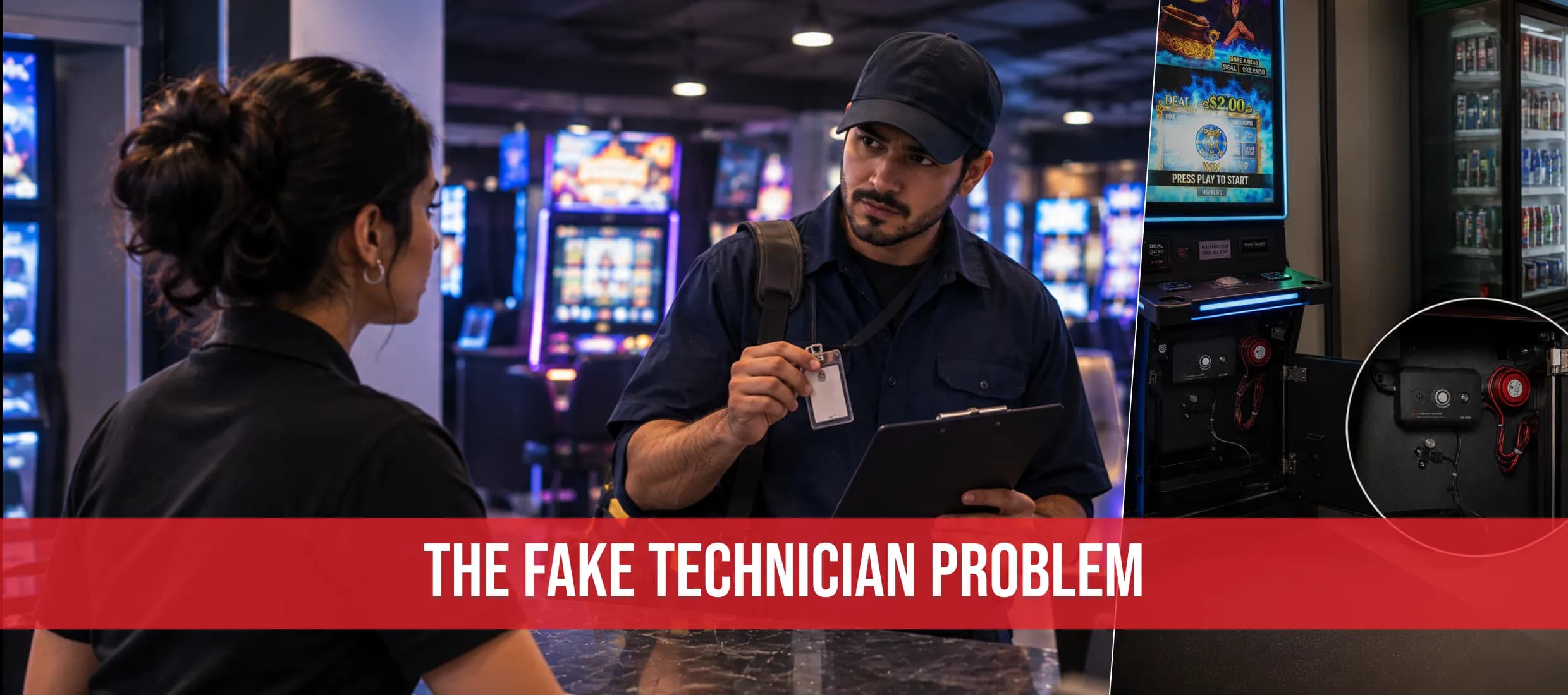
A person in a work shirt walks up to the counter and says the operator sent them to check on the machine. They know the machine type, and they know your company name. The person behind the counter has seen service people before and has no easy way to check them.
A fake technician doesn't need much. A believable role and a calm voice can be enough.
Who decides whether that visit is real?
Fake Technician Scams: What Route Operators Need to Know
- How It Works: The visitor claims to be from your company and asks for access to a cabinet, counting on the fact that the location has no easy way to check.
- Why Checks Leave a Gap: Anything built on what the visitor hands over, such as a number or a work order, can be copied by someone else.
- The Real Test: A visit is either on your calendar or it isn't, and only you know which.
- What the Alarm Does: A door alarm responds to an unauthorized opening, not to the visitor's story.
- What You Control: Your schedule, your paired keys and how you handle an attempt that comes back.
How a Fake Technician Gets Past the Counter
Why the Story Works
Service people turn up at route locations all the time. Third-party service visits from a manufacturer rep or a distributor's tech are routine, and so are visits from your own collector. Few people at a convenience store counter think twice about someone in a uniform carrying a tool bag.
A fake repairman uses exactly that opening. The role costs almost nothing to play, just a shirt and a clipboard. Social engineering theft relies on a believable role like that, played to someone who wants to be helpful.
The person at the counter isn't being careless. They're doing what most decent people do with a visitor who seems to know the business. The visitor is counting on that, and on the fact that the location can't see your service calendar.
What They Ask For
The ask is usually small and routine. They say the operator has them scheduled for a quick machine check, and that the office knows they're coming.
What they want is the cabinet door. Behind it is the cash, and getting there is the unauthorized access an alarm is built to respond to. The visitor has no real connection to your company, and the story is just the way in.
Why Phone Numbers and Paperwork Leave a Gap
The Call-Back Problem
The usual fixes sound sensible. Ask for a work order, ask for a badge, call the number on the card. Each one makes sense when the visit is an honest mix-up, like a new technician nobody introduced.
The thing is, every one of them depends on what the visitor hands over. A card, a number or a printed work order can come from someone else as easily as from you. A technician scam doesn't need to beat the check because it supplies the check.
Relying on those checks also asks a lot of the person at the counter. They'd have to decide, in front of a patient visitor, whether a stranger is lying, with nothing to compare against. Plenty of people would give the benefit of the doubt, and that's a reasonable human instinct.
Scheduled or Unscheduled Is the Real Test
Think about it from your side of the desk. Planned visits to a cabinet on your route are on a calendar somewhere, whether that's a collection stop, a parts swap or a service call you booked.
A planned technician visit has a date attached before anyone shows up, whether it's your own technician or an outside rep. The stranger who just arrives has no date attached. The question isn't whether the story sounds right but whether the visit was on your calendar.
A repairman scam is hard to catch at the counter because the information needed to catch it lives somewhere else, with you. A day with no service call on the books and a stranger at the cabinet is an unscheduled visit, however good the uniform looks.
Why Having Someone at the Location Isn't Verification
It's tempting to think a staffed location is a protected one. A counter with a clerk behind it feels like supervision.
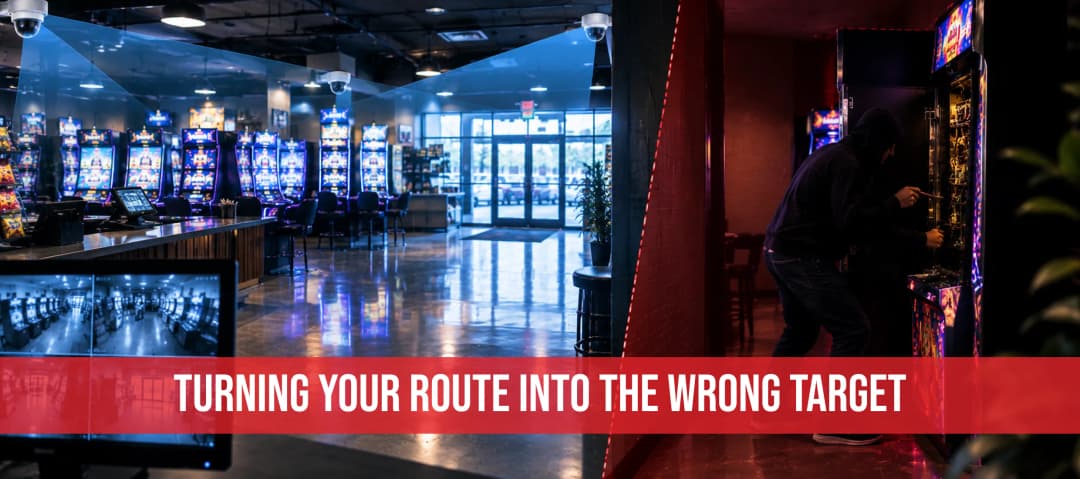
Many thefts happen even when you are present, even during broad daylight. A busy room and a few people nearby aren't the same as supervision of a specific cabinet. A clerk is usually watching the register, the entrance and the line.
Most route cabinets keep their cash behind a cabinet door. A single successful machine break-in can cost operators $10,000+ when stolen cash, cabinet damage, downtime, and service response are combined.
Asking the person at the counter to judge a stranger isn't a security plan. An alarm that responds to the cabinet door doesn't need them to.
What a Door Tamper Alarm Does When the Story Doesn't Matter
The Opening Is What the Alarm Responds To
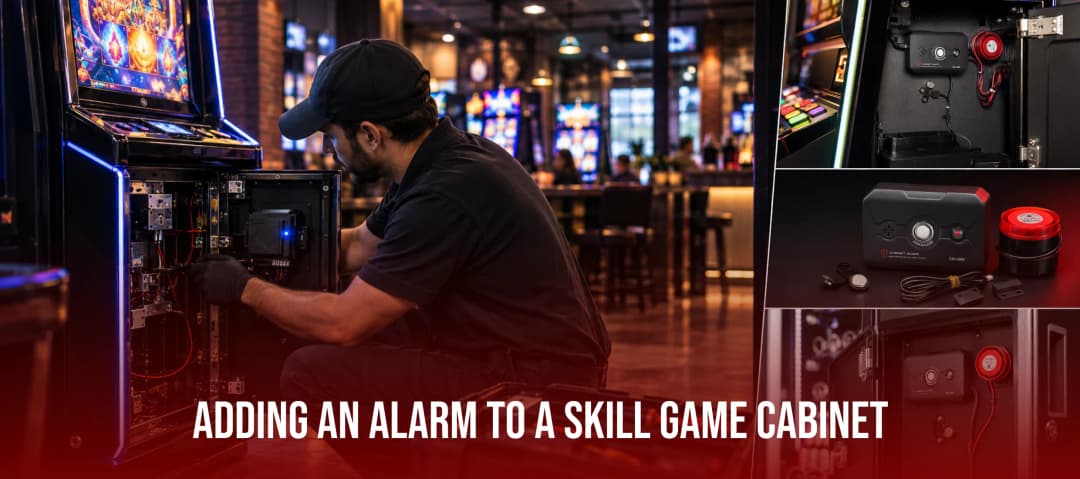
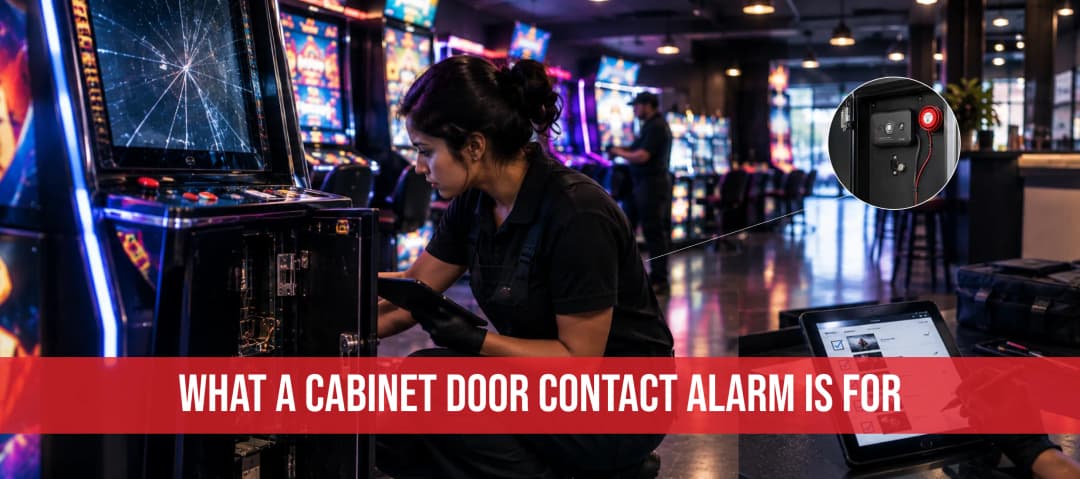
The CG-1000 is a cabinet door-tamper alarm. It detects an unauthorized cabinet door opening and activates a powerful on-site siren and flashing alarm. The siren is designed to interrupt a cash grab in progress and draw attention.
It doesn't hear the visitor's story, read a work order or care who they say they are. It responds to the door itself. The rapid on-site alarm response doesn't wait for anyone at the location to decide what they're looking at.
The presence of an alarm changes the risk calculation. A thief who suspects an alarm is present will often choose a different target, and the siren draws attention and pressures the intruder to leave. None of that depends on anyone at the location challenging the visitor.
A cabinet tamper alarm won't keep a stranger from walking in and talking. It responds once the cabinet door opens without authorization.
It doesn't replace a lock either. A lock resists entry but reports nothing if it's defeated, so a layered setup pairs the two.
What Changes for Your Own Service Stops
Your own stops work differently, and that's the useful part. The technician or collector carries a paired key and touches it to the reader to put the unit into service mode for the duration of a scheduled stop. Without it, the door contact treats the opening as unauthorized.
A fake technician and a real one open the same door. The difference is that yours arrives with a paired key and the stranger doesn't. That puts the weight on who holds a key, which is a job you can actually do.
What Operators Can Tighten Without Relying on the Location
A cabinet alarm covers the cabinet door. For route operators, the rest comes down to how you run your stops, and none of it depends on a stranger being believed or doubted at the counter.
Keep the Calendar Ahead of the Visit
Make your own schedule easy to read at a glance. If a collection stop, a parts swap or a manufacturer visit is booked, you should be able to say so in seconds to anyone who asks.
When a location calls about a visitor, the question "is anyone supposed to be there today?" should have a one-line answer. If it doesn't, that's the gap to close first.
Treat an Unscheduled Opening as the Signal
When the siren sounds on a day with no stop on the books, your calendar already tells you what kind of event it is. Everyone in the venue can hear it, staff can recognize the sound, and they know who to call.
Know who carries a paired key. Keys that get handed out and never tracked back are where key control slips on a route. That matters more once a key is what separates an authorized stop from an unauthorized one.
After an Attempt
A failed attempt isn't always the end of it. Someone who tried one location and left can come back, and a repeat attempt can come after things have gone quiet.
Write down what happened while it's fresh: which location, what the visitor claimed and what they asked for. Keep it as your own note, since it makes the next visit easier to recognize.
If you're working out how paired keys and scheduled stops would fit the cabinets on your route, we're happy to take questions about your cabinets.