What Location Staff Should Do When the Cabinet Alarm Fires
Sep 2, 2026
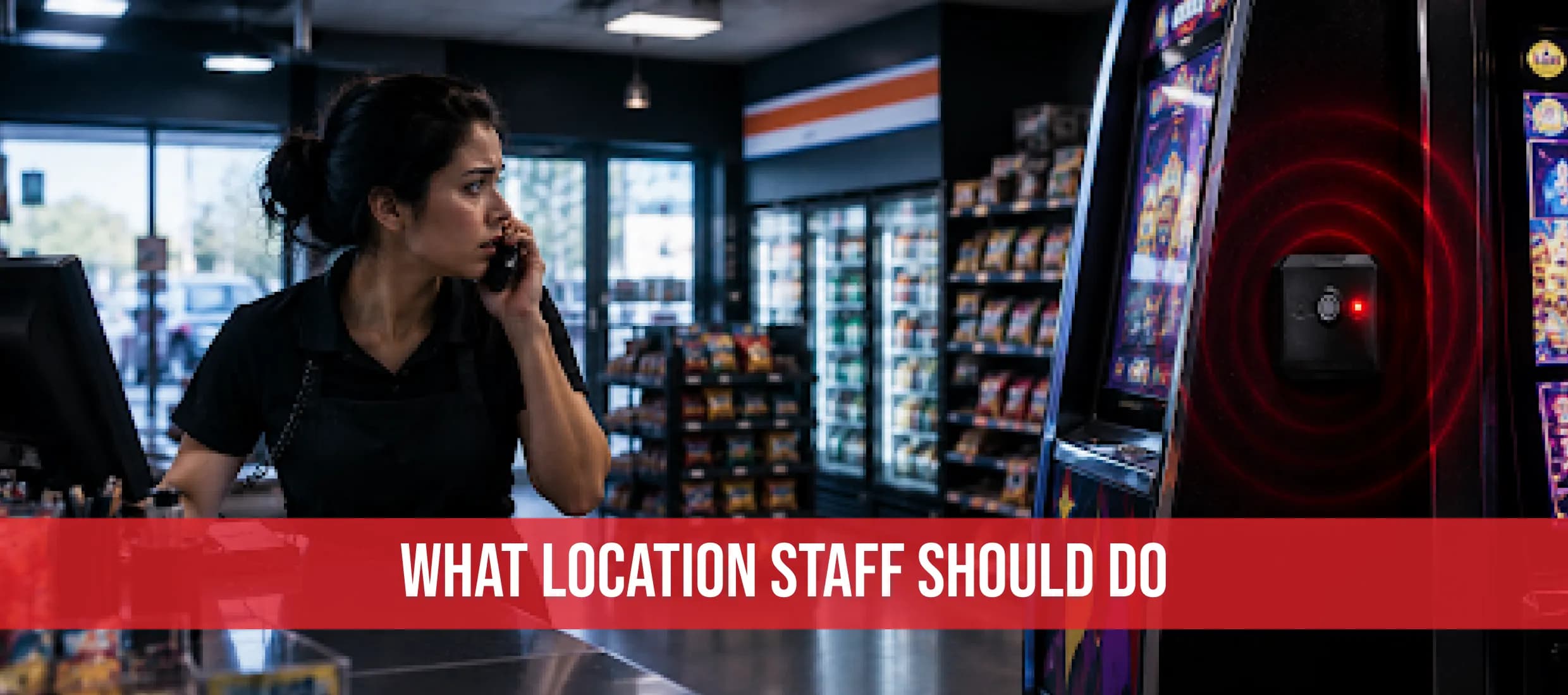
A cabinet alarm goes off at a two-person convenience store on a Tuesday afternoon, and the person behind the counter has no idea what they're supposed to do. Call someone? Walk over and check the door? Wait it out? Most locations never get a real staff protocol for this exact moment, so whoever's on shift ends up guessing, and guessing under a 100+ dB siren is a bad place to improvise from. The fix isn't complicated. It's a short list of specific actions, handed to location staff before the alarm ever fires, not after.
TL;DR: Staff Protocol for Cabinet Alarm Response
- Stay clear: Staff don't approach the cabinet when the alarm fires; that's not their job.
- Don't touch the door: No keyfob, no reason to open it, real alarm or false one.
- Note what you saw: A rough time and anything unusual, nothing more.
- Call the operator: The posted contact number is the actual next step, not a guess.
- Keep it short: A staff protocol for this only needs three or four rules to work.
Most locations never actually get handed a staff protocol for this. Whoever happens to be on shift when the alarm fires is rarely the operator and almost never the technician who installed the unit. They're a cashier, a bartender, a clerk covering a slow Tuesday, and the alarm is the first they've heard about any of this.
That gap matters because many thefts happen even when you are present, even during broad daylight. Staff being on-site was never the thing keeping a cabinet safe in the first place, so it doesn't make sense to expect them to suddenly become the safeguard the moment a siren goes off. The same logic shows up in how operators assess risk more broadly: presence alone was never the protective factor to begin with.
Makes sense once you say it that way. The alarm exists precisely because presence wasn't enough on its own.
What Staff Should Actually Do When the Alarm Fires
Stay Clear
The siren is doing exactly what it's built to do the second it goes off. It makes enough noise that whoever's nearby notices, and whoever's at the cabinet knows they've been noticed. Staff walking toward that noise doesn't help the alarm do its job, and it puts a person closer to a situation they have no reason to be in the middle of. Distance is the correct response here, not investigation.
Don't Touch the Cabinet
Staff at a location almost never carry a keyfob, and there's no reason they should. The keyfob exists so a technician or collector can put a unit into service mode for a scheduled stop; without it, the door contact treats any opening as unauthorized, including one meant to help. The thing is, opening the cabinet to check on it doesn't stop the alarm and doesn't answer anything staff actually need to know.
Note What You Saw
The alarm fires in real time based on the door contact. There's no separate log for staff to check back on later, so whatever gets written down in the moment is the only record of what actually happened. A rough time, anything unusual nearby, that's genuinely enough. Nobody needs a detailed report, just something more specific than it went off at some point.
Contact the Operator
This is the actual end of the protocol, not one option among several. Operators should post that number somewhere staff can find it without digging, on the unit itself or wherever the location keeps its other emergency numbers. Once that call is made, staff's part in this is done.
What Staff Should Never Do
None of this is about staff being unhelpful. It's about staff not being asked to do a job that was never theirs.
Staff should never approach or attempt to confront whoever is at the cabinet. That's not a judgment call to make in the moment; it's the rule, full stop. Staff also shouldn't try to identify the person, chase anyone off the property, or treat the alarm as a cue to get involved physically in any way. The alarm's presence and the disruption it causes are already doing the job of changing that person's calculation about whether this location is worth the trouble. Staff standing in the middle of that doesn't speed anything up. It just adds a person to a situation that doesn't need one.
The same applies to the cabinet itself. Staff shouldn't attempt to silence the alarm, reset anything, or open the door hoping to make the noise stop faster. Service access on a route runs through the technician or collector's keyfob specifically, not through whoever happens to be behind the counter that day.
Why the Protocol Can Stay This Short
The reason this protocol fits on a single page comes down to what's actually deciding whether the alarm fires in the first place. It's not staff judgment. It's a door contact.
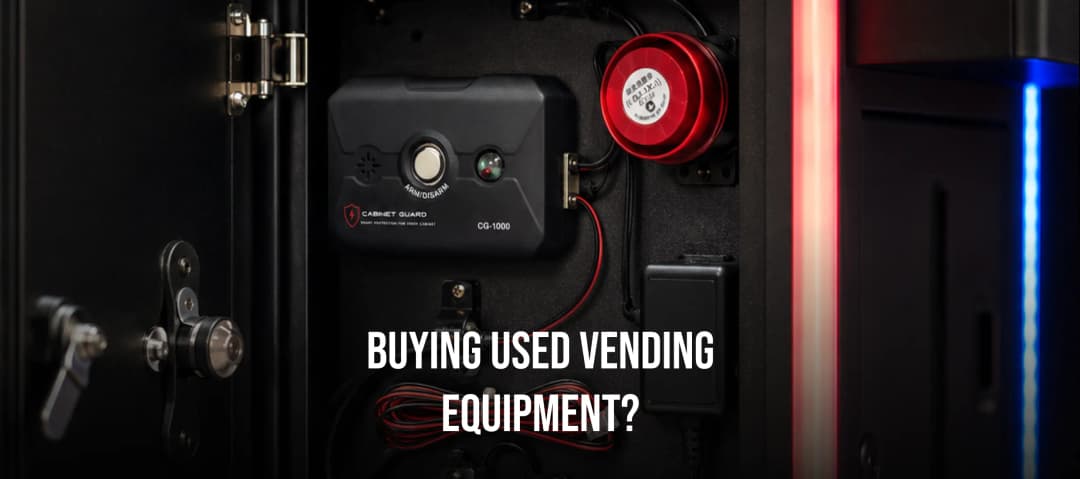
The CG-1000 wires into a cabinet's door switch circuit through SW-IN and SW-OUT terminals, and it fires the moment that circuit breaks without the unit being in service mode first. There's no assessment happening, no weighing of whether this particular opening looks suspicious. The door either opened with authorization or it didn't, and staff were never part of that decision to begin with.
That matters for what staff's actual job looks like. If the alarm needed a person on-site to decide whether something looked wrong before responding, the protocol would have to teach judgment, which is a much bigger ask than four rules on a page. Because the alarm already made that call the moment the door opened, staff's job shrinks down to what happens after: stay clear, don't touch anything, call it in.
Cabinet power getting cut doesn't create a gap here either. If cabinet power is interrupted, internal backup power keeps the alarm system armed so unauthorized cabinet access can still trigger the alarm, which means staff isn't suddenly covering for a system that went quiet. Anyone building out a protocol packet for a new location can check the unit's installation specs alongside it.
What About False Alarms?
Staff isn't expected to figure out whether a triggered alarm is real or false before calling it in. That's not their call to make, and trying to make it just slows down the one step that matters. Cutting down on false triggers in the first place is a wiring and maintenance question for the operator, not something staff can diagnose by listening to the siren a little longer.
Turning This Into Something You Can Actually Hand to Staff
A staff protocol that lives in an operator's head doesn't help anyone standing behind a counter when the siren goes off. It needs to actually be at the location, somewhere staff will see it before they need it, not somewhere they have to go looking.
One page does the job. Four rules, the operator's contact number, maybe a line about what happens next so staff isn't left wondering if they did the right thing. Posted near the cabinet, taped inside a drawer at the counter, wherever staff will actually see it during a shift. A laminated card outlasts a sheet of paper that gets buried under a week of receipts.
What happens after staff makes that call is the operator's problem, not staff's. What actually gets damaged and what it costs to get the machine back online is a separate conversation entirely, one that starts after the call, not during it. None of that changes what staff needed to do in the moment. Their job started and ended with four rules and a phone call.
If you're building a protocol packet for a location running more than one machine, or you're not sure how to word the contact instructions for staff who've never dealt with this before, reach out and we'll help you get it right.