
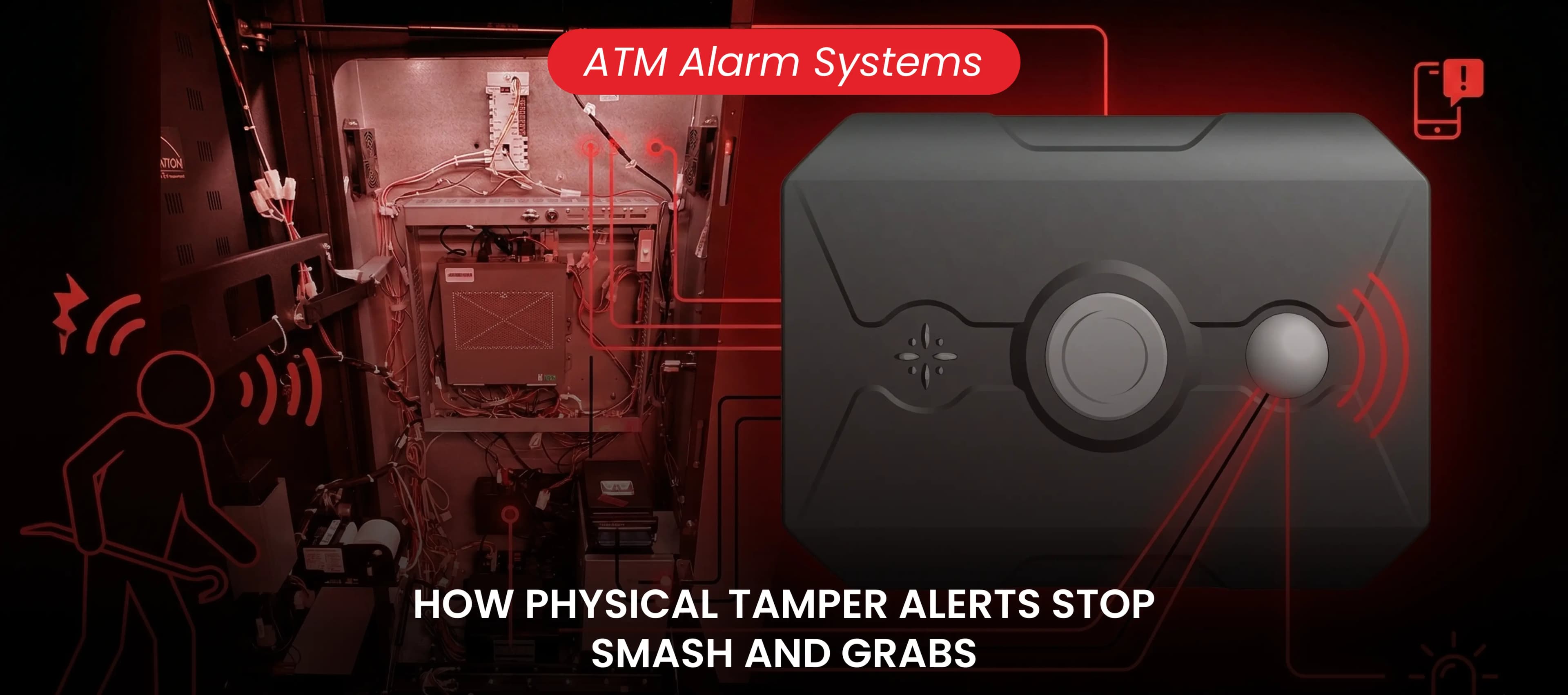
ATM Alarm Systems: How Physical Tamper Alerts Stop Smash and Grabs
Apr 8, 2026
For the independent ATM deployer, the greatest threat isn't a shadowy hacker in a dark room; it is a two-foot crowbar in a gas station parking lot at 3 AM. While the industry spends millions discussing digital encryption, the field reality is that ATM security is often compromised by brute force prying or the use of illicitly obtained master keys.
To protect the cash inside, operators are increasingly moving beyond passive locks toward active ATM alarm systems. These systems rely on physical tamper alerts to bridge the gap between a breach and a total loss. Understanding how these alerts function and why they are the backbone of ATM theft protection is critical for any route owner looking to harden their fleet.
TL;DR
- Physical tamper alerts provide immediate local deterrence through 100+ dB sirens.
- Hardwired systems avoid the jamming and latency issues of wireless IoT devices.
- ATM security features must include multi-door monitoring (vault and logic board).
- Integrated iButton access allows technicians to service machines without triggering false alarms.
- Reliability depends on 12–24V AC/DC universal power compatibility.
What is a Tamper on an Alarm System?
In the context of route-based hardware, what is a tamper on an alarm system? Simply put, it is a dedicated circuit designed to detect unauthorized cabinet access, even if the alarm is not "armed" in a traditional sense. In professional ATM anti-theft devices, a tamper alert triggers when the physical integrity of the enclosure is compromised.
Most entry-level sensors use simple magnetic contacts. However, an operator-grade ATM security alarm system like the CG-1000 uses a closed-loop logic. If a thief attempts to cut the wires, smash the enclosure, or pry the door just enough to break the circuit, the system reacts instantly. This is the foundation of ATM tamper-proofing: creating a scenario where the machine defends itself the moment the metal begins to bend. Often, traditional cabinet locks simply aren't enough to stop a determined thief with a pry bar.
The Mechanics of ATM Theft Protection
When an attack occurs, time is the only currency that matters. A physical attack on a retail ATM usually lasts less than two minutes. If your security relies on a cloud-based notification that hits your phone while you are asleep, the machine will be empty before you open the app.
Physical tamper alerts work by triggering a local, high-decibel response. The goal of ATM alarm systems is not just to notify the owner, but to physically overwhelm the thief. A 100+ dB siren inside a confined retail space creates an environment of extreme stress and draws immediate attention from anyone nearby, often forcing the perpetrator to abandon the job. This is why active defense is becoming the standard for high-traffic routes.
Why Wired Systems Rule the Route
Many off-the-shelf ATM security features attempt to use WiFi or cellular signals. In the field, these are liabilities. Thick steel cabinets and concrete walls act as Faraday cages, dropping signals when you need them most. Furthermore, "jammers" have become a common tool for organized retail crime rings.
A hardwired ATM security alarm system is immune to signal interference. By using the machine's own 12–24V AC/DC power supply, the system remains energized 24/7. When looking at alarm wiring diagrams, you will notice that professional systems like the CG-1000 utilize spring-cage terminals. This ensures that even under the heavy vibration of a drilling or prying attack, the connection remains secure. Many operators realize that DIY cabinet alarms fail exactly where hardwired, professional units succeed.
Integration into ATM Machine Security
Modern ATM tamper-proofing requires a multi-layered approach. It isn't enough to just protect the vault door. Professional operators monitor two distinct zones:
- The Upper Cabinet: Protecting the logic board, receipt printer, and card reader from "black box" attacks.
- The Lower Vault: Protecting the cash cassettes from prying and "hook and chain" pulls.
By using expansion-ready hardware, an operator can daisy-chain multiple physical tamper alerts together. This ensures that no matter where the breach occurs, the response is the same. Understanding what makes hardware reliable in these high-stress environments is the first step toward a secure route.
Solving the Service Mode Headache
One reason many operators avoid ATM alarm systems is the fear of false alarms during routine maintenance. If a technician forgets a code or a key, the resulting noise can damage the relationship with the merchant.
The solution lies in operator-centric features like iButton access and "Service Mode." Instead of fumbling with a keypad, a technician simply touches a programmed key to the reader. This disarms the physical tamper alerts for a set window, allowing for a cash drop or repair. Once the door is closed, the system automatically re-arms, ensuring the machine is never left vulnerable due to human error. Preventing unauthorized access doesn't have to mean slowing down your legitimate service team.
The Role of Universal Power and Reliability
Reliability in ATM security is driven by power management. Professional kits are designed to handle 12–24V AC/DC power. This versatility allows the alarm to be tapped directly into the ATM’s internal power rail, eliminating the need for external wall "bricks" that can be easily unplugged. Adding an optional battery backup ensures that even if the thief cuts the main power to the building, the ATM security alarm system still has the juice to scream.
Hardening Your Route for the Long Haul
Investing in ATM anti-theft devices is an exercise in risk mitigation. You cannot stop every thief, but you can make your machines the most difficult and loudest targets on the block. By prioritizing physical tamper alerts that are built for the rigors of the field, you protect not just your cash, but your equipment and your reputation. Learning how to choose the right system can save you thousands in future equipment damage.
If you are tired of looking at "after-the-fact" footage of your machines being prying open, it is time to move to an active defense. The CG-1000 was designed by people who have spent a decade in the trenches of route operations, specifically to stop the losses that standard locks cannot.
Ready to stop the prying? Explore the specs of the CG-1000 and see why wired, operator-grade hardware is the standard for retail security.