Why Cabinet Dimensions and Layout Differences Break Security Systems
May 25, 2026
You’ve been there before. You’re out on a service call with a new skill game or a slimline VGT. You have a "universal" security kit in the truck. Then you crack the door open, and the reality hits. The manufacturer moved the bill validator three inches to the left. The logic board is now hogging the only flat mounting surface.
There is literally nowhere to bolt your alarm.
This is the "Space War" inside the machine. In route operations, security hardware is always the last thing considered. Manufacturers don't leave extra room for us. If a security system is too bulky, it fails. If it relies on a perfect layout, it fails. Cabinet hardware design is a major hurdle for mixed fleets.
TL;DR: The Physical Reality of Cabinet Security
- Hardware Footprint: Bulky alarms won't fit in slim VGTs or crowded ATM vaults.
- Layout Obstacles: Real security must navigate around hoppers and power supplies.
- Door Alignment: Warped doors and gaps in cabinet doors cause false triggers.
- Universal Mounting: Use universal mounting brackets to standardize your route.
- Wired Reliability: Hardwired systems bypass the interference found in metal cabinets.
The "Universal" Lie: Why Most Alarms Don't Fit Your Route
Many companies call their alarm "universal" because the software works. Sometimes they just mean the voltage matches. In the field, universal must mean physical compatibility. A technician shouldn't spend two hours fabricating custom plates. If he does, that system is a liability.
The struggle often starts with the arcade machine layout. Older wooden cabinets have deep voids. New metal VGTs have zero wasted space. Most off-the-shelf security kits were made for home closets. They don't belong in a tight VGT or a compact ATM. They break because they don't account for real physical constraints.
The Space War: Managing Hardware Footprint and Internal Obstacles
Every inch of real estate inside a cabinet is claimed. The bill validator and the hopper take priority. The monitor and logic board come next. The security system has to be the most adaptable part.
The Problem with Cramped Interiors
The hardware footprint is your biggest hurdle in slimline cabinets. An alarm enclosure that is too deep will hit the coin hopper. You won't even be able to close the door. Some techs try to tape sensors to the side of a bill validator. This never works. The heat kills the adhesive and the sensor falls. That leads to a 3:00 AM false alarm call.
Mounting Challenges in Mixed Fleets
A real route isn't a showroom. It is a mix of different brands and ages. You need universal mounting brackets that offer flexibility. You might be mounting to thin metal or thick plywood. The hardware must grab hold and stay put. A large enclosure just makes the job harder.
When the Door Doesn't Line Up: Cabinet Door Gaps and Flex
The perfect machine doesn't exist in the field. Heavy use causes "cabinet sag." Hinges wear down over time. Suddenly, your cabinet door alignment is gone.
Low-quality sensors fail if they need a tiny gap to stay quiet. Vending machines and skill games flex when people lean on them. This flex creates cabinet door gaps. These gaps trick cheap sensors into thinking the door is open.
A professional door tamper switch must handle this "slop." It needs to be rugged. It should catch a real pry attempt without being hyper-sensitive to vibrations. Door frame security is about more than just the lock. A thief with a pry bar looks for a gap. If your sensor doesn't account for flex, they will get inside.
Wiring for Reality: Beyond the Single Door
Most cabinets have more than one door. You have belly doors, top boxes, and rear panels. If your system only handles one door, it is incomplete.
The Daisy Chain Solution
This is why Daisy Chain sensors are essential. You shouldn't run separate home runs for every door. A smart layout uses one universal wiring harness. It loops through every access point. If any door in the chain opens, the siren sounds. This saves hours of labor on a large vending machine route.
Eliminating the "Viper’s Nest"
Technicians hate messy wiring. Loose wires near a cooling fan are a disaster waiting to happen. They can get caught in moving parts or ticket cutters. A clean VGT sensor install requires secure terminal connections. They won't vibrate loose over time.
Built for the Field: How CG-1000 Solves the Layout Problem
We didn't design the CG-1000 in a lab. We designed it on our own routes. We were tired of fighting with bad hardware. We tested seven prototypes in machines that had been broken into.
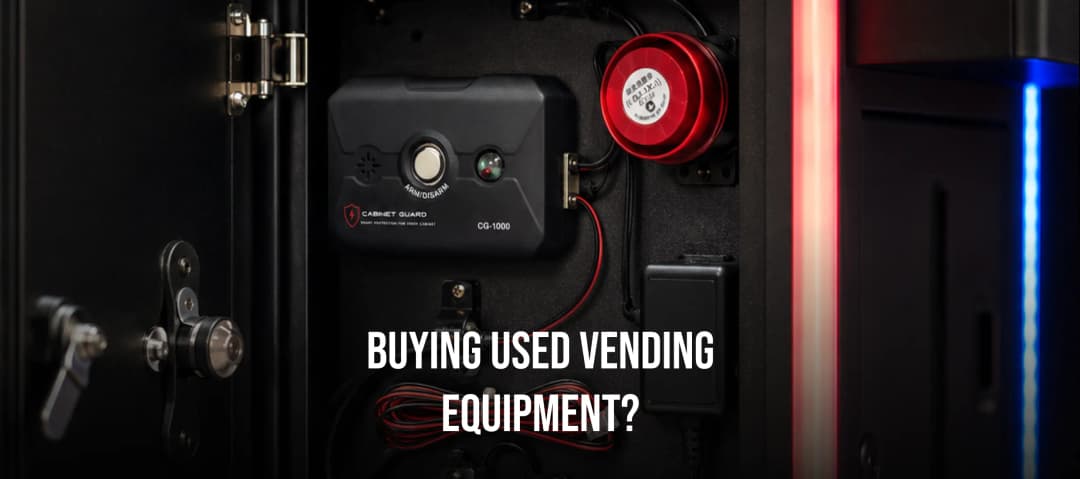
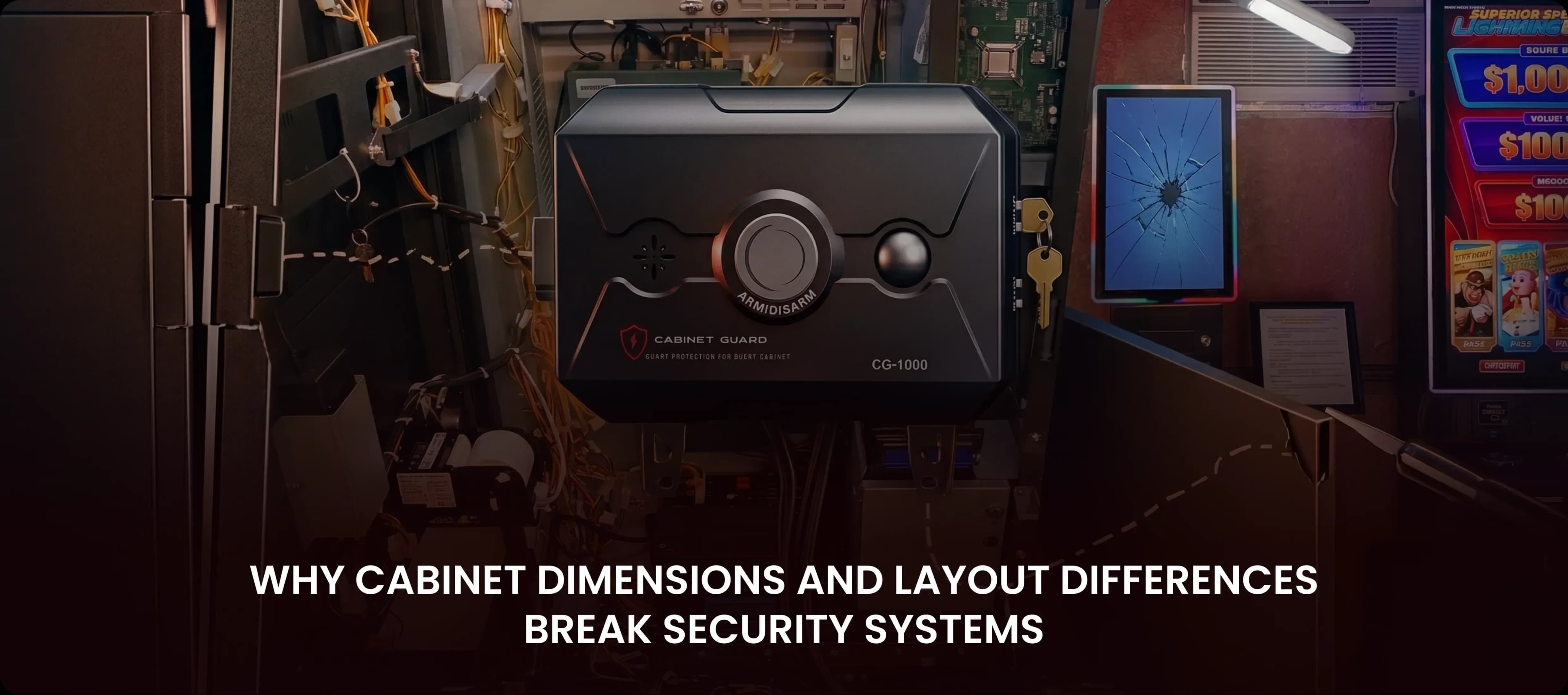
The CG-1000 has a compact, tamper-resistant enclosure. It fits in the palm of your hand. This small hardware footprint lets you tuck it away easily. You can hide it in an ATM vault or behind a monitor. It won't block airflow or service access.
It is a hardwired, tamper-proof alarm. You don't have to worry about blocked wireless signals. Thick steel ATM walls won't stop this system. It supports 12–24V AC/DC power. It taps directly into the machine's power bus. No extra transformers are needed. It works across all your ATM hardware and gaming gear.
Conclusion: Standardizing Your Defense
Layout differences shouldn't dictate your security level. You might be focused on vending machine theft prevention. You might be stopping an ATM smash-and-grab. The goal is the same. The alarm must be active and loud.
Choose hardware that respects physical constraints. This reduces install time. It also stops nuisance calls caused by poor fitment. Standardize on a system that handles cabinet door alignment issues. It's the only way to keep your route profitable.
The thing is, machines aren't getting any simpler. Your security shouldn't make the job harder. Just like this.
Mixed fleets are hard to manage. Don't let your security hardware make it worse. If you are tired of "universal" kits that don't fit, look at the CG-1000. It is built for real field conditions. It handles the vibration and the tight spaces of a real route.