Why Cabinet Security Is Critical for Amusement Machines
Feb 27, 2026
Maintaining a profitable operation is a game of margins. Whether you are placing skill games in a Texas convenience store or managing a fleet of jukeboxes across Pennsylvania taverns, the "unattended" nature of the business is its greatest strength and its biggest vulnerability.
The industry is evolving. So are the tools used to bypass traditional security. We recently launched our cabinet alarm system because we saw a gap between "cheap plastic sensors" and "expensive casino-grade systems" that simply didn't work for street-level hardware. After 12+ years in gaming and vending operations, we knew that cabinet security had to be as rugged as the machines themselves.
TL;DR - The Bottom Line
- Diverse Risks: Different machines (arcades vs. skill games) face different types of tampering.
- Beyond Locks: Most modern theft is non-destructive; it’s about shimming and "fishing" rather than smashing.
- Field-Tested: The CG-1000 alarm was designed after 7 prototypes and consultations with 16+ operators and technicians.
- The Solution: A universal, wired defense for any 12-24V cabinet that stops "invisible" losses.
Industry Overview: The Vulnerability of Unattended Play
The U.S. amusement industry is built on trust and accessibility. From gas stations to bars and laundromats, equipment is often left for hours or days without direct supervision. While the software in these machines has become incredibly secure, the physical hardware, the cabinet itself, remains the "soft" entry point.
As a business owner, your profit doesn't just come from the "play"; it comes from the integrity of the collection. If the cash-to-meter ratio is off, your ROI evaporates. Cabinet Guard was born out of the frustration of repeated real-world break-ins and the failed "DIY" fixes that many of us have tried while servicing machines in the field.
Why Cabinet Security Is Critical for Amusement Machines
Amusement cabinets include a wide variety of hardware, and each presents a unique risk profile for the operator:
- Skill Gaming Terminals: These are high-risk assets. Because they hold significant cash and pay out prizes, they are targets for sophisticated "shimming" (sliding tools through door gaps) to bypass the bill validator.
- Arcade & Redemption Games: Here, the risk is often "prize theft" or ticket fraud. Tampering with the ticket eater or the prize door can lead to massive inventory loss.
- Coin-Operated Entertainment: Jukeboxes, pool tables, and coin-op equipment often face "stringing": the practice of using a thin line to pull a coin or bill back out after the credit is registered.
- Interactive Kiosks: Whether it's an ATM or a bill-pay kiosk, these machines are targets for internal access attempts where secure access is critical.
One of our early consultants told us a story about a jukebox in a quiet corner of a bar. Every week, the collection was short exactly $40. No forced entry, no broken locks. It turned out that a regular had figured out that a specific shim could reach the service switch through a cabinet flex gap. That "invisible" theft is why a simple lock isn't enough.
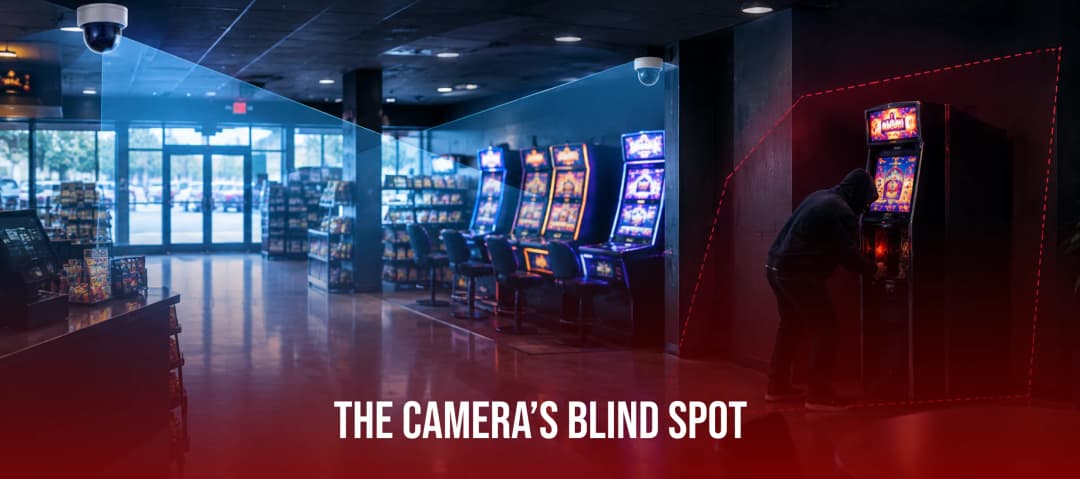
When comparing traditional locks vs modern systems, the biggest difference is the "Silent Collection Killer." Most loss isn't from a crowbar; it’s from the "pro" who knows how to shim a door. Without a tamper alarm for skill machines, you have no way of knowing when the door was cycled or if a "soft" break-in occurred.
Should you really have to check your meters every single day just to make sure no one is shimming your coin mech? Of course not.
The High Cost of "Good Enough" Security
We’ve seen it all: magnetic door sensors designed for home security, cheap Wi-Fi cameras, and flimsy brackets. In a professional environment, these fail.
- No IoT/Wi-Fi: A busy bar is a nightmare for wireless signals. If your alarm depends on the location's Wi-Fi, it will fail when you need it most.
- Battery Fatigue: You cannot rely on a 9V battery to protect a machine you only visit once every two weeks.
In high-traffic locations, having an operator-built cabinet alarm is often the only thing that prevents a curious patron from becoming a casual thief. It makes the machine a "hard target."
Standardizing Your Defense with the CG-1000
We didn't just build the CG-1000 in a lab. It was designed after repeated real-world break-ins and failed DIY fixes. It's built by operators, for operators.
Why Wired and Universal?
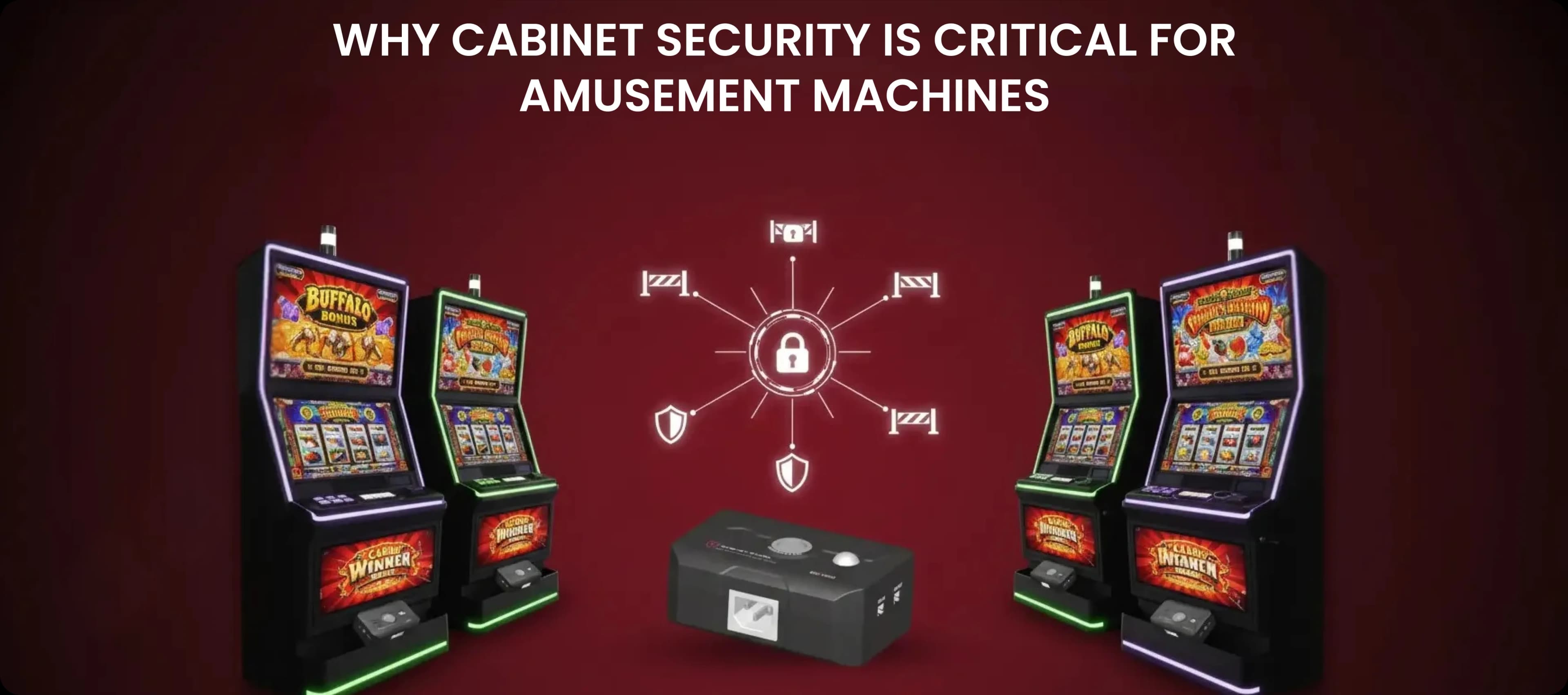
The CG-1000 is a hardwired, standalone device. It doesn't need an app or a cloud subscription. It uses the machine’s own 12–24V AC/DC power supply. Whether you are protecting a brand-new skill terminal or retrofitting an old redemption game, the cabinet alarm system stays consistent across your entire fleet.
Service Mode: Built FOR Operators
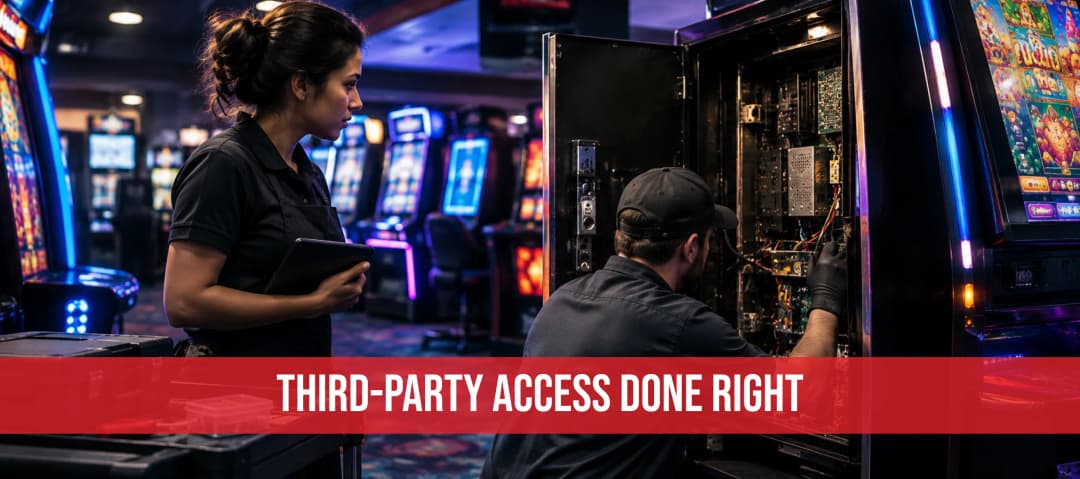
Technicians hate alarms that scream at them while they’re clearing a jam. The CG-1000 features a "Quiet / Service Mode" and iButton key access. This allows your team to work in peace, while the 100+ dB siren remains ready to deter anyone who shouldn't be there. It's the most reliable active defense solution for skill games and amusement available today.
Final Word: Protecting Your Collections
At the end of the day, your business is only as profitable as your collections are secure. "Hope" is not a security strategy. Moving toward a purpose-built commercial cabinet security system ensures that you are protecting your cash box, your equipment, and your location relationships.
See how the CG-1000 integrates with your cabinet type. Our team can walk you through it in minutes.